
116 Rokeby: A Breathing Workplace Shaped by Precision, Restraint, And Community

“The repetitious form and the use of a monochromatic palette of raw concrete and metal work allows the building to sit quietly within the urban context.”
— Stephen McGarry, Carr
Carr and Figurehead Group did not set out to make a loud building at 116 Rokeby Street. Instead, they pursued something far more demanding. A workplace that could breathe. One that could hold people, ideas, and time without spectacle. In Collingwood, a suburb defined by its layered industrial past and creative present, 116 Rokeby emerges as a quietly radical proposition for how commercial architecture might respond to climate, craft, and culture.
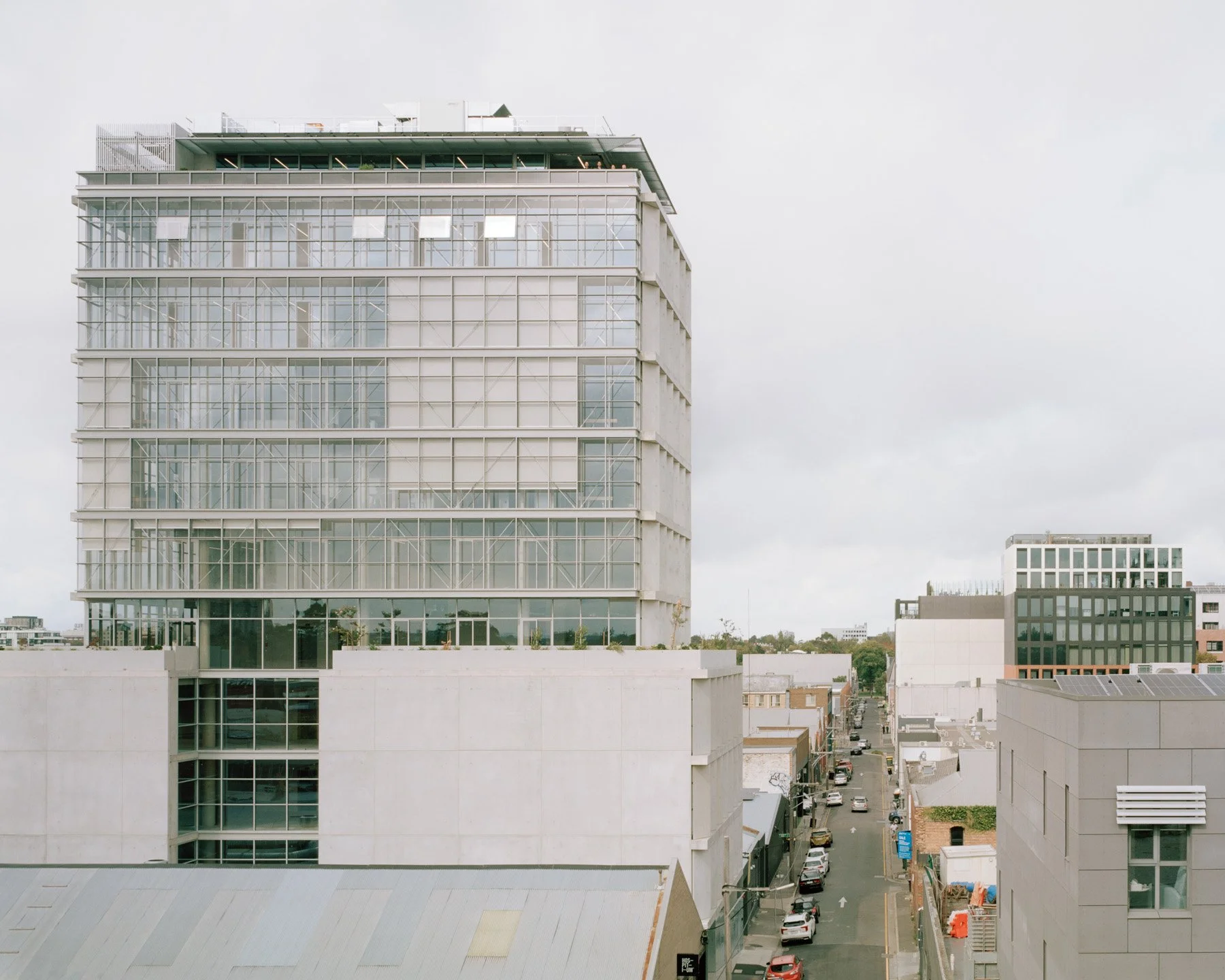

From the outset, the brief for 116 Rokeby was ambitious and exacting. Designed as an all-electric, carbon-neutral commercial building, the project required a synthesis of architectural discipline, environmental performance, and human-centred thinking. For Carr, this meant resisting visual excess in favour of clarity, proportion, and precision.
The building’s form draws from Collingwood’s utilitarian warehouse typologies. Raw concrete, steel, and a restrained rhythm give the architecture a sense of permanence rather than trend. It sits comfortably within its context, confident without nostalgia or spectacle. This restraint is intentional, allowing the building to age with dignity while remaining flexible and adaptable for future tenants.

The façade at 116 Rokeby is not decorative. It is purpose-driven, with each elevation responding carefully to orientation, climate, and the surrounding urban condition. Passive design measures are integral to its architectural expression, ensuring performance and restraint are inseparable.
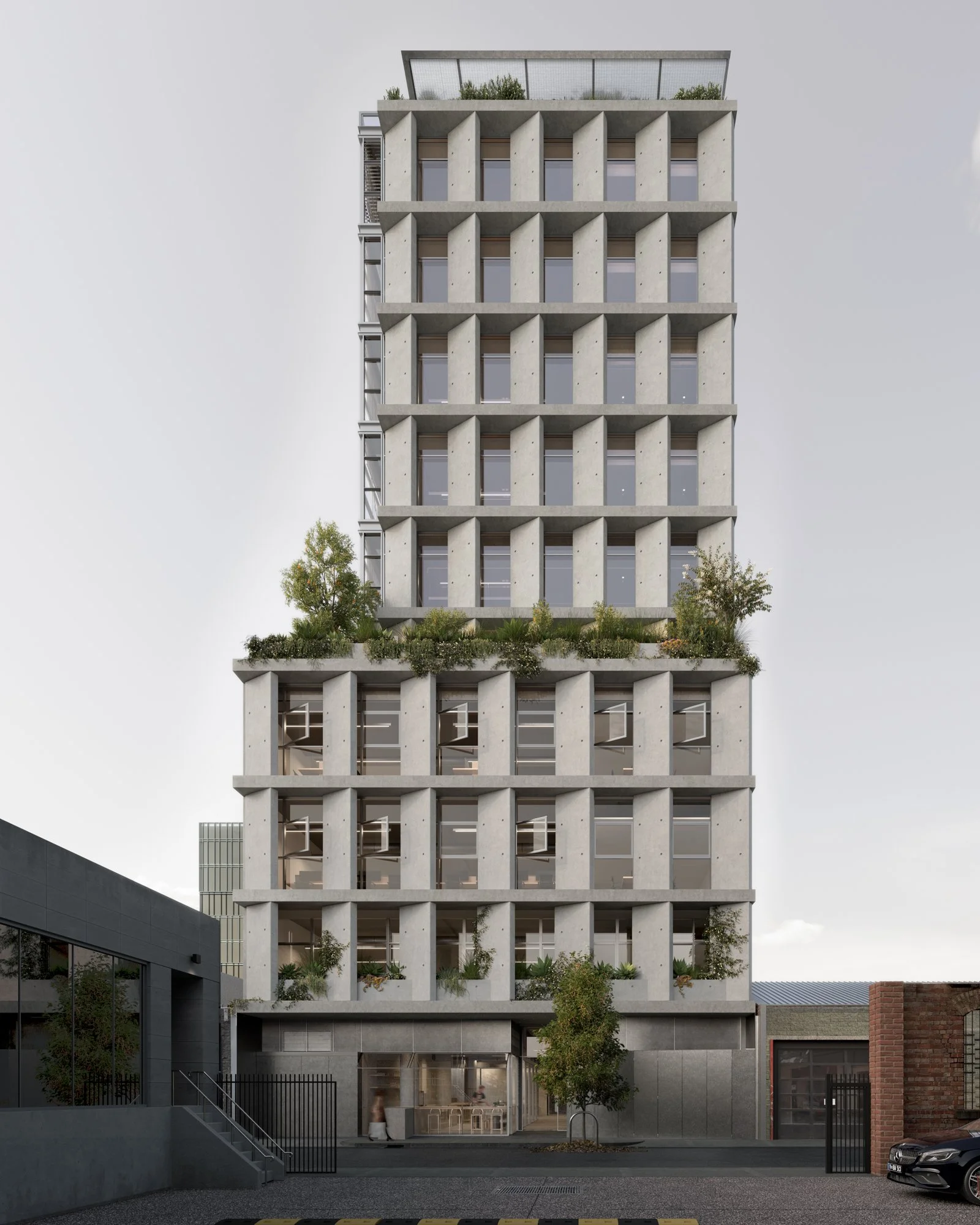
To the north, a diaphanous, operable double-skin façade functions as an environmental device, controlling heat gain, daylight, glare, and air quality while enabling natural ventilation across the floor plates. To the east and west, fixed-angle concrete sun shading blades reference Collingwood’s fragmented industrial character, mitigating heat gain without compromising views or access to natural light.
Together, these strategies significantly reduce reliance on mechanical systems, allowing the building to operate efficiently while maintaining a calm, rhythmic presence.
As Carr’s design team has noted, the façade does not seek attention. It works quietly, constantly, and with clear intent.
“The passive nature of the façades are hard at work, not needing intricate layers, sun shading devices, colour or an architectural gesture to say ‘look at me’.”
— Stephen McGarry, Carr

Inside, the architecture continues its commitment to clarity and breathability. Large, flexible floor plates allow tenants to configure spaces around their own rhythms of work, collaboration, and retreat. Ceiling heights, daylight penetration, and cross-ventilation support a sense of openness rarely achieved in dense urban offices.
This is not an interior defined by finishes alone, but by what it allows. Air moves. Light shifts throughout the day. Spaces feel adaptable rather than fixed. The result is an environment that supports focus without isolation, and interaction without noise.
The emphasis on tight tolerances and millimetre-perfect execution speaks to the level of care involved. Many of these decisions may go unnoticed by occupants, yet they are felt in the building’s calmness and ease.


Biophilic principles are embedded subtly rather than symbolically. Natural ventilation, visual connection to the outdoors, and a rooftop garden provide moments of relief and restoration within the workday. These gestures support wellbeing not through decoration, but through sensory experience.
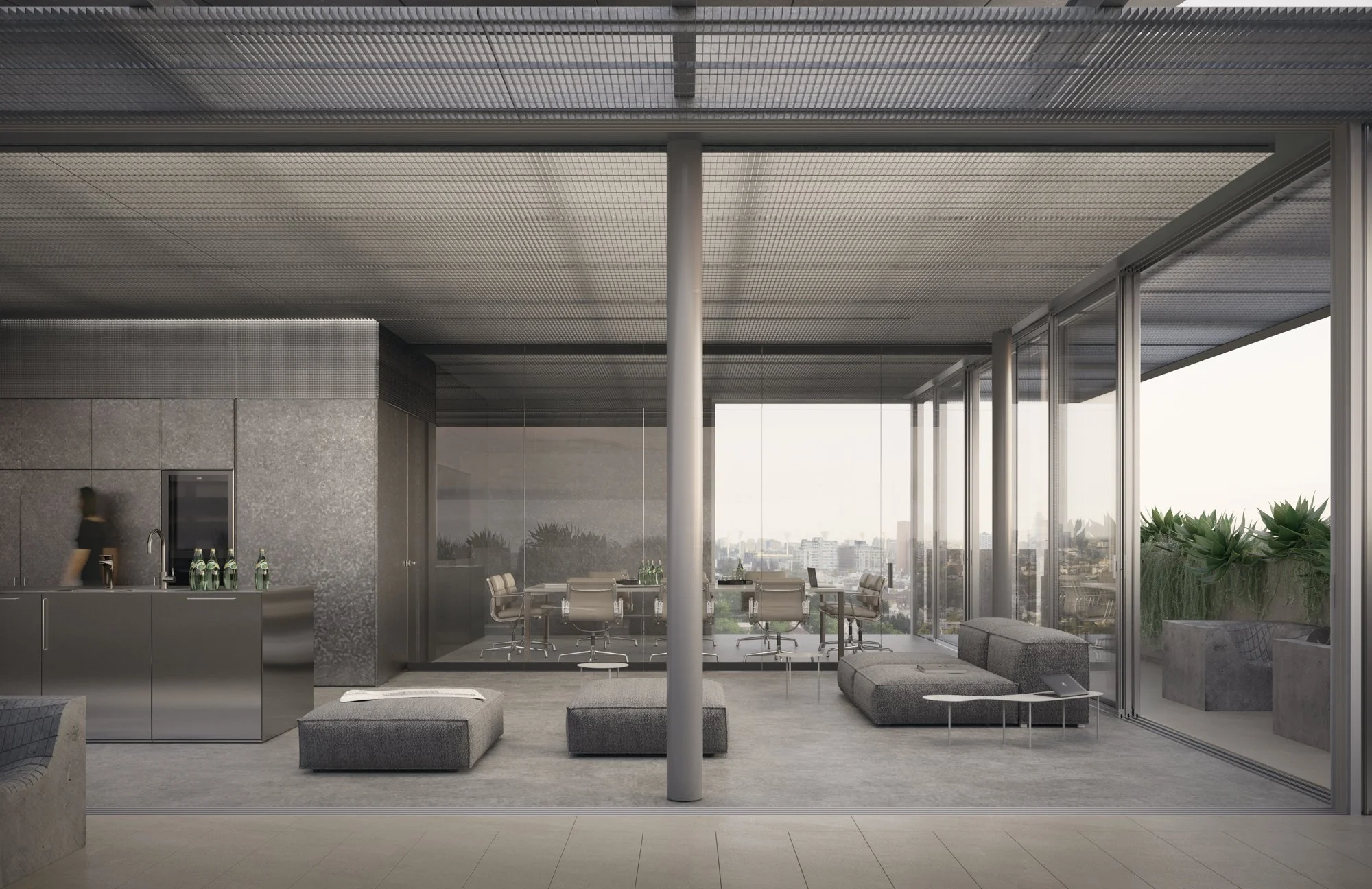
The rooftop becomes a shared landscape. A place for pause, conversation, and perspective.
It reinforces the idea that workspaces should nourish people, not merely accommodate them.
Photo by Gabriel Saunders

“There’s a real clarity about the building. It is not decorated. It has a calmness to it and this ability to breathe.”
— Rebecca Trenorden, Carr

Sustainability at 116 Rokeby is not an overlay. It is structural. The building targets Platinum WELL certification, a 5.5-Star NABERS Energy rating, and Climate Active Carbon Neutral status. These benchmarks reflect a commitment to long-term environmental responsibility rather than short-term optics.
Material choices prioritise durability, low toxicity, and lifecycle performance. Low-VOC finishes, recycled insulation, efficient glazing systems, and an all-electric services strategy work together to reduce emissions while improving indoor air quality.
“From conception we have been working towards designing a gas-neutral building in response to what we see as a climate and biodiversity emergency.”
— Stephen McGarry, Carr


At street level, 116 Rokeby engages directly with Collingwood’s social fabric. Ground-floor hospitality activates the public realm, blurring the boundary between workplace and neighbourhood. The Local Drop wine bar anchors the building as a place of gathering rather than exclusion.

Cultural acknowledgment is embedded into the architecture itself. A First Nations artwork, Reflections of a Breathing Space, is cast into the southern concrete façade in collaboration with Wurundjeri elders. It grounds the building in Country, history, and continuity, reminding occupants that architecture exists within a much longer narrative.
For Carr, the project marks a clear evolution in practice, one that reinforces a philosophy grounded in natural light, adaptability, and environmental and social sustainability. These principles are embedded in the building’s structure and performance, shaping an experience that feels calm, breathable, and enduring. As Stephen McGarry notes, this is architecture that prioritises how people feel over how a building performs visually.
What elevates 116 Rokeby further is the rare alignment between architect, client, and city. As Vicky Grillakis of Urbis observes, the project represents an exceptional urban response for Collingwood, setting a benchmark for how commercial development can give back to its community. Through its focus on longevity, wellbeing, and shared environmental ambition, the building creates an enhanced workplace experience that extends beyond individual tenancies. It stands as a confident example of Australian workplace design, considered, responsible, and quietly city-shaping.

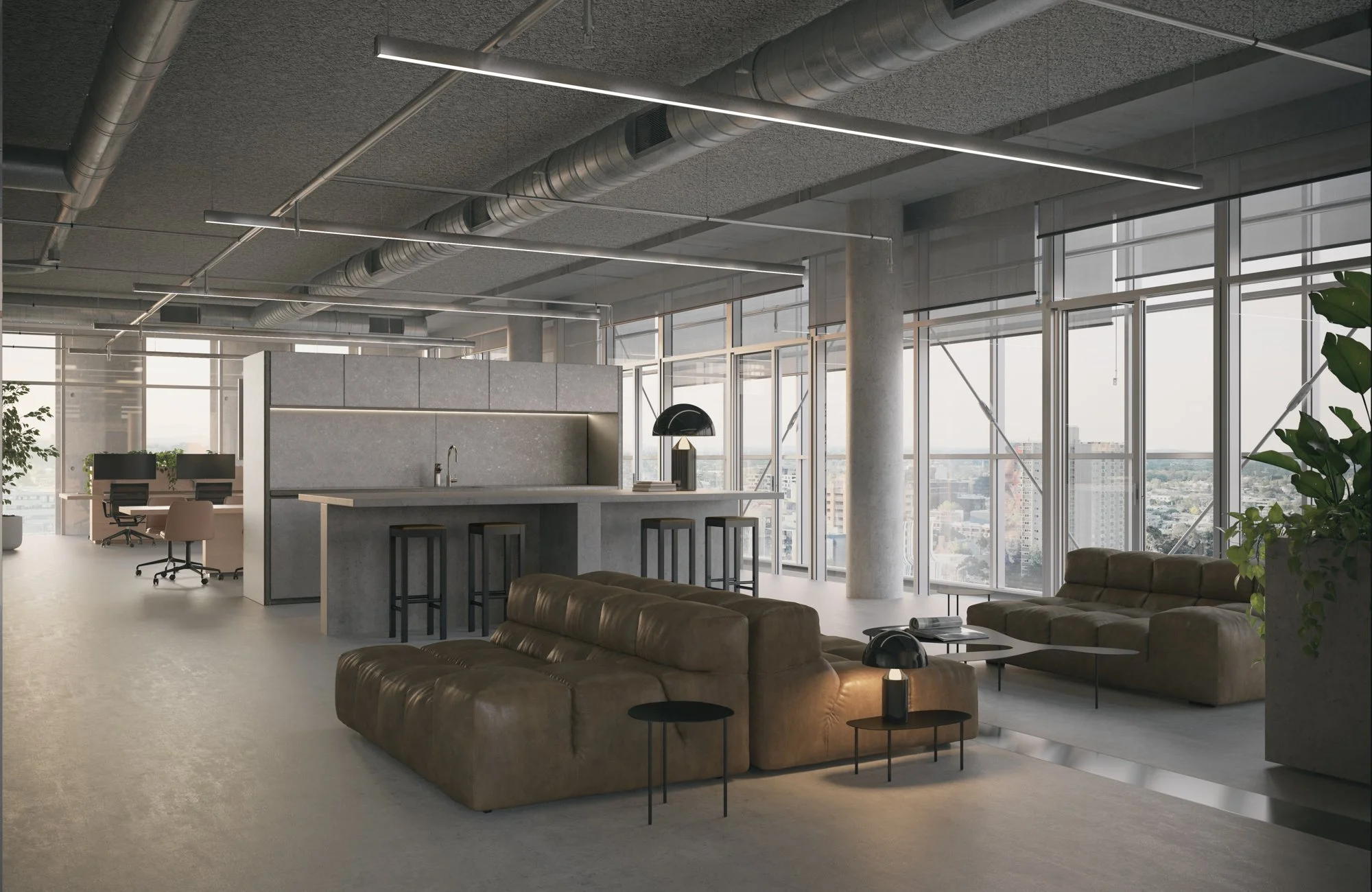
Completion: 2023, Photo by Gabriel Saunders
“116 Rokeby is about an experience. It’s about building a community and having spaces to socialise and nourish.”
— Rebecca Trenorden, Carr
Find out more here.
Project Credits
Architecture & Interiors: Carr
Developer: Figurehead Group
Builder: Figurehead Construction
Photography: Rory Gardiner with Colby Vexler.
