
Where Energy Moves Through Space: Inside Senex’s Brisbane Workplace
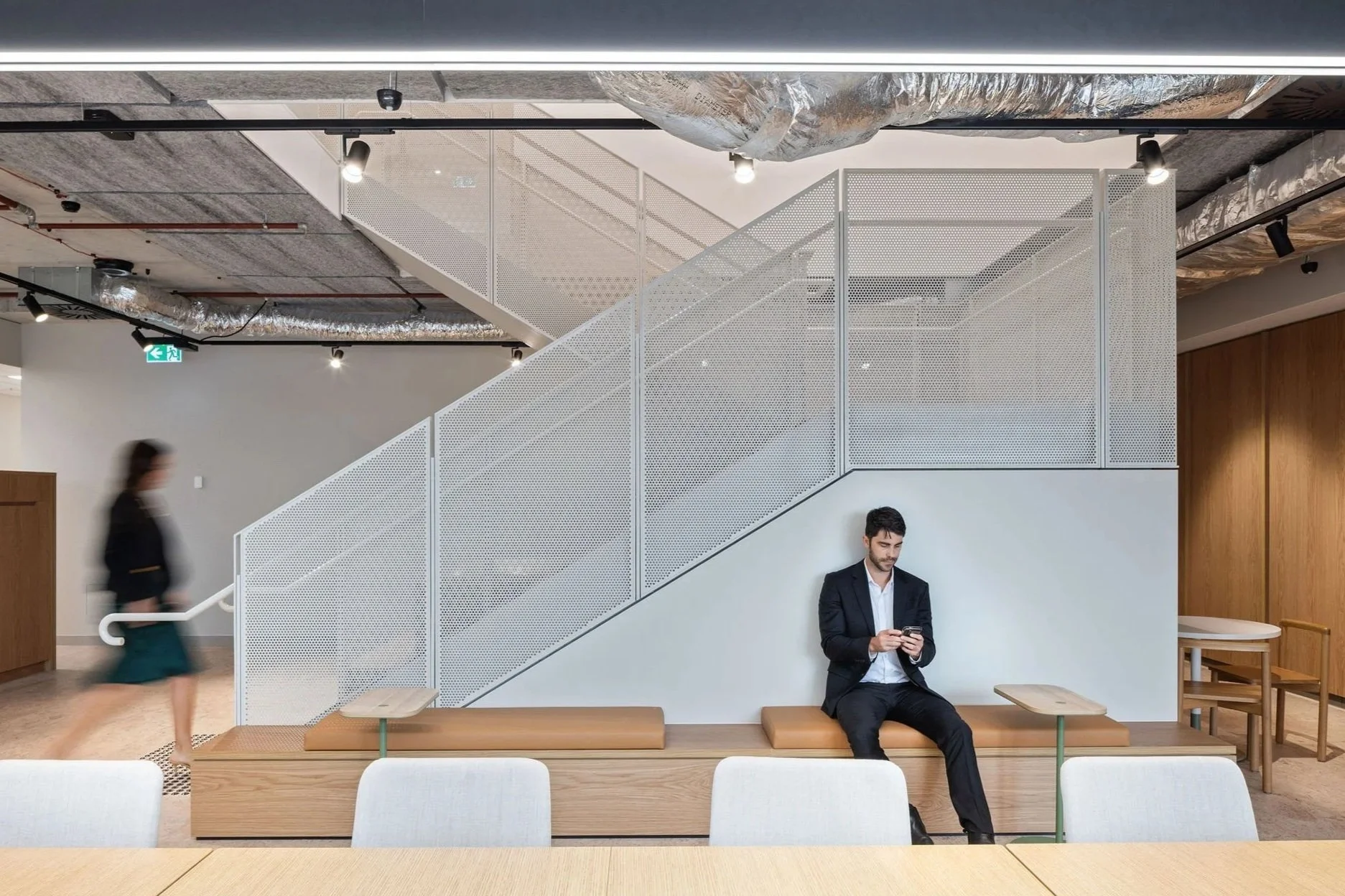
There’s a quiet sense of movement the moment you step into Senex Energy’s Brisbane workplace. Not just in how people move, but in how the space carries energy, vertically, materially, and socially.
Designed by Architectus, this seven-level workplace reads as a connected landscape. It reflects how Senex operates across regions, teams, and timeframes. Grounded in the realities of an energy company, the space still holds a softness that invites people to gather, pause, and interact.
A workplace shaped by connection
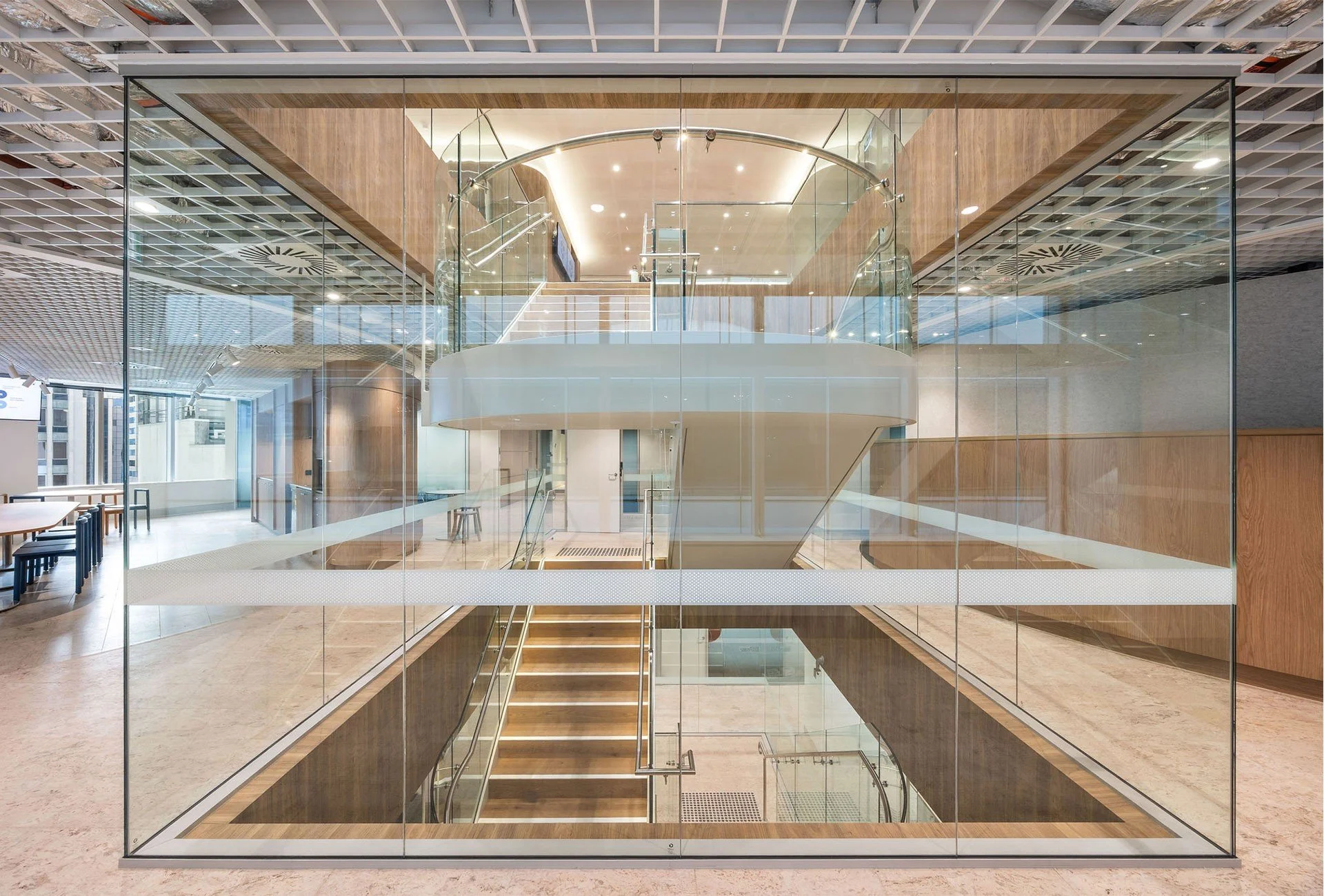
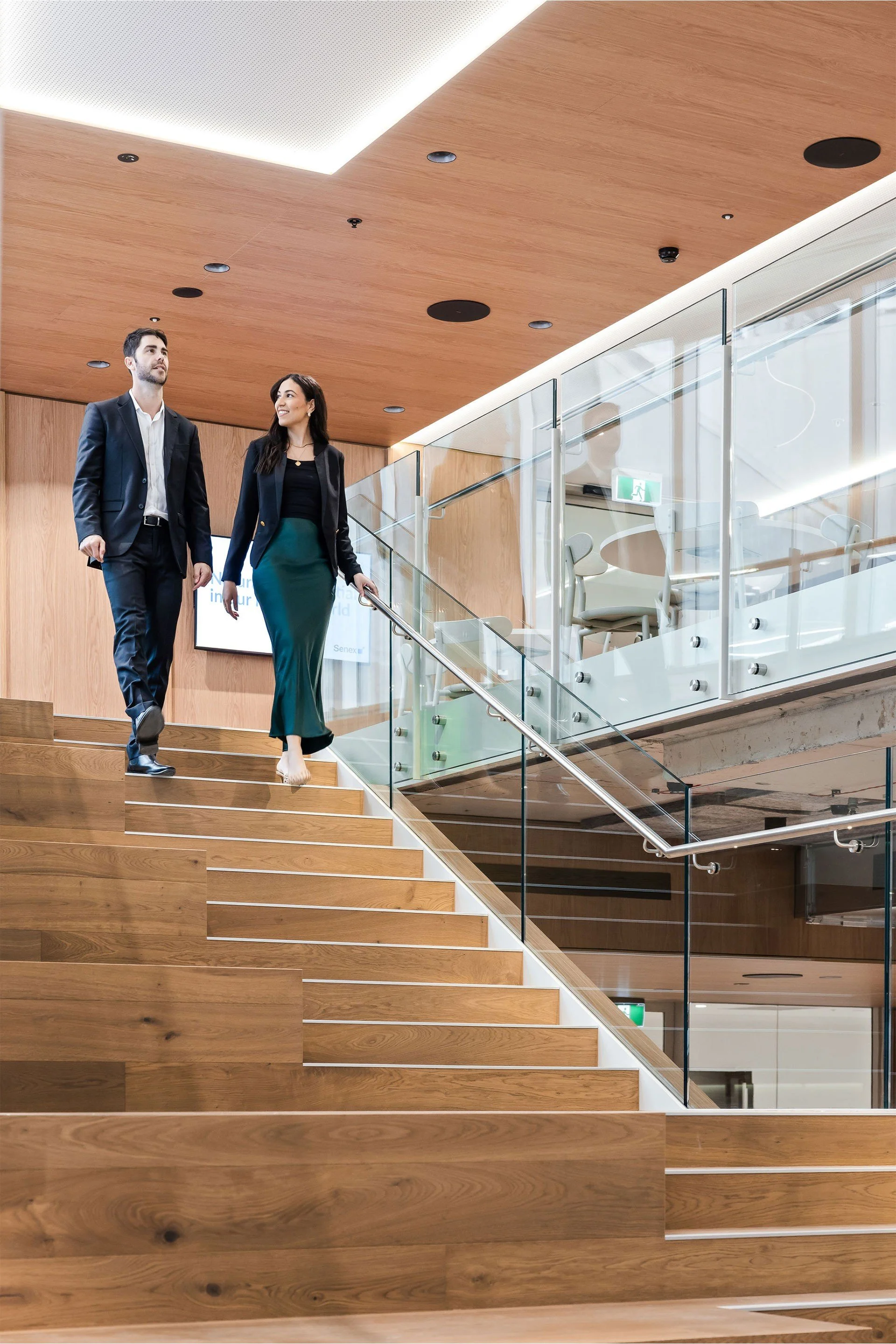
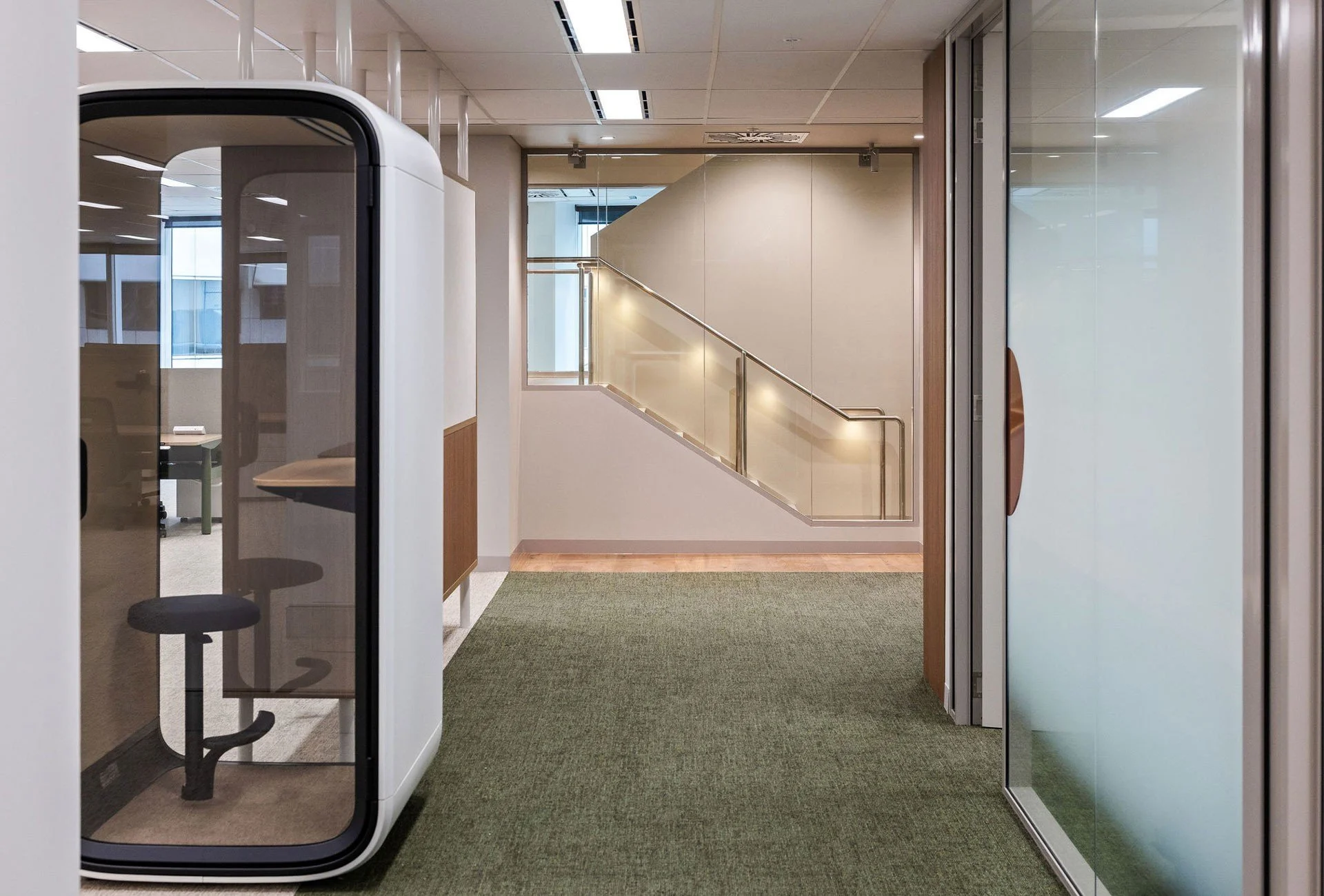
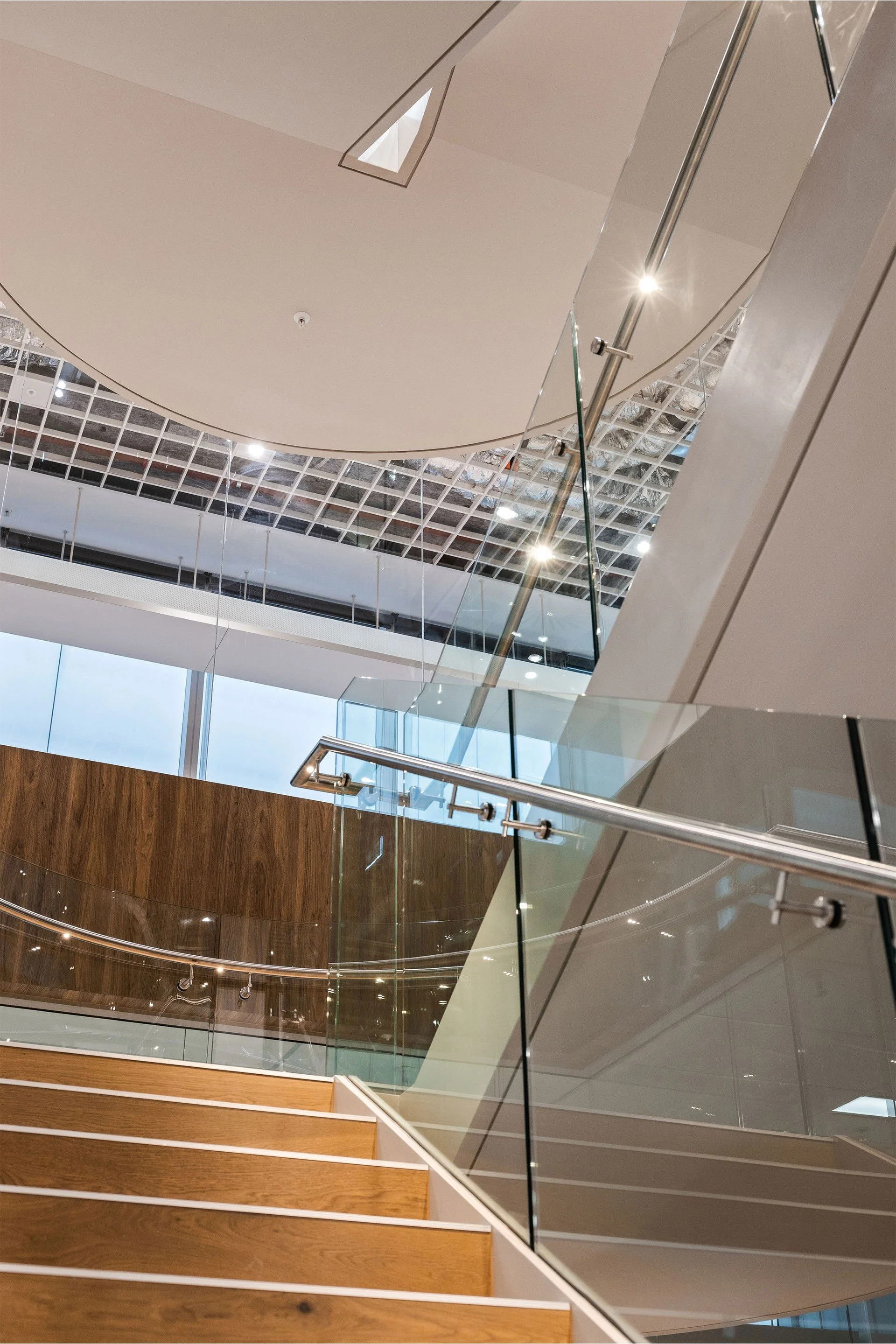
Connection sits at the centre of the design. Early planning focused on how teams move across the building with ease, both physically and socially. The response is a continuous vertical spine formed by six interconnecting stairs, linking all levels. These stairs extend beyond circulation. They create moments of pause and interaction.
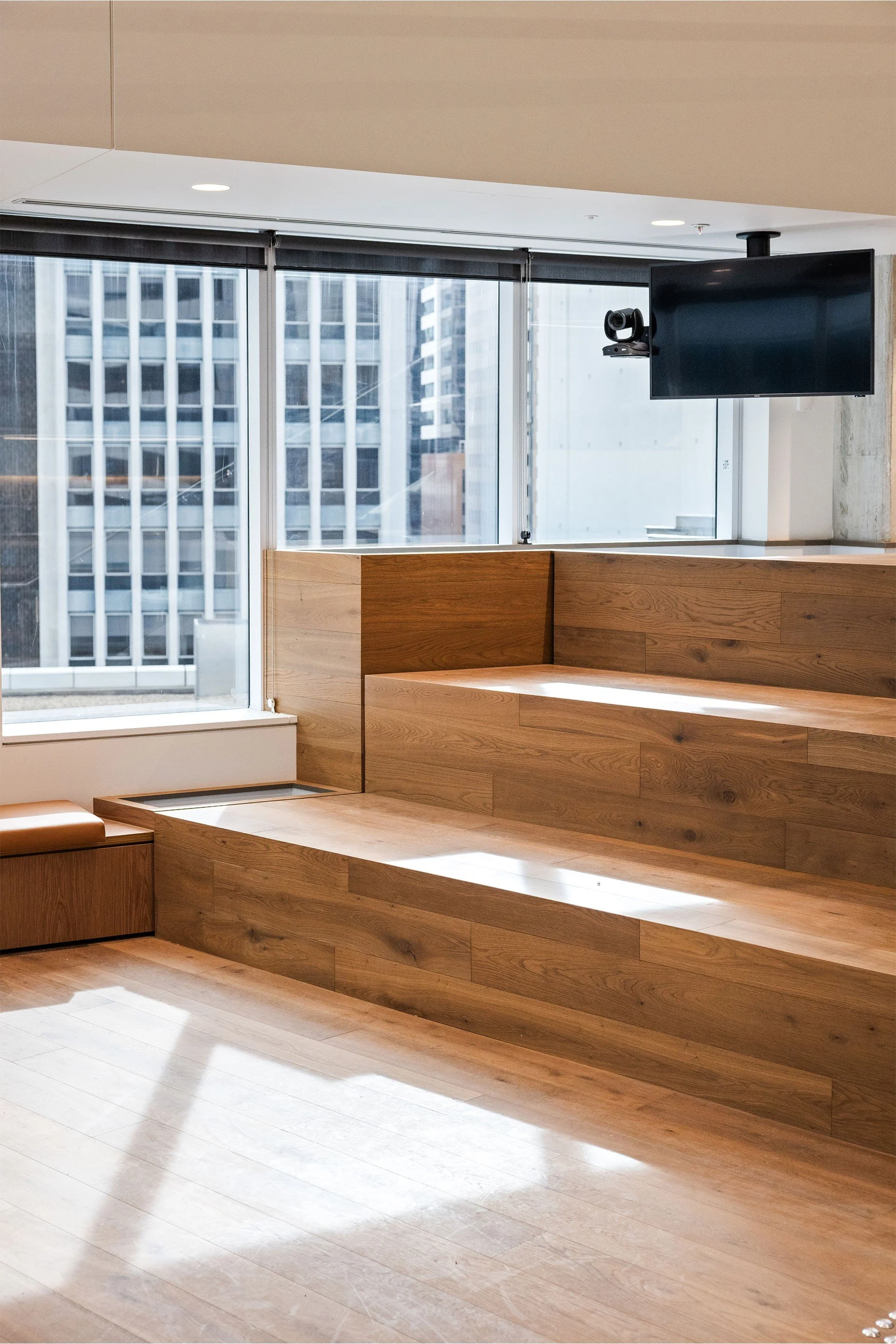
At the centre, a custom amphitheatre introduces a shared space for presentations, informal gatherings, and everyday conversations. Timber bleacher seating softens the scale and brings a sense of warmth into the core of the floorplate. Each level opens into a different setting, encouraging people to move between teams and spaces throughout the day.
A landscape of interaction
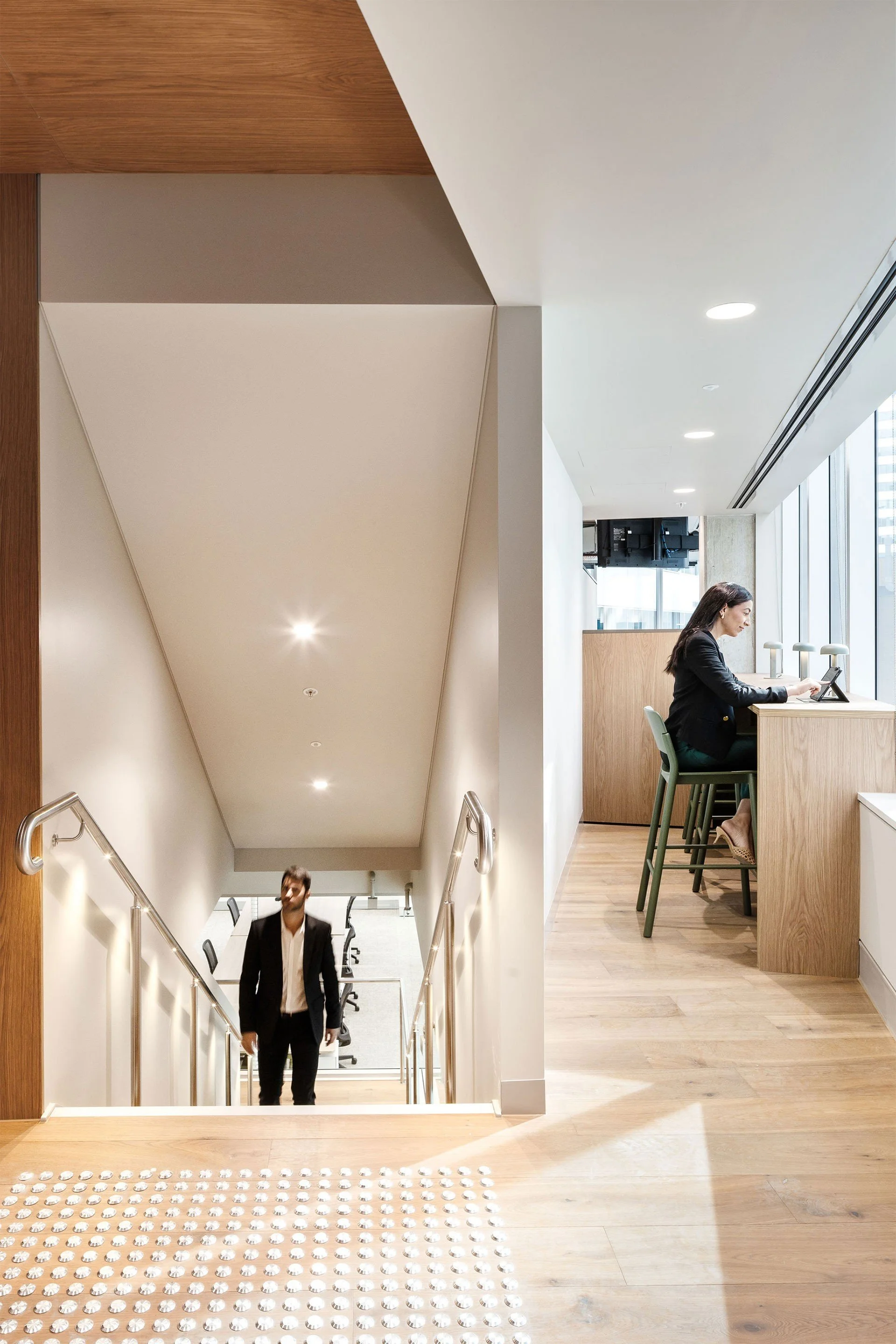
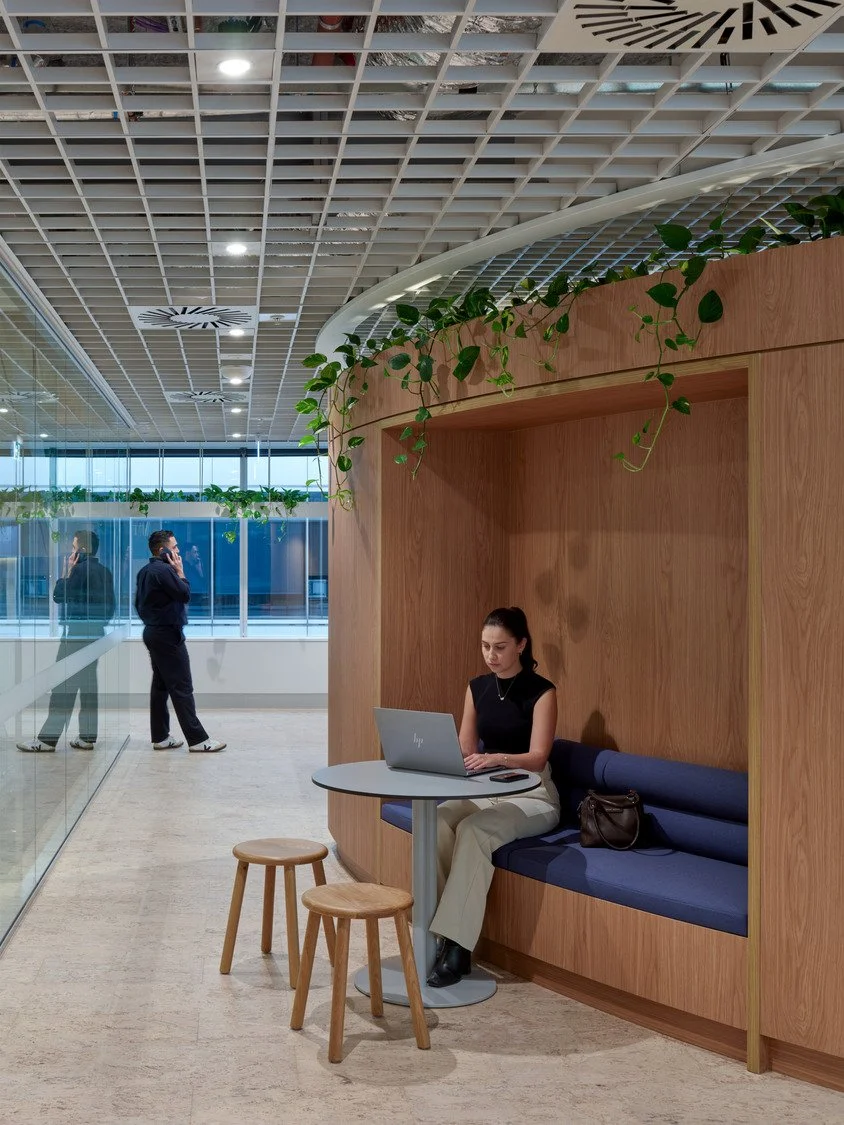
The workplace is organised into smaller, vertically connected neighbourhoods. Each zone carries its own rhythm, from collaborative areas to quieter spaces for focused work.
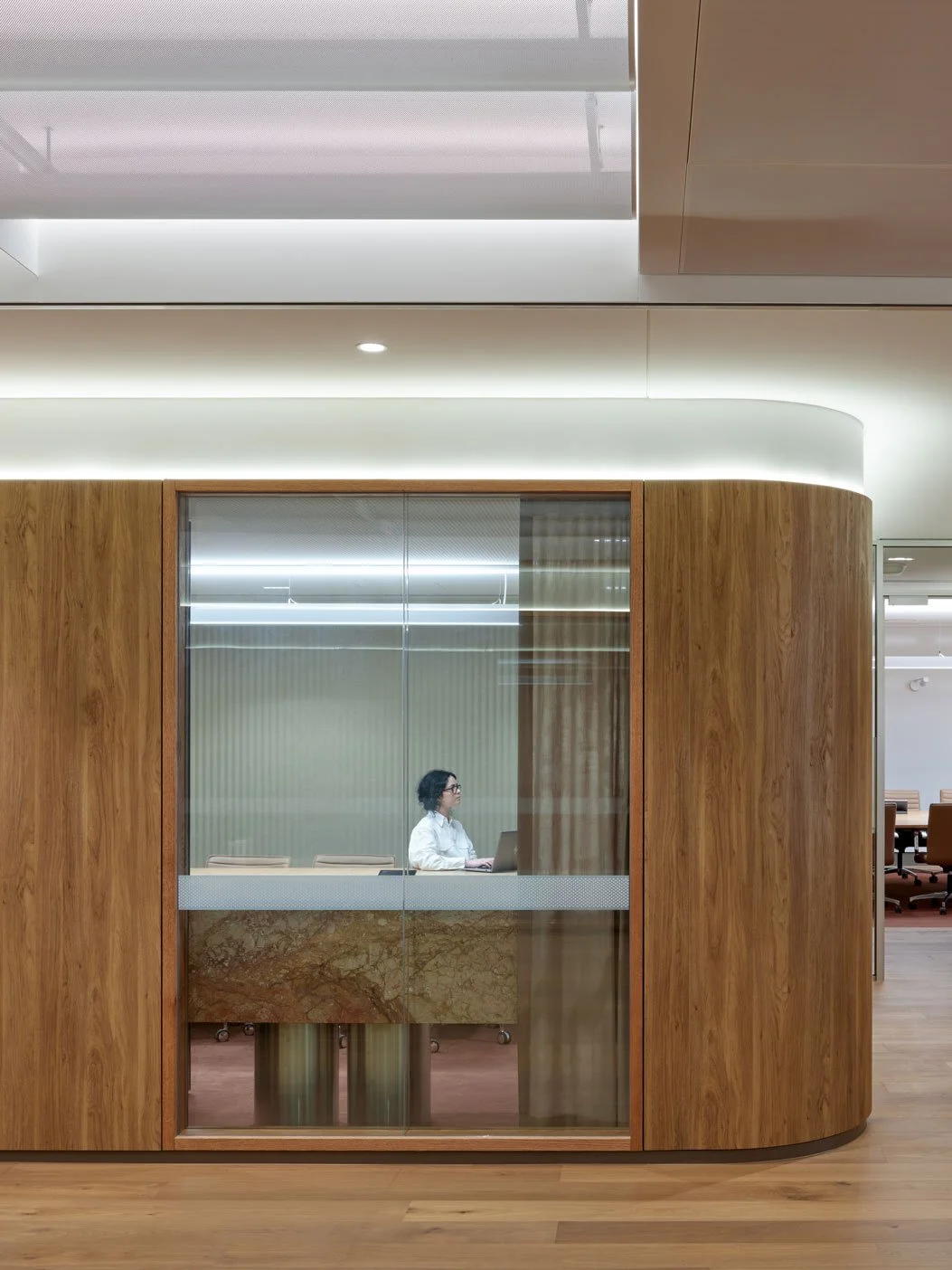
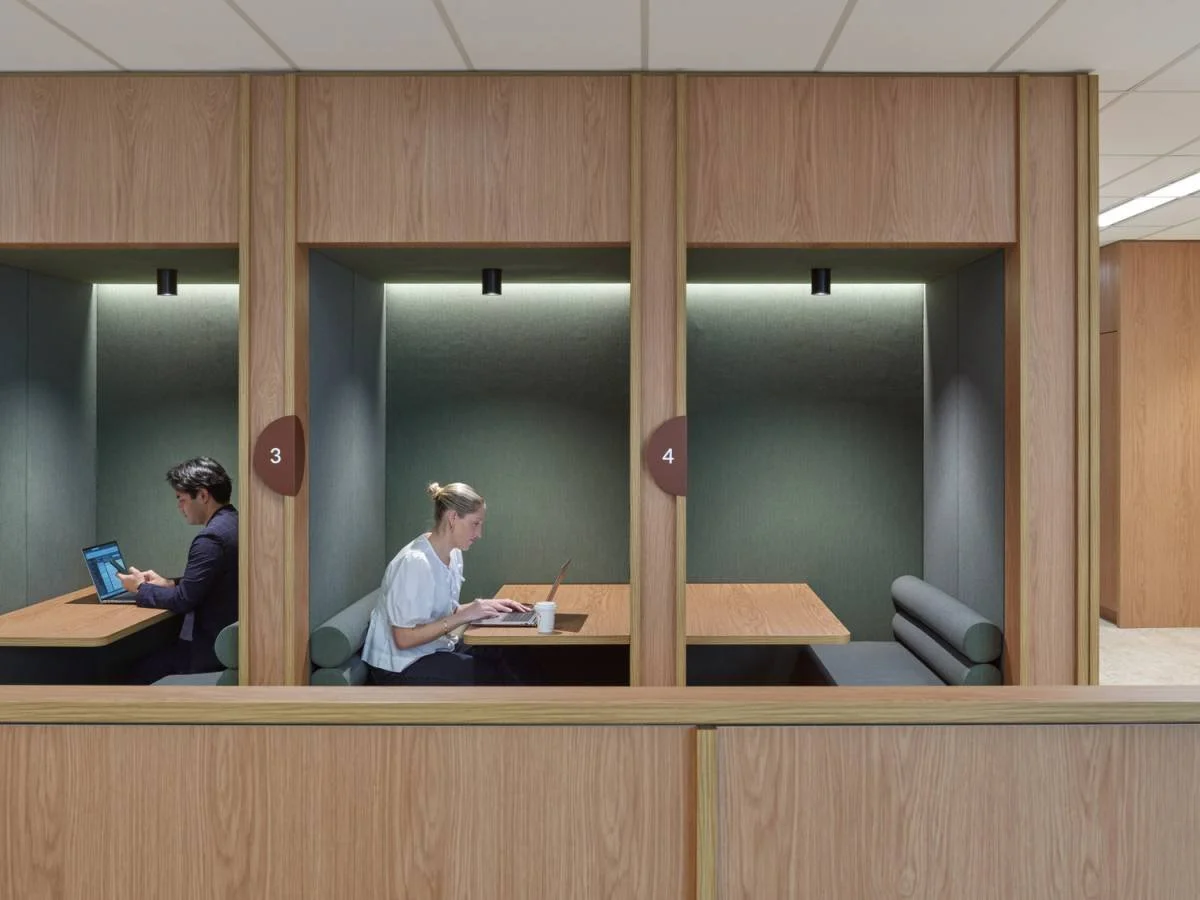
This structure supports a more fluid way of working. Teams can stay connected while still having access to privacy when needed. Meeting pods and focus rooms are distributed across levels, allowing the workplace to shift with changing patterns of use. The experience feels balanced. Open, but still considered. Functional, while remaining comfortable to spend time in.
Drawing from place
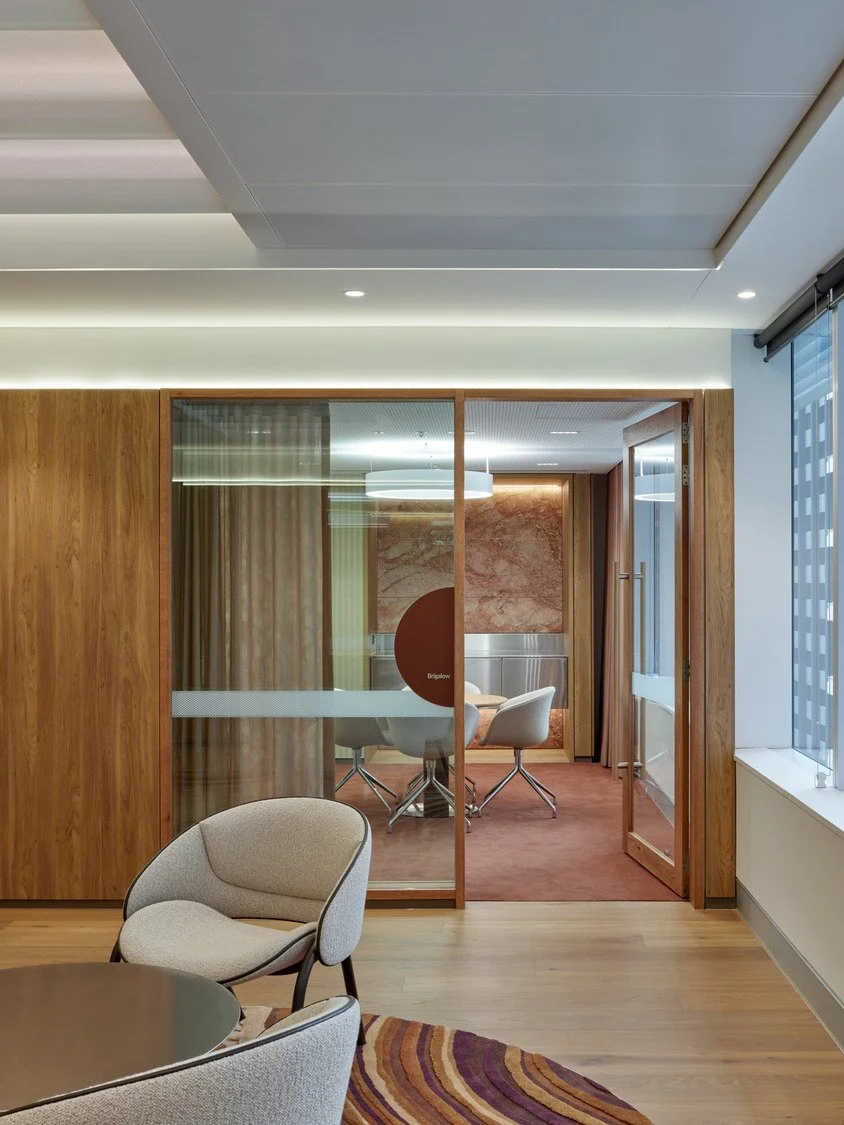
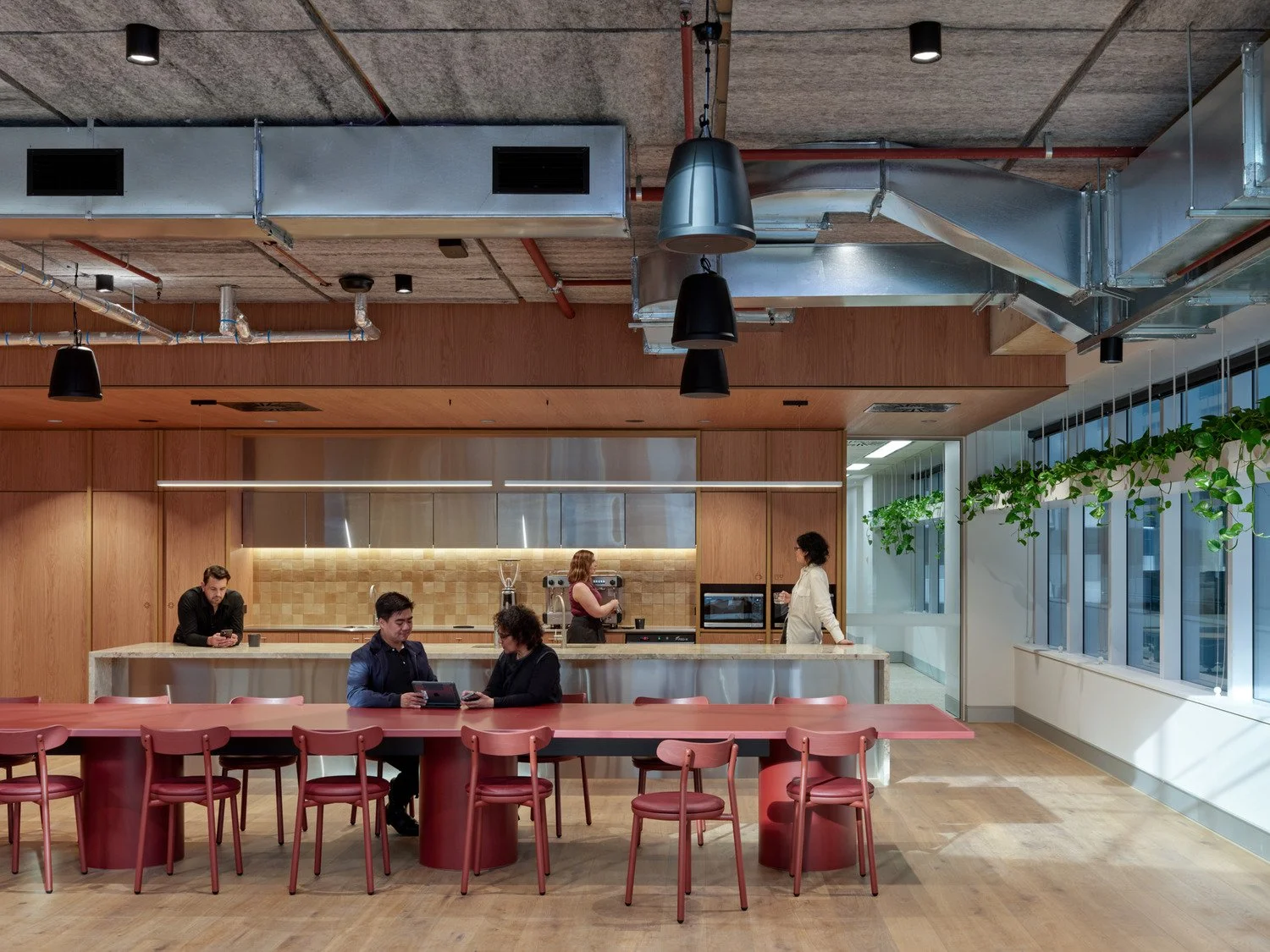
Material choices reference the landscapes where Senex operates, particularly the Surat Basin. The palette feels grounded, with textures that carry a quiet depth.
Timber and stone sit alongside subtle tonal variations, echoing the environments of Atlas and Roma North.
These elements connect the workplace back to the sites and communities that shape the business.
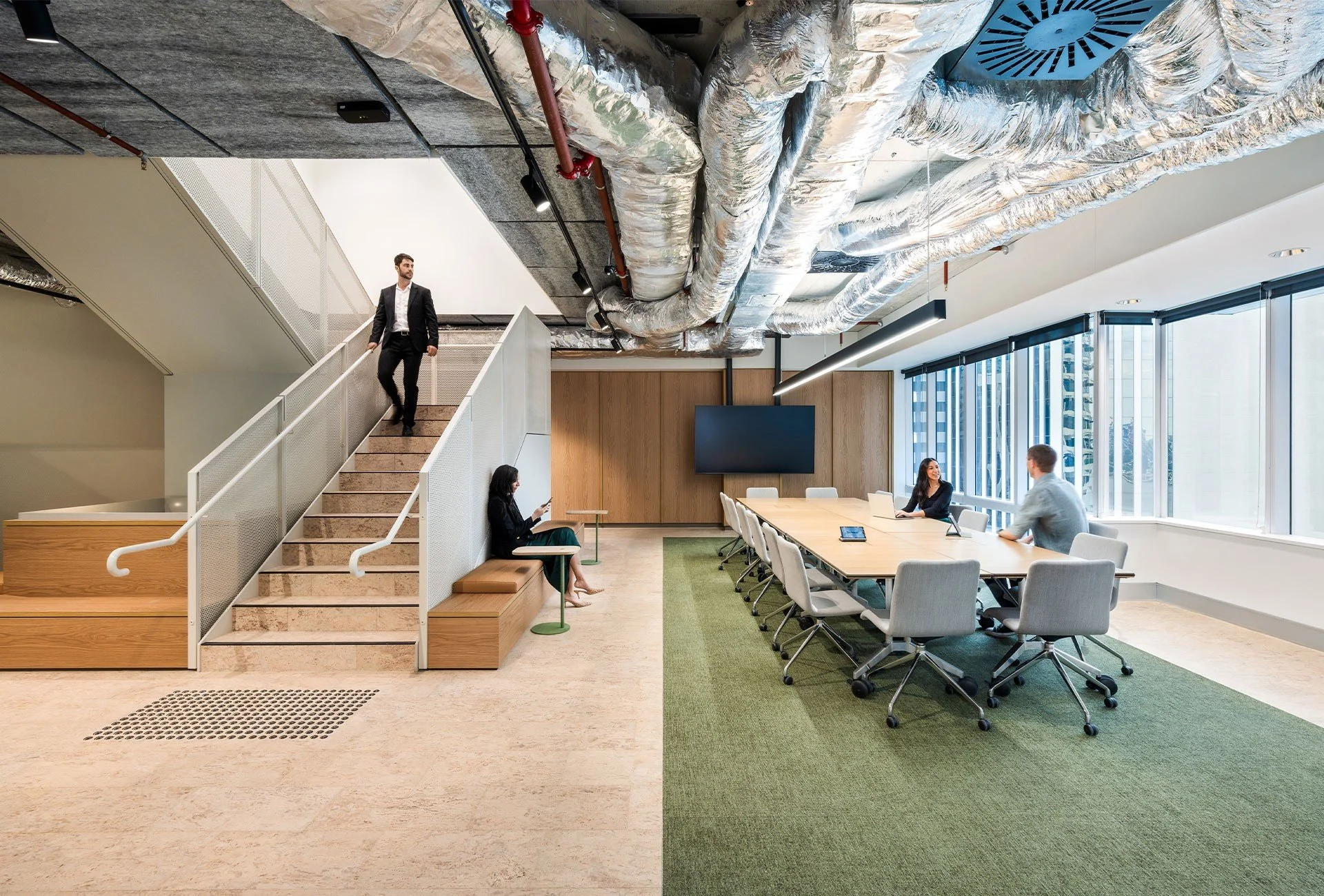
On the client-facing floor, the design shifts in tone. Forms become more structured, drawing on the movement of gas pipework and engineering systems. It introduces a clear link between operations and the urban setting.
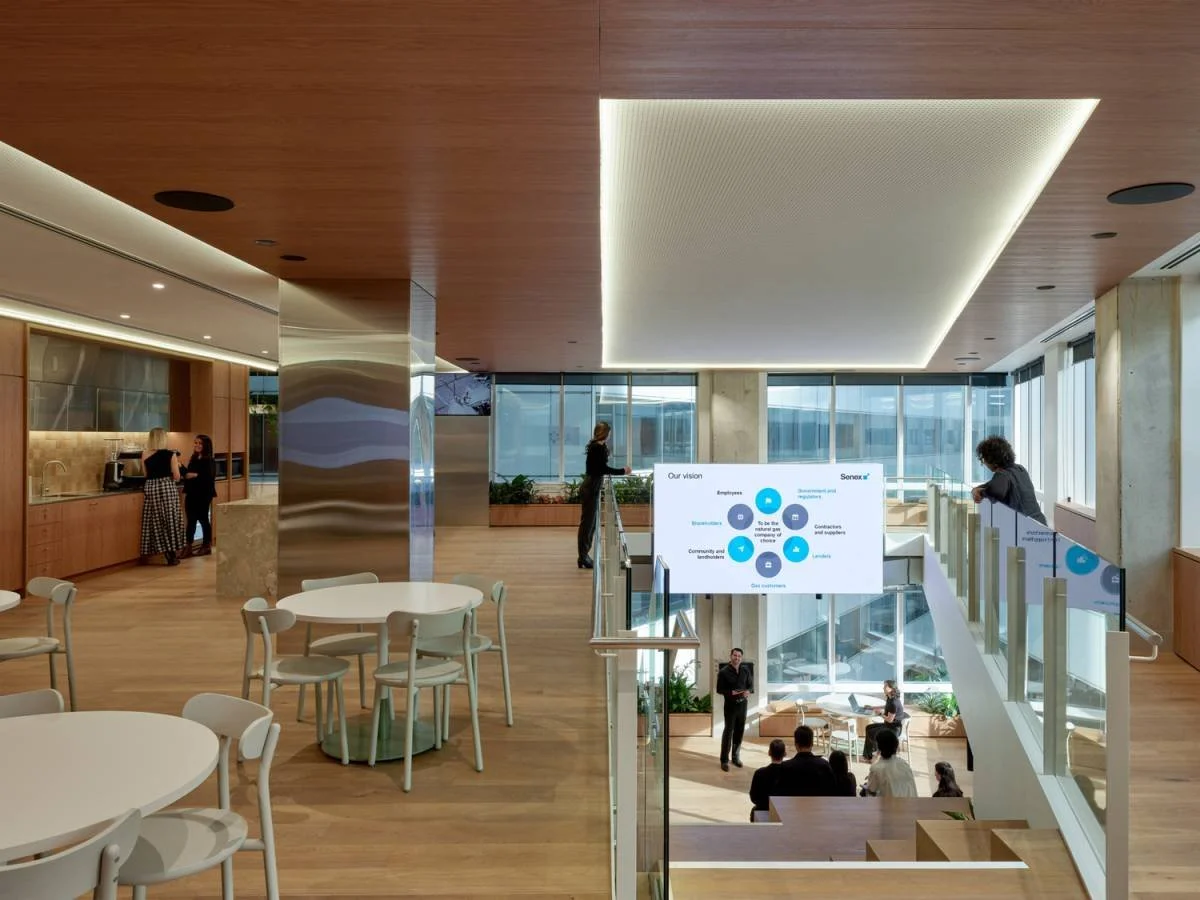
The heart of operations
At the centre of the workplace sits the Control Room. This is where time-sensitive decisions are made and where the pace of the business becomes visible. Surrounding project and engineering spaces are designed with clarity and efficiency in mind.
These areas remain visually and physically connected to the broader workplace, maintaining a sense of cohesion across functions.
Craft, detail, and movement
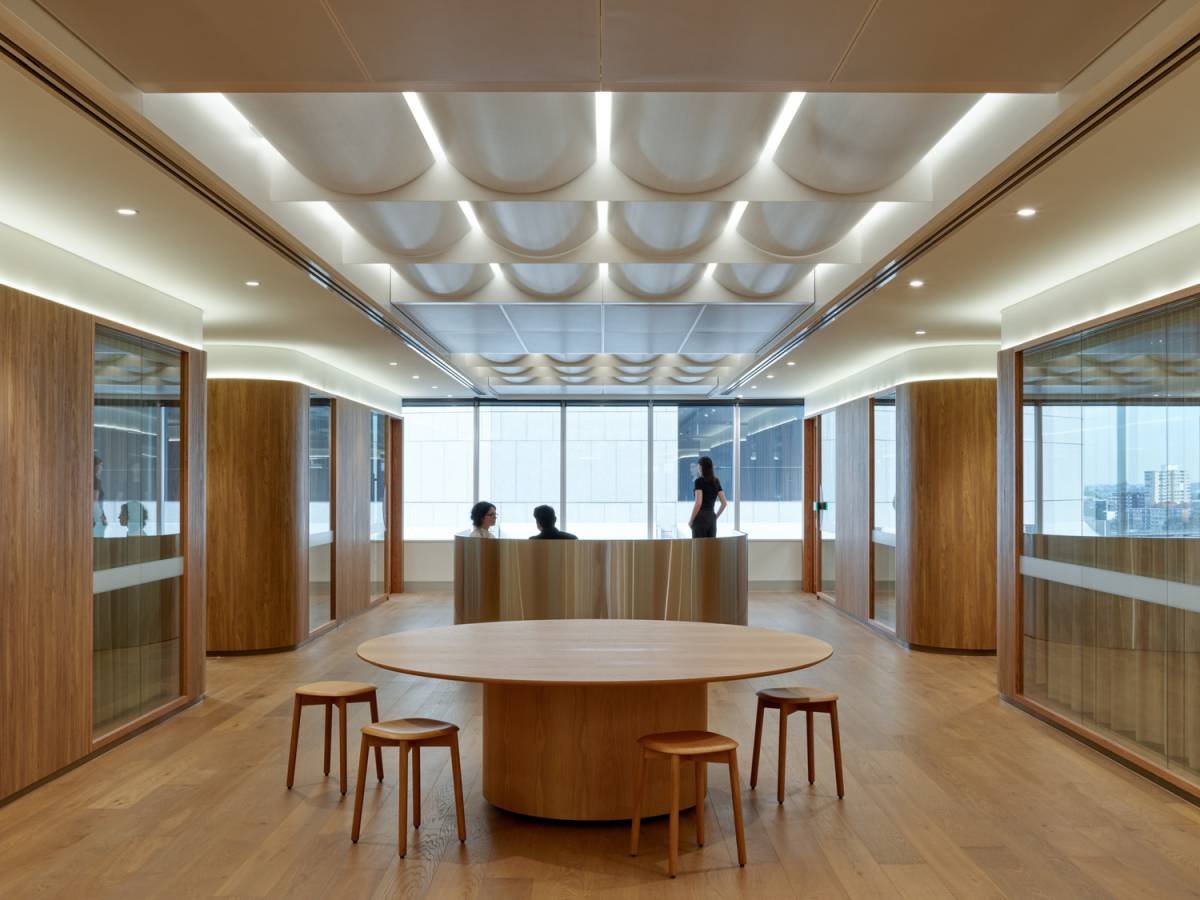
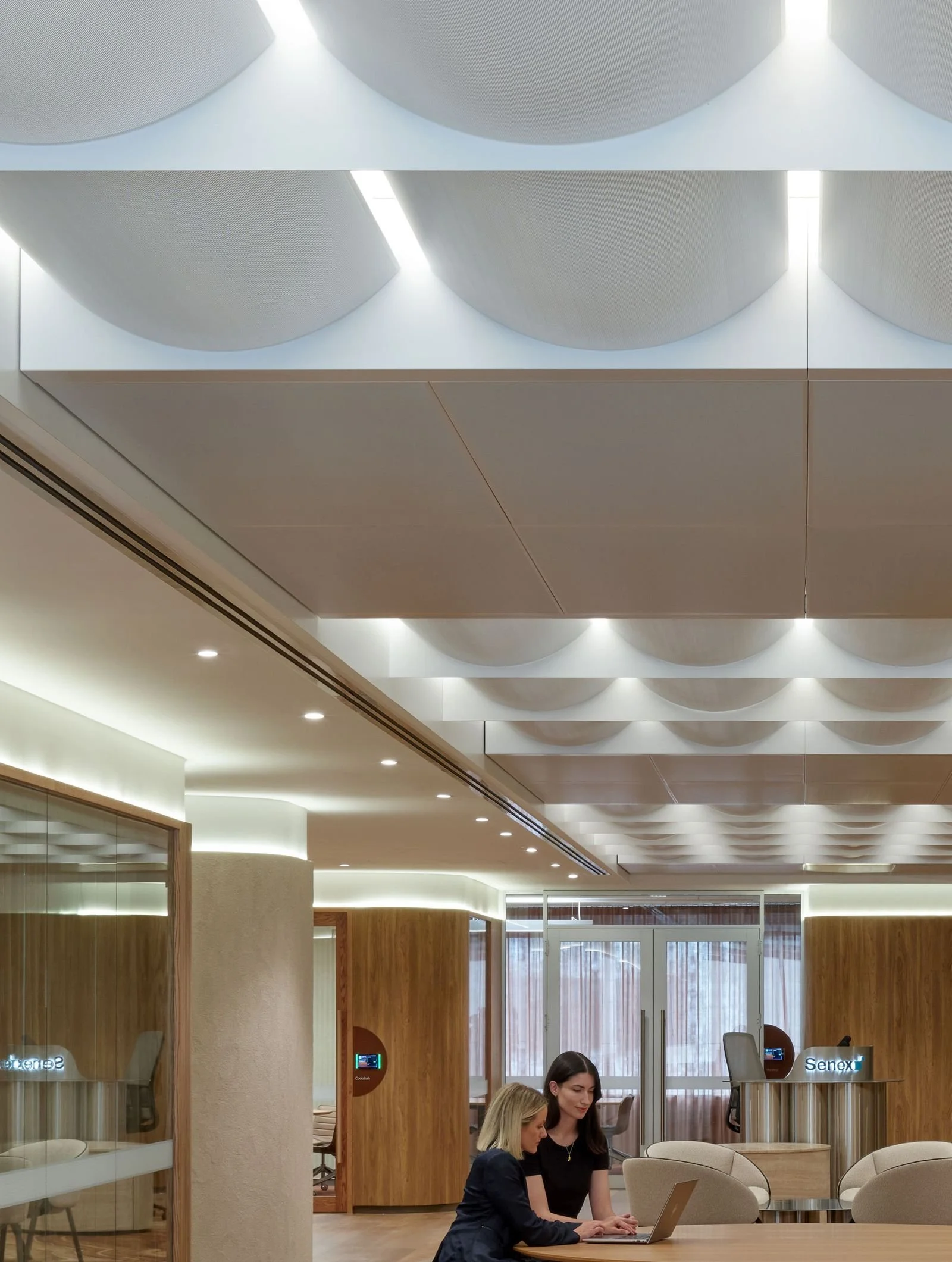
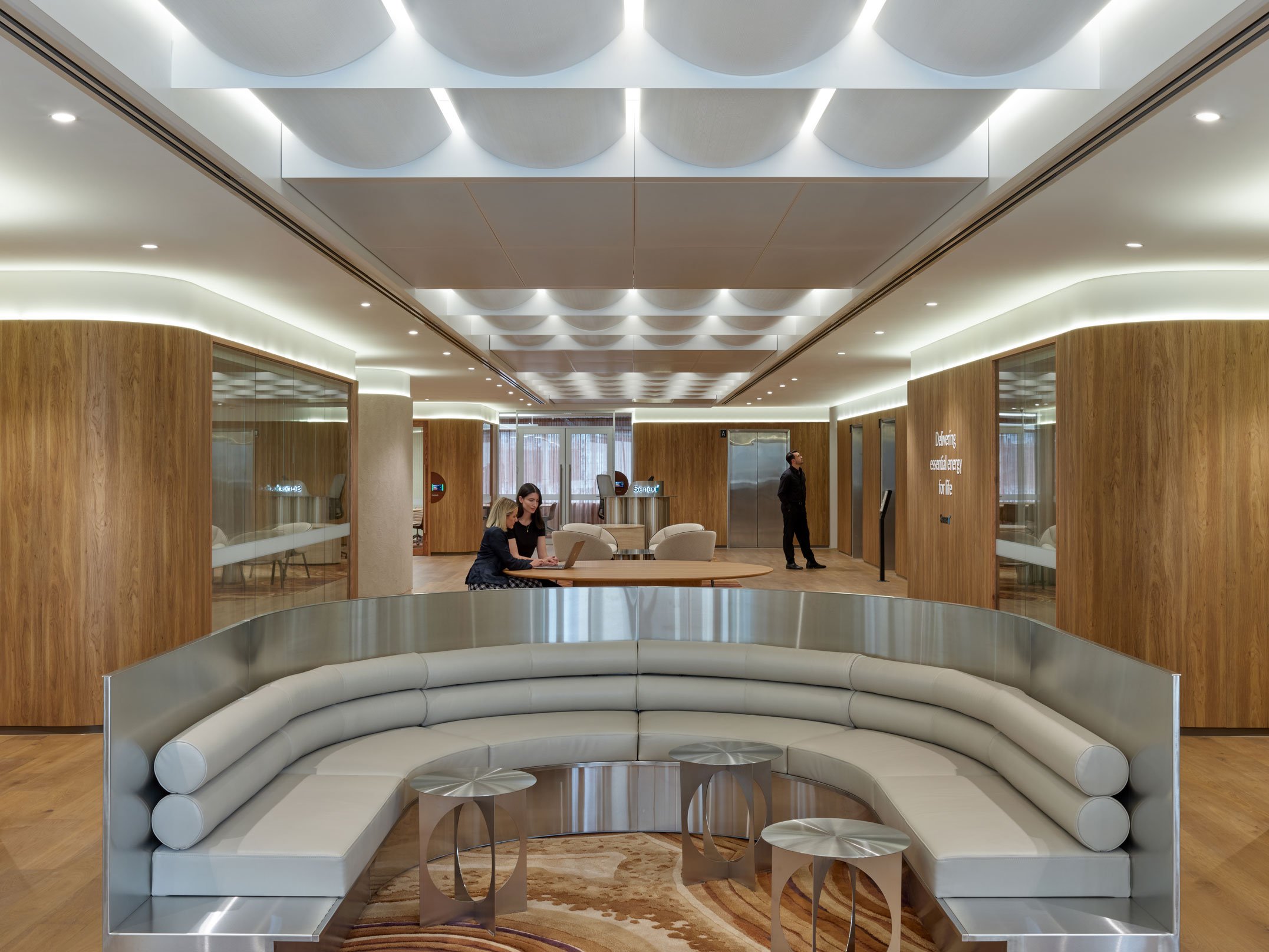
Above, the ceiling introduces a sculptural layer that carries movement across the interior. Developed in collaboration with MBS Architectural and SAS International, it brings a sense of rhythm to the space.
Curved raft ceilings sweep across each level, their forms echoing industrial flows while softening the overall environment. Light follows these curves, creating depth and subtle shifts throughout the day.
The execution required careful coordination, from bespoke bulkhead transitions to the integration of curved and flat ceiling planes. This level of detail brings consistency to the experience of moving through the space.
A workplace that evolves
Flexibility is embedded throughout the design. Meeting rooms, pods, and shared areas can adapt as the organisation grows and shifts.What stands out is how the workplace holds both technical precision and human experience. It supports the operational demands of an energy company while creating space for connection and everyday interaction.
It feels grounded, connected, and built for the way people work now.
Project Credits
Architecture: Architectus
Builder: SHAPE
Installer: Citibuild
Manufacturer: SAS International
Photography: Christopher Frederik Jones
