
Campbell House Private Office: Where Design Softens the Boundary Between Inside and Out
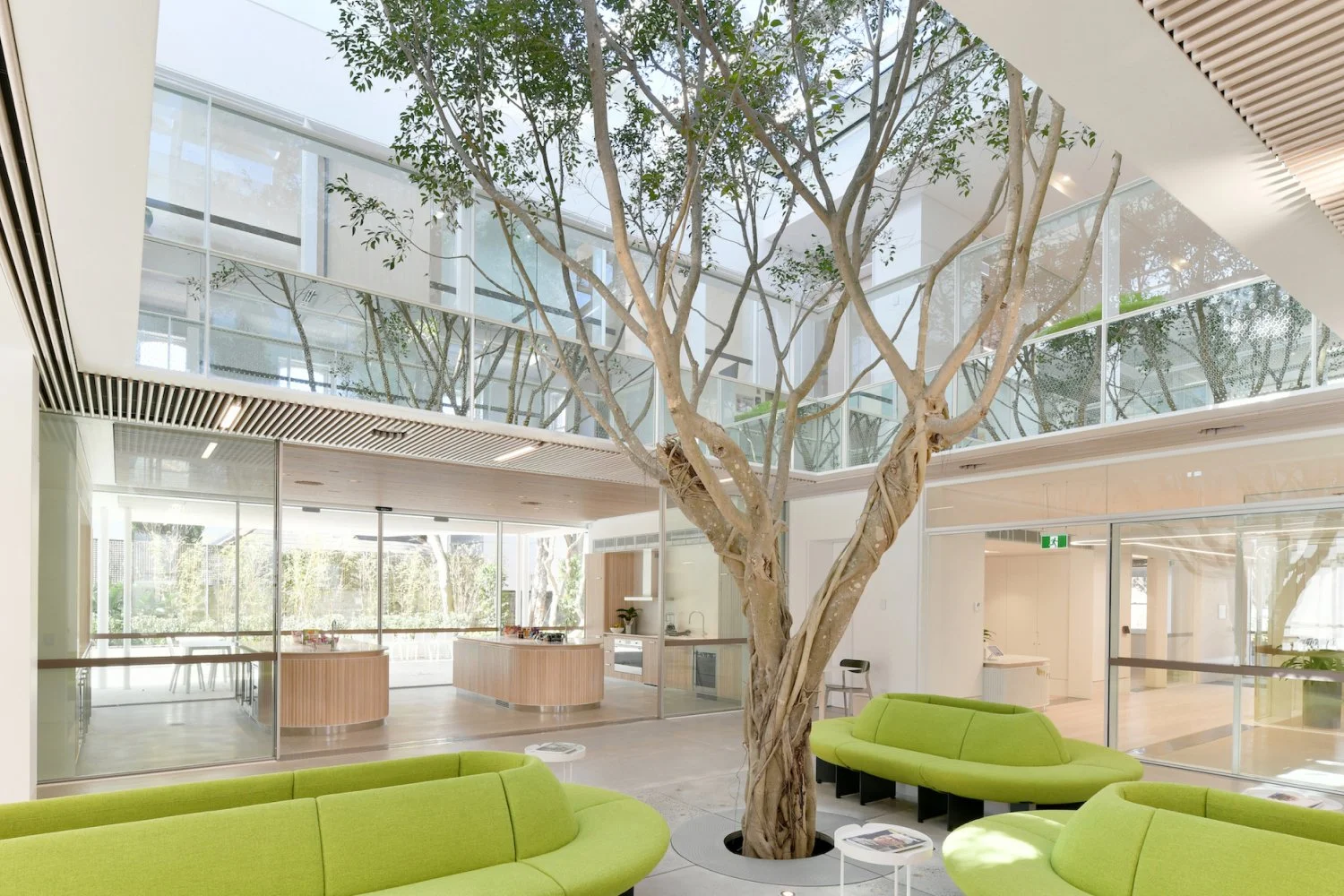
The first thing you notice at Campbell House is the tree.
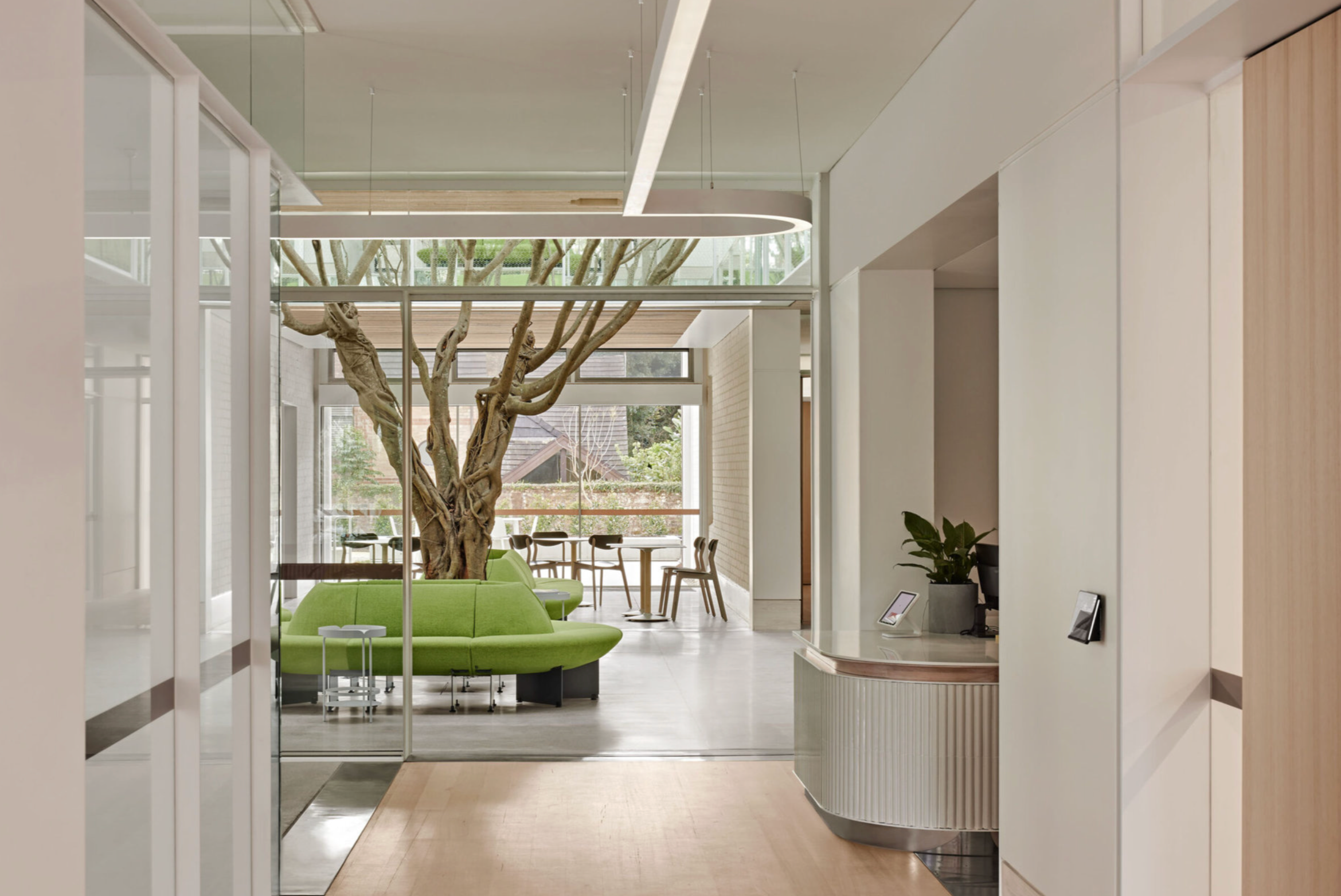
It rises through the centre of the building, reaching towards a skylit void above. Around it, soft green seating curves gently, glass balustrades reflect daylight, and people move quietly between floors. The atmosphere feels calm and grounded. In a dense part of Sydney, this private office carries a surprising sense of openness.
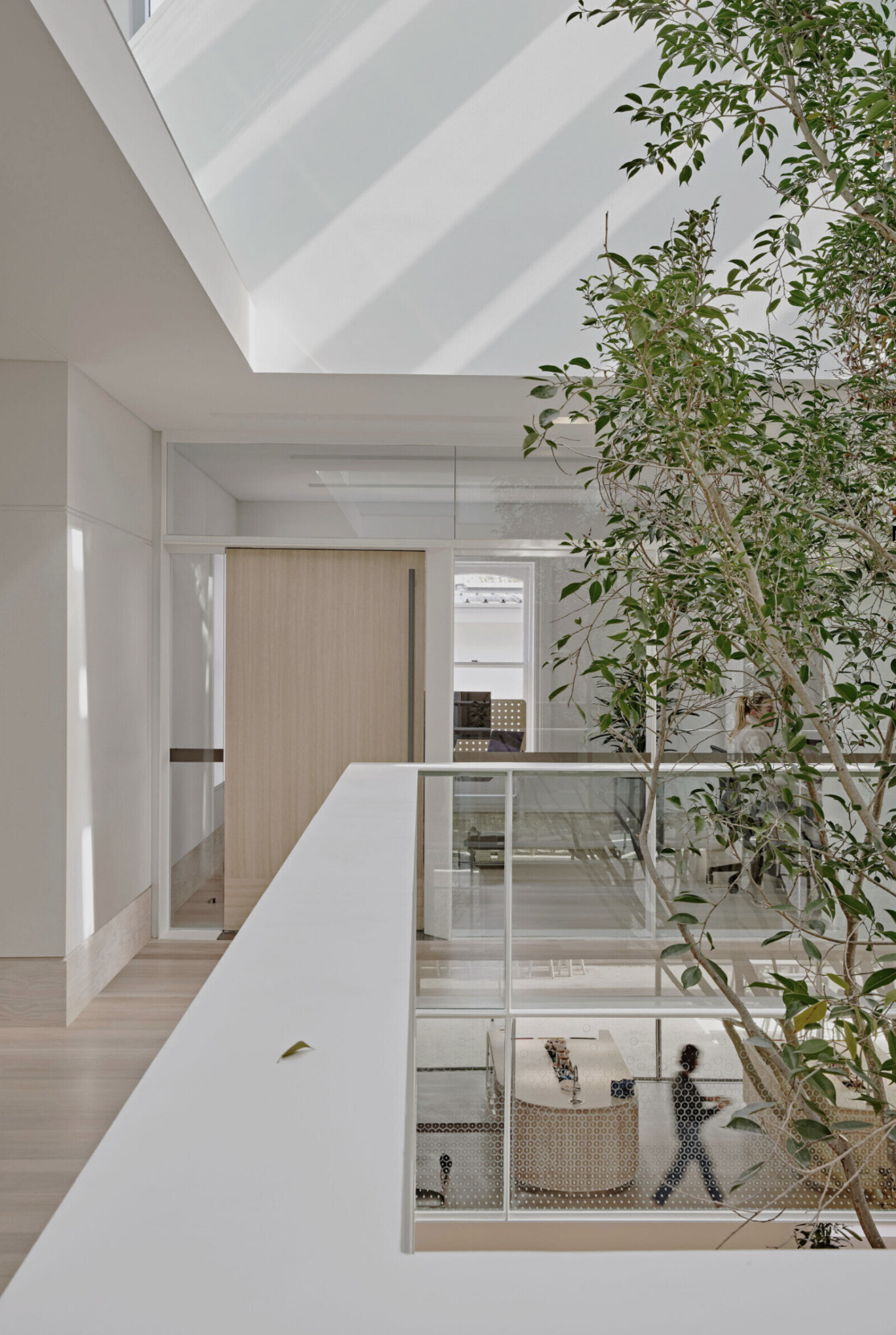
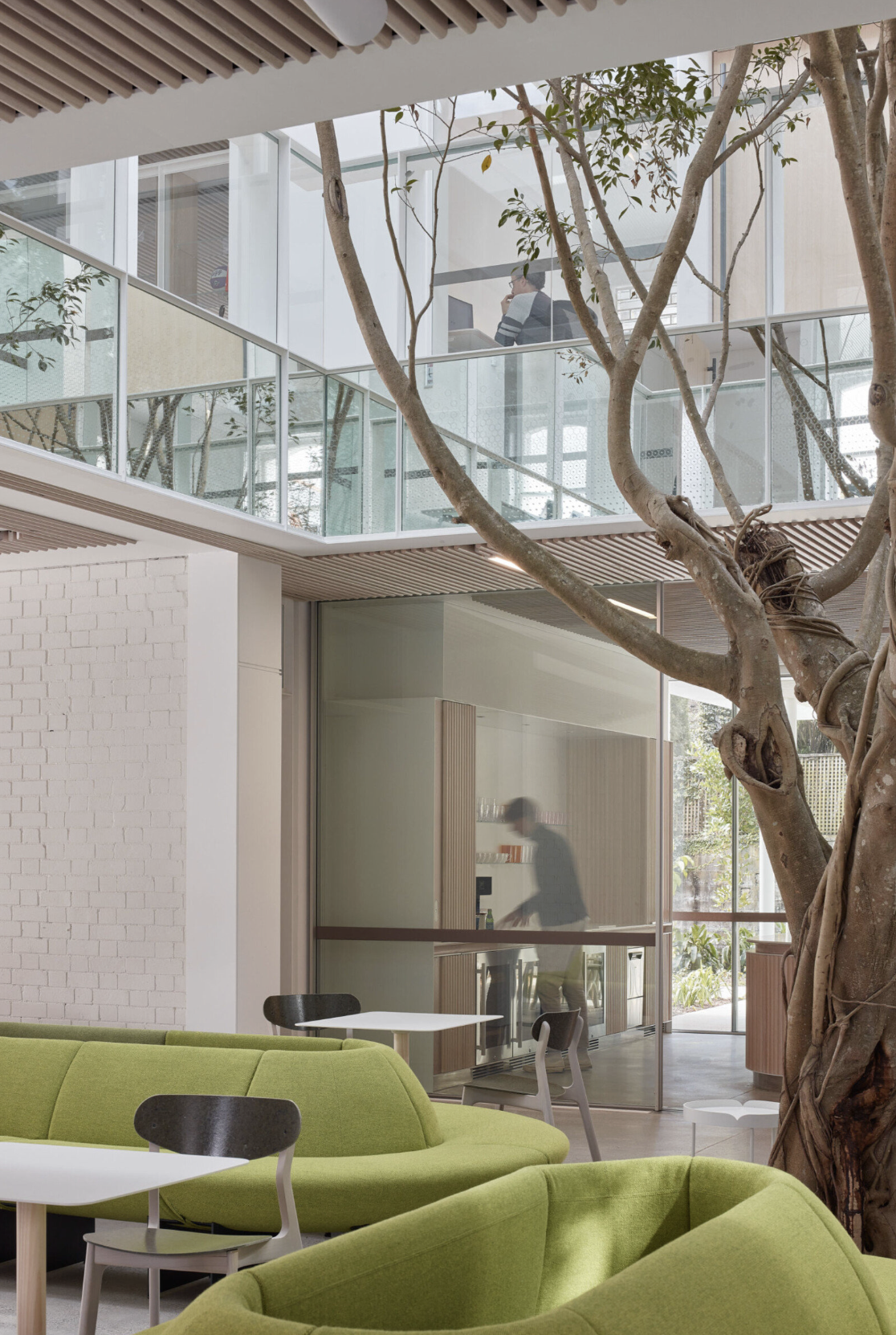
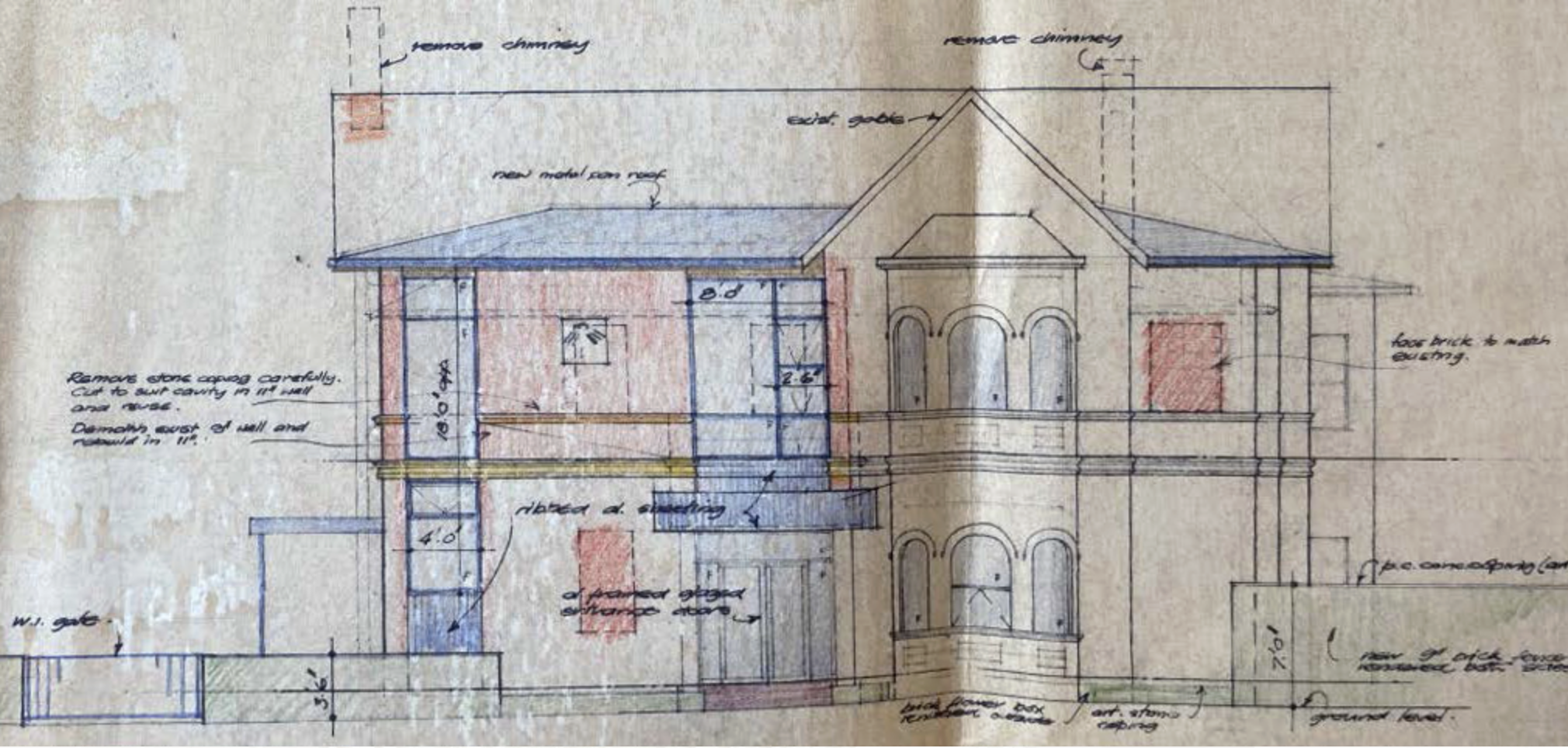
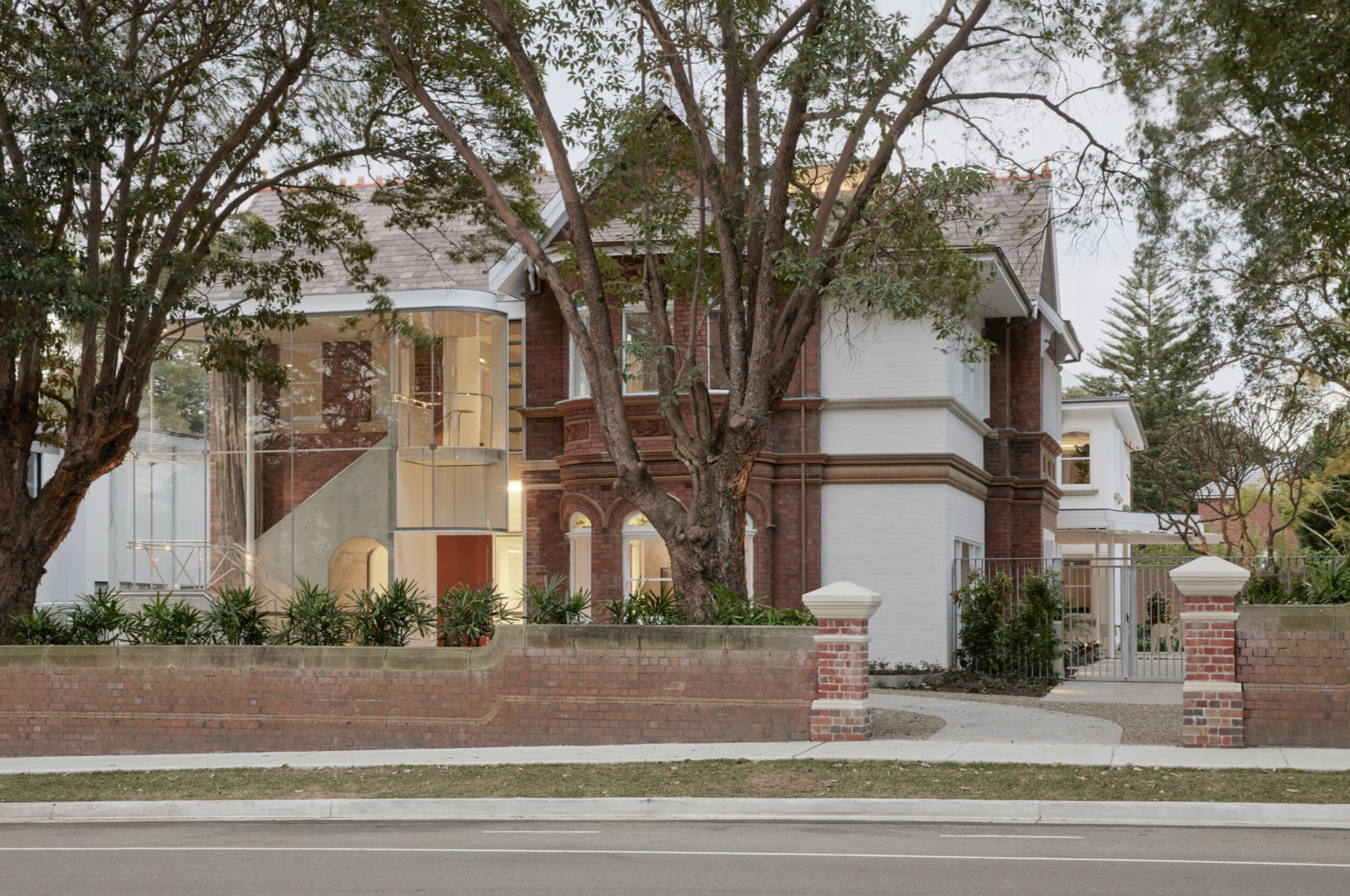
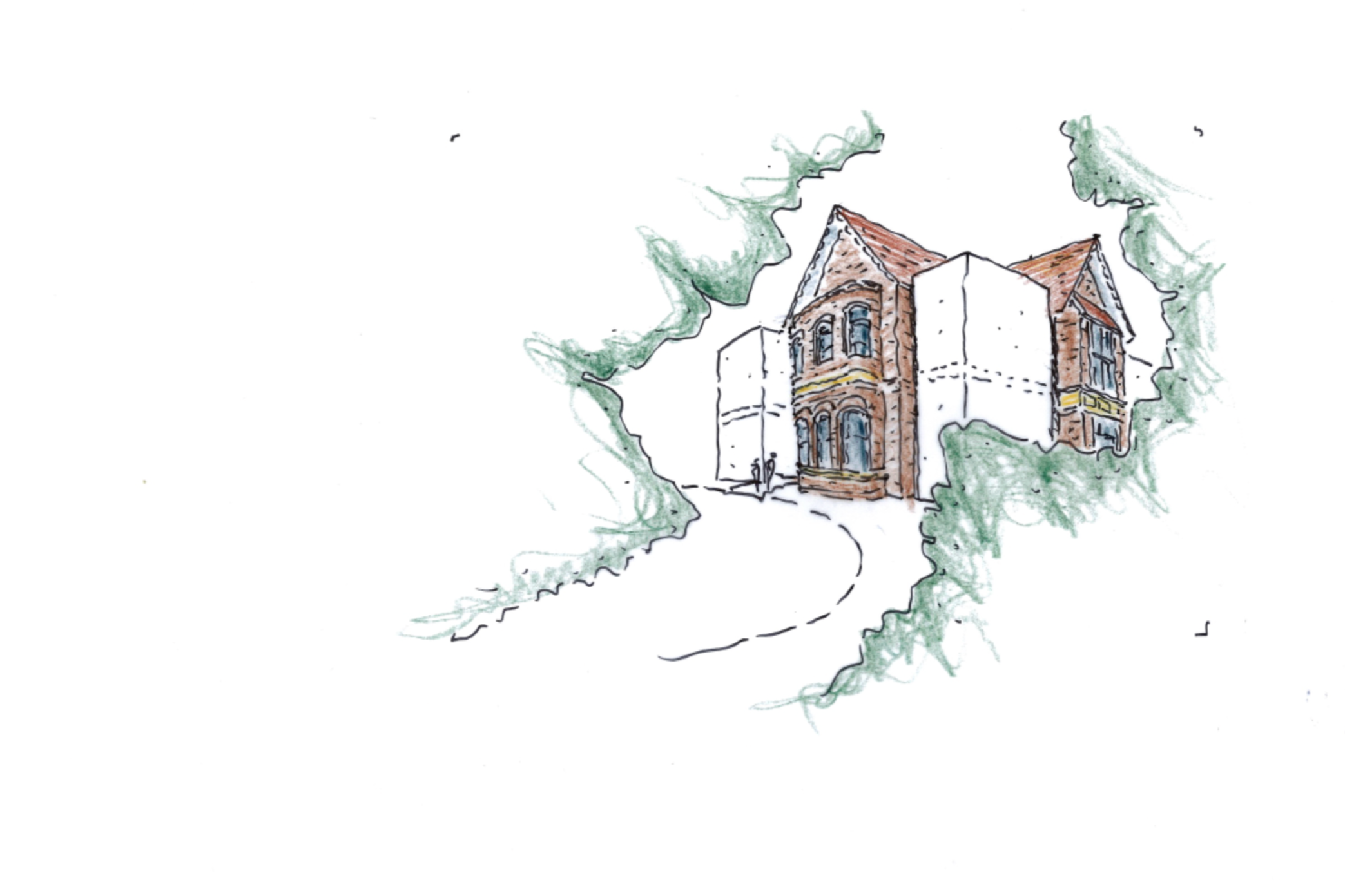
Campbell House started as a Federation era home. Today, it operates as a contemporary private commercial office in the heart of Sydney. The transformation, led by Tonkin Zulaikha Greer and delivered by Buildcorp, feels thoughtful at every scale. Heritage, sustainability and daily function sit comfortably together.
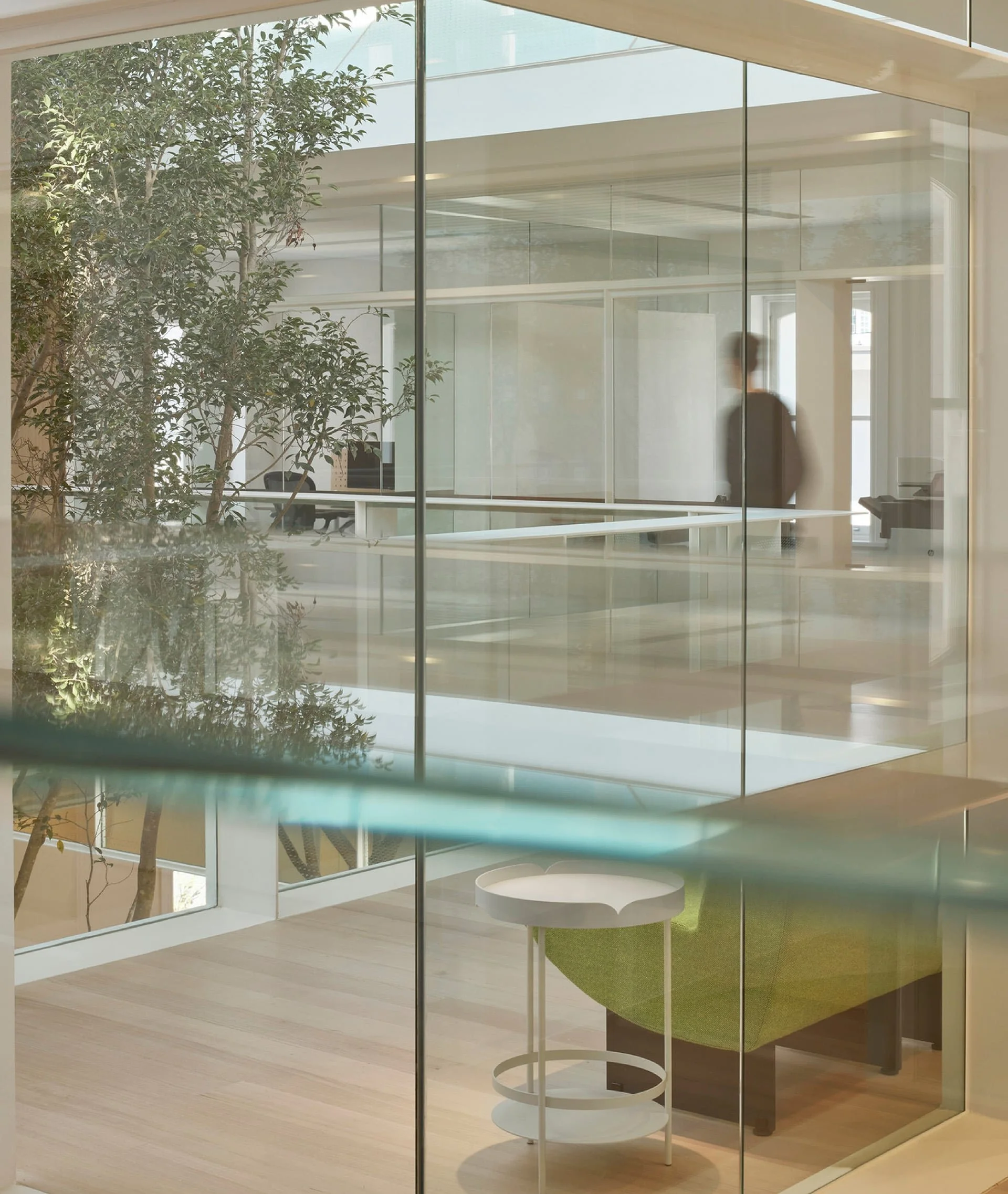
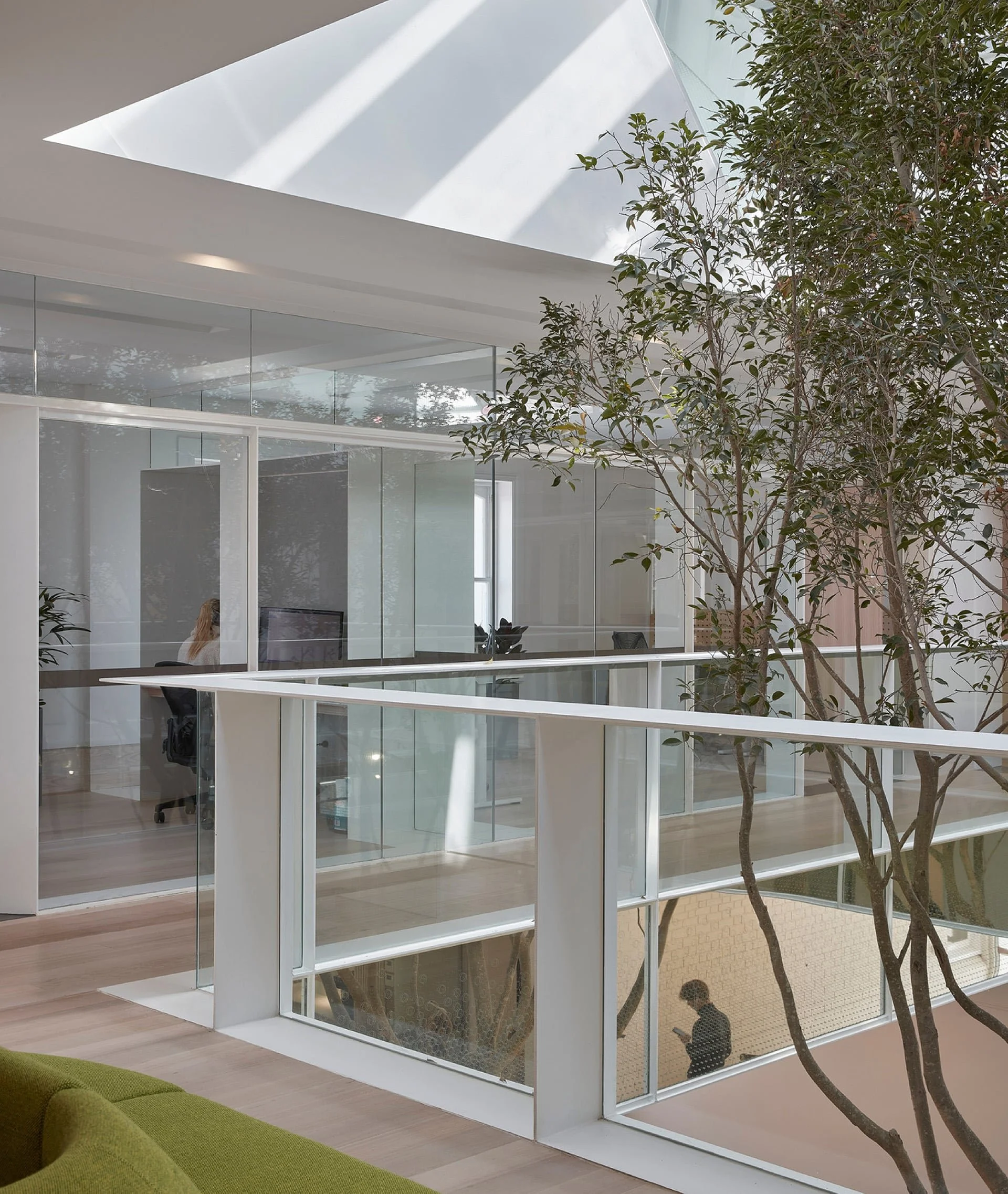
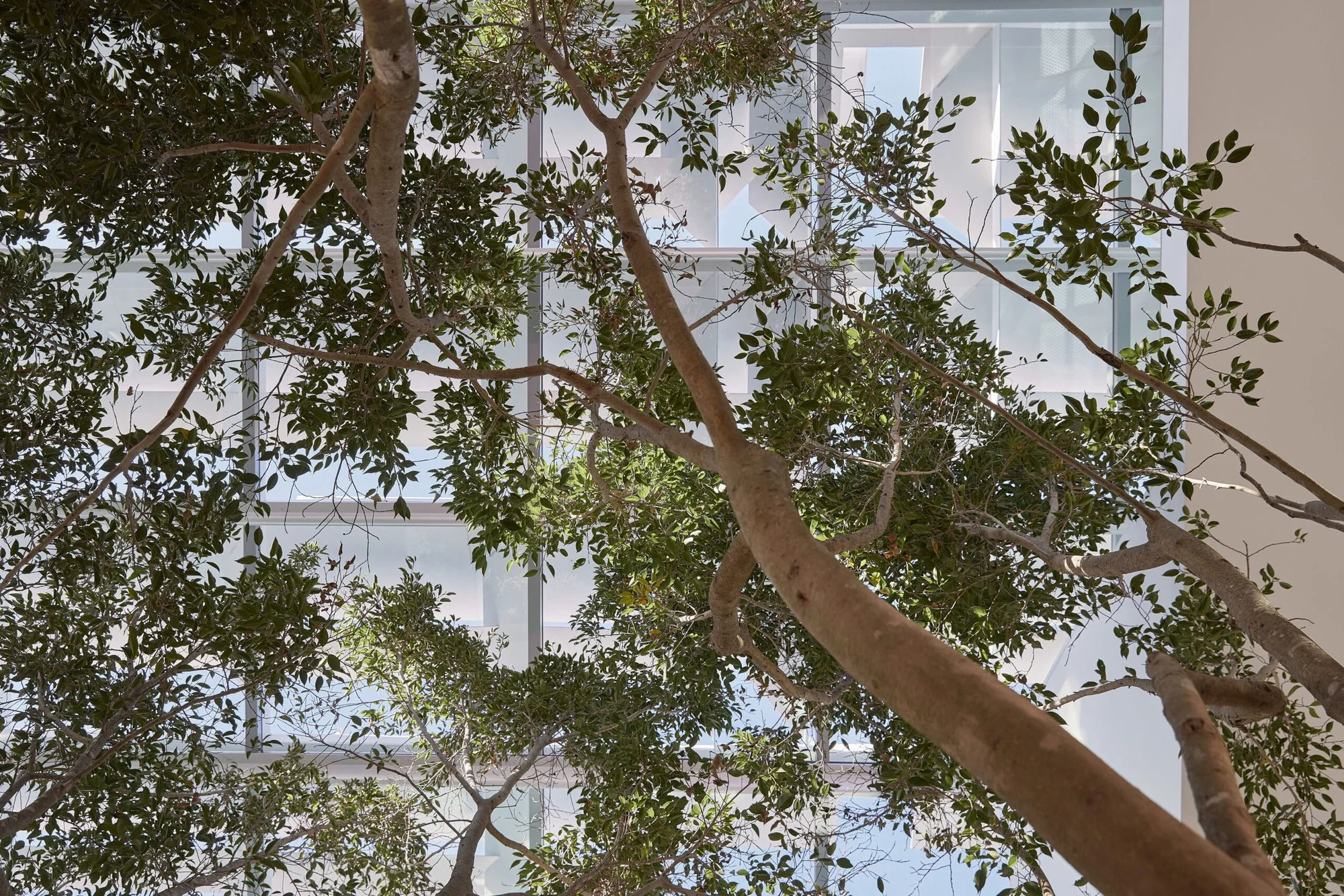
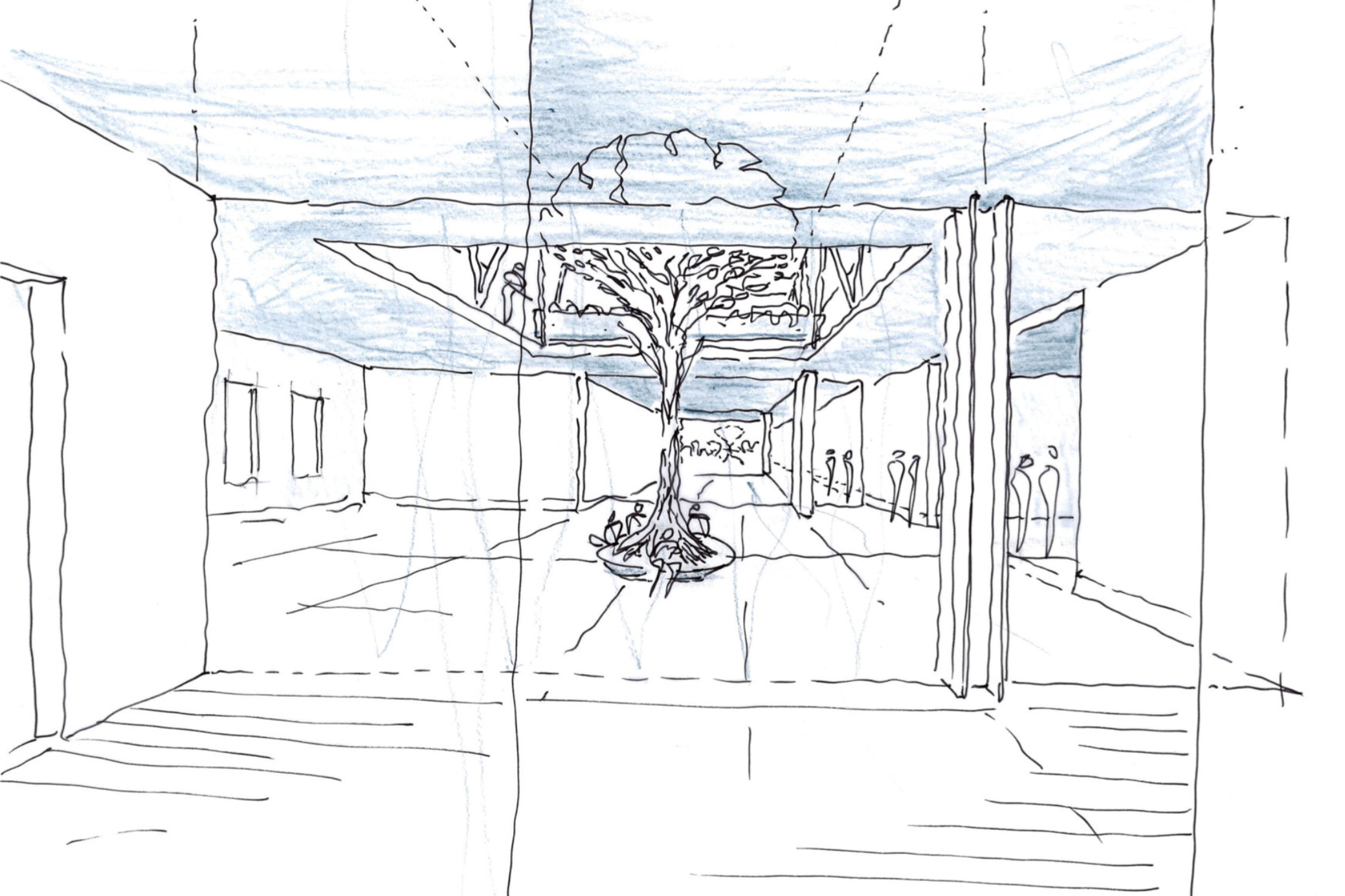
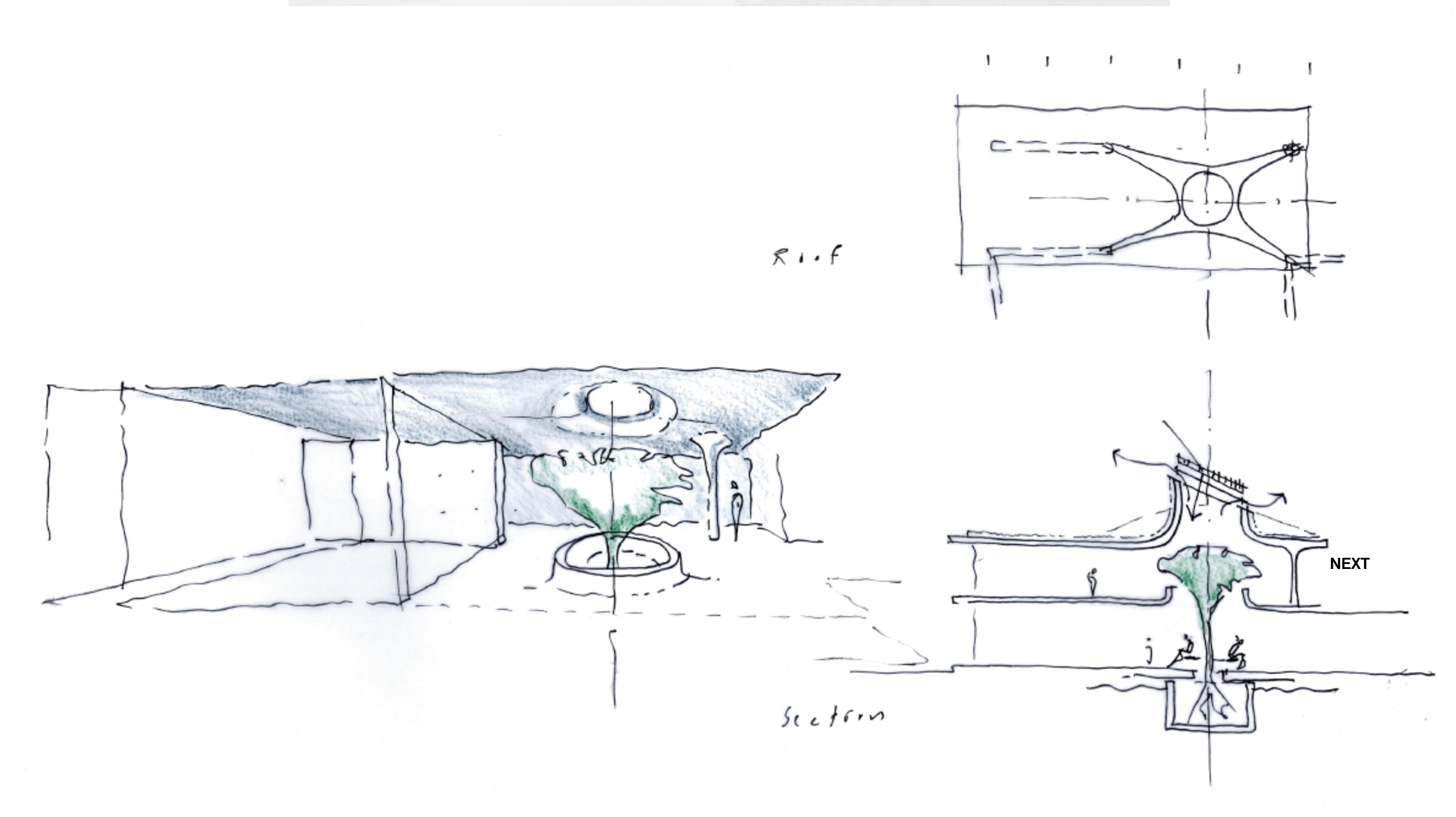
At the heart of the building, an over 35 year old, 8 metre high Weeping Fig tree anchors the central courtyard beneath a custom skylight. Selected two years prior to construction, the tree was carefully trained through a bonsai process to suit its new setting. Framed by the landscape design of Dangar Barin Smith, it draws daylight deep into the plan and introduces a living presence into the daily workplace experience.
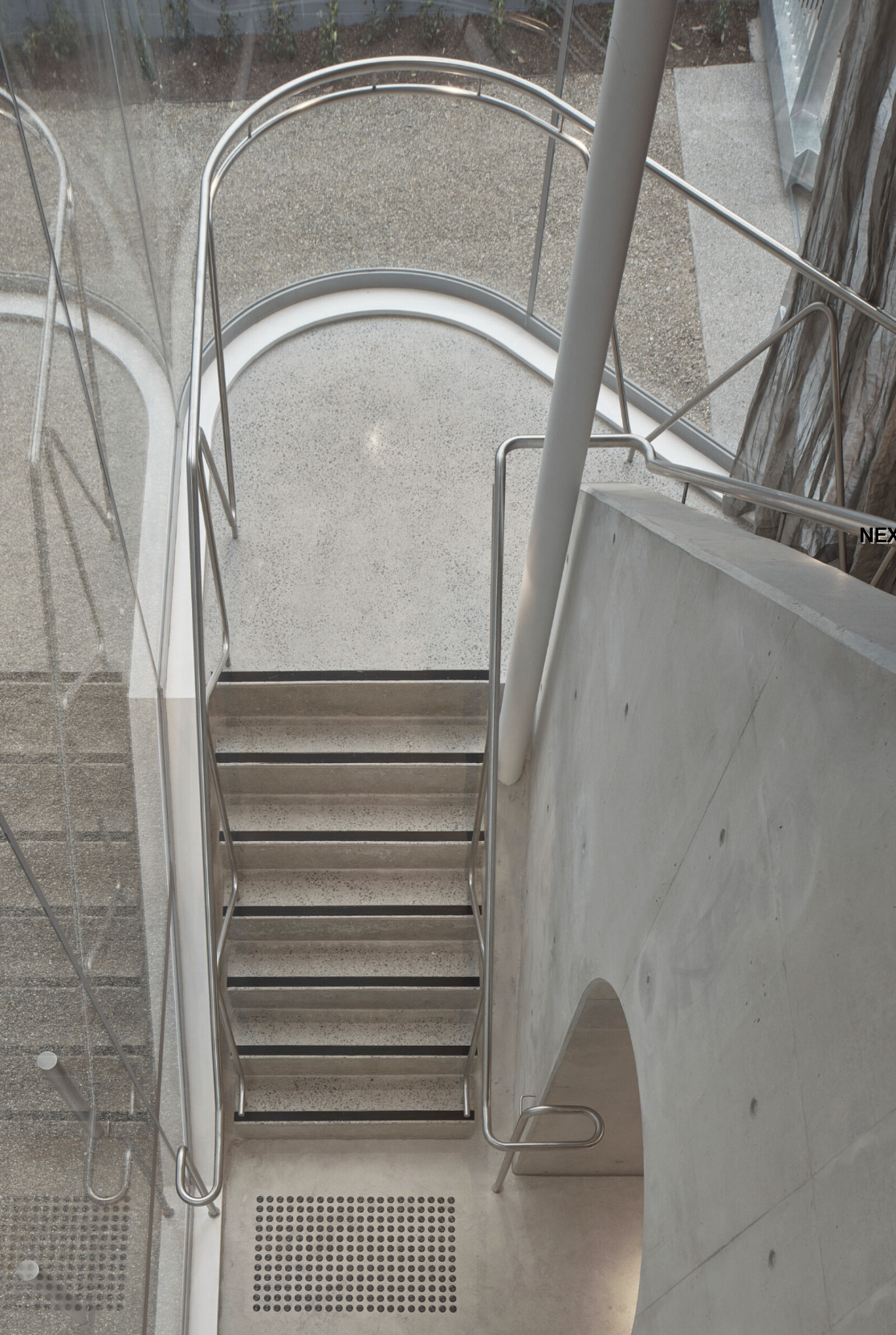
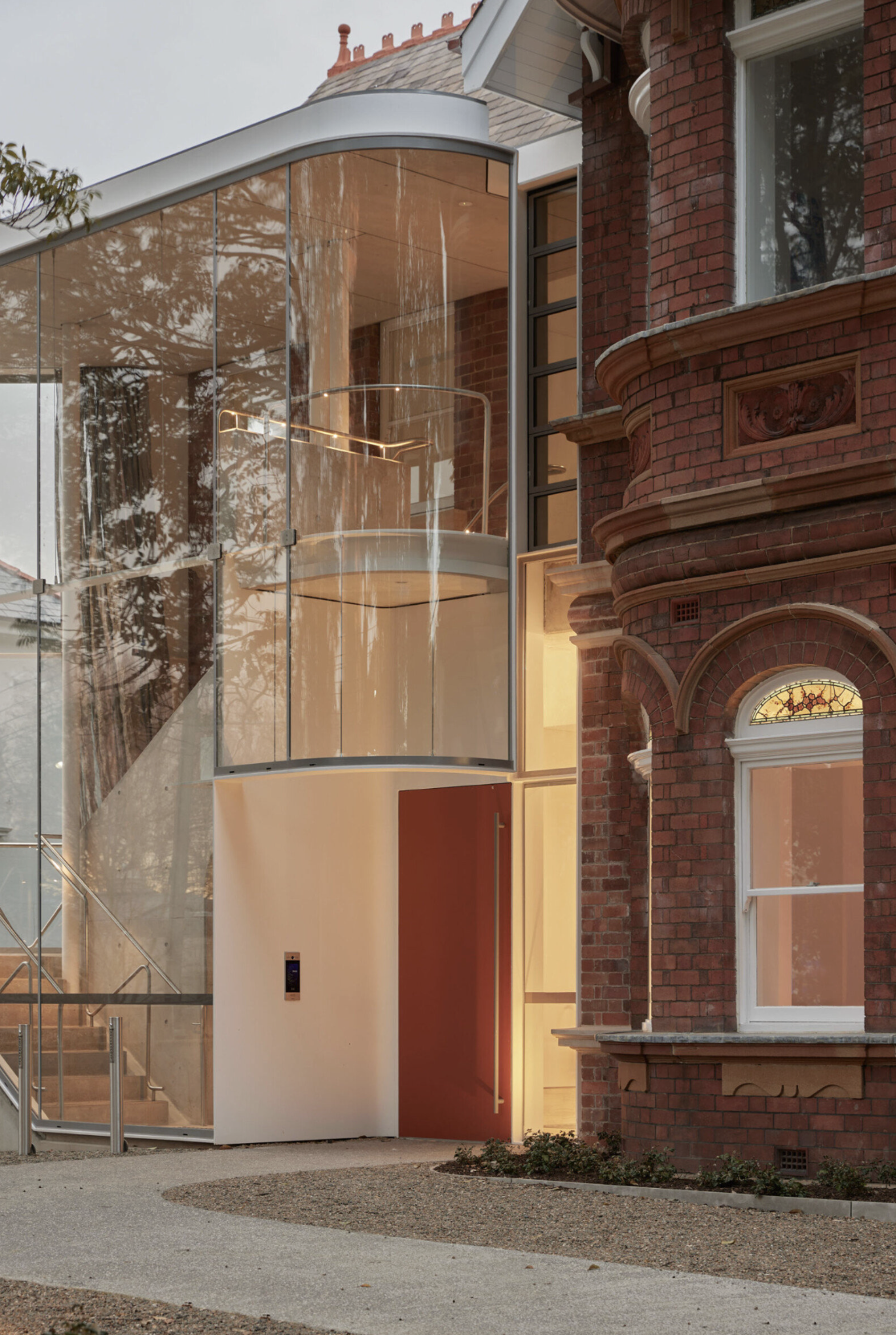
A master stonemason was engaged to carefully replace and match the existing sandstone sills across the entire façade, while the original brickwork was meticulously repointed to restore its integrity. These craft based interventions reinforce the building’s historic character and ensure its longevity.
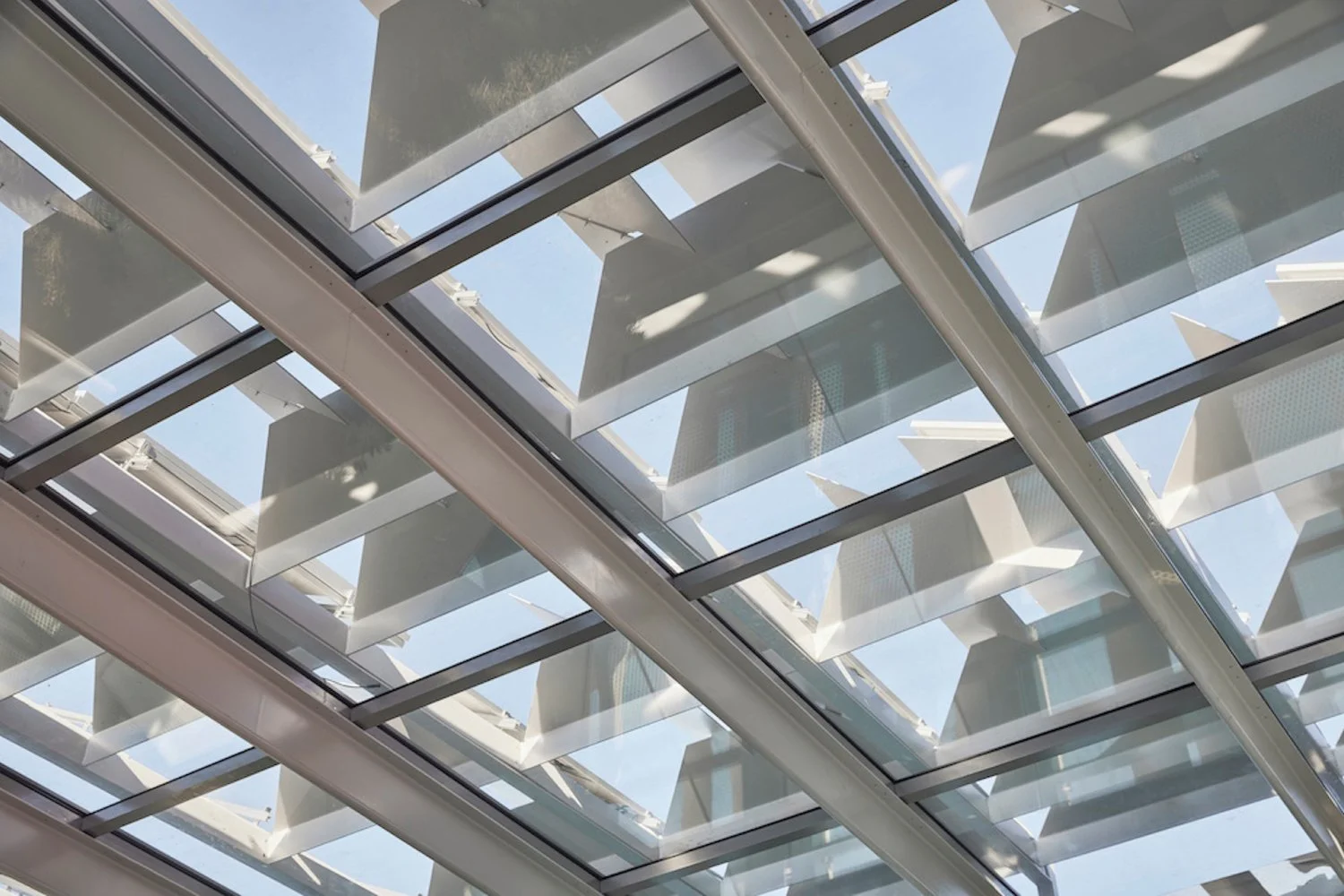
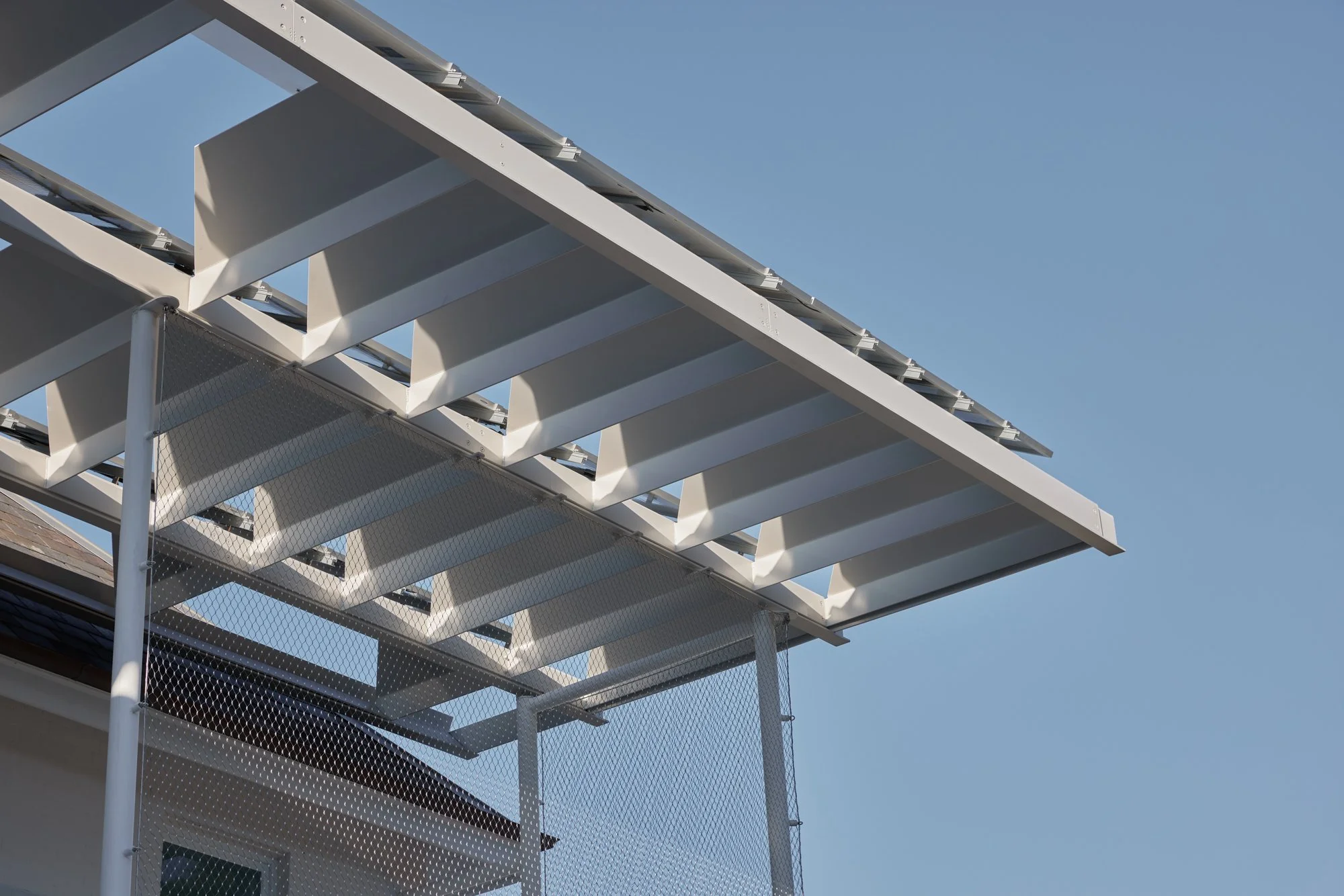
Alongside this restoration work, new architectural elements were introduced to support long term environmental performance. A bespoke aluminium and stainless steel structure was engineered to carry 65 solar panels, generating approximately 80 percent of the building’s energy needs and powering an integrated Tesla battery system. The project is currently tracking toward a 5 Star NABERS rating. In total, 91 solar panels produce around 33kWh of energy. Supported by battery storage, the system allows the building to operate independently for much of the year.
Material selections further strengthen the dialogue between past and present. Working closely with the existing fabric, Buildcorp reduced material waste by carefully salvaging and reusing original bricks, hardwood timber floors and structural frames from the home. Reclaimed slate from St Mary’s Cathedral was also sourced to restore the roof, reinforcing a commitment to craftsmanship, resourcefulness and continuity. Together, these layers celebrate the late nineteenth century Federation house while supporting its next chapter.
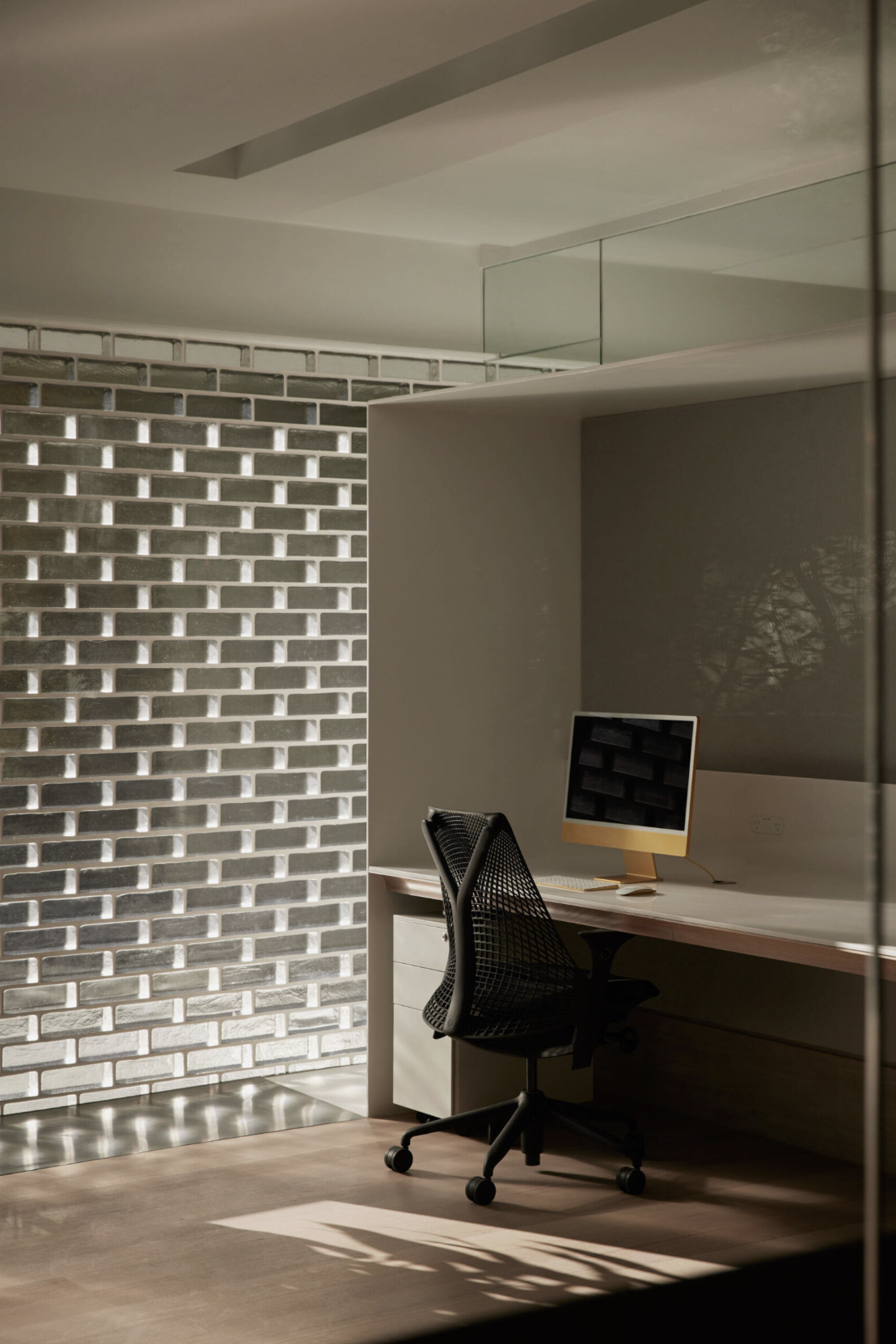
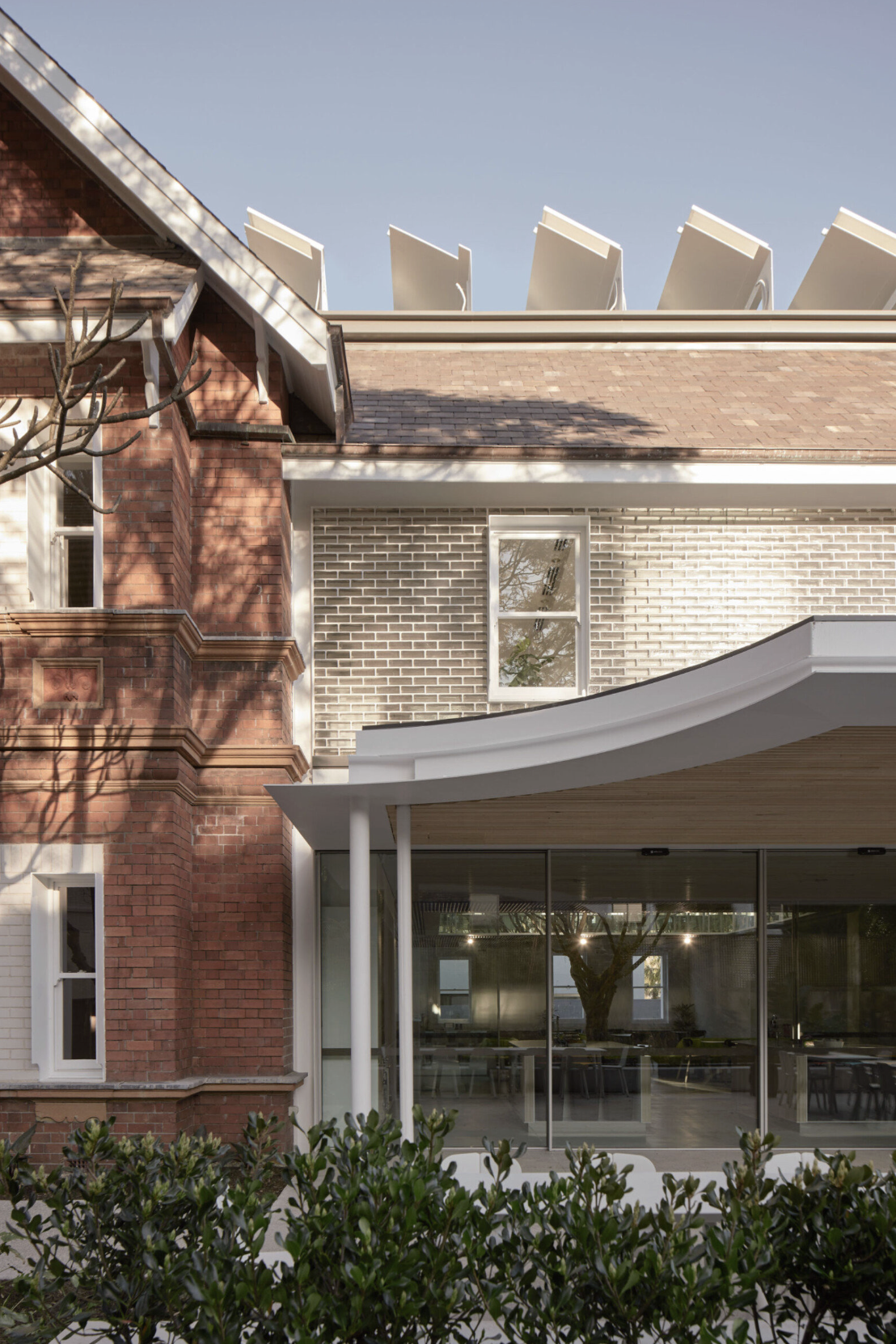
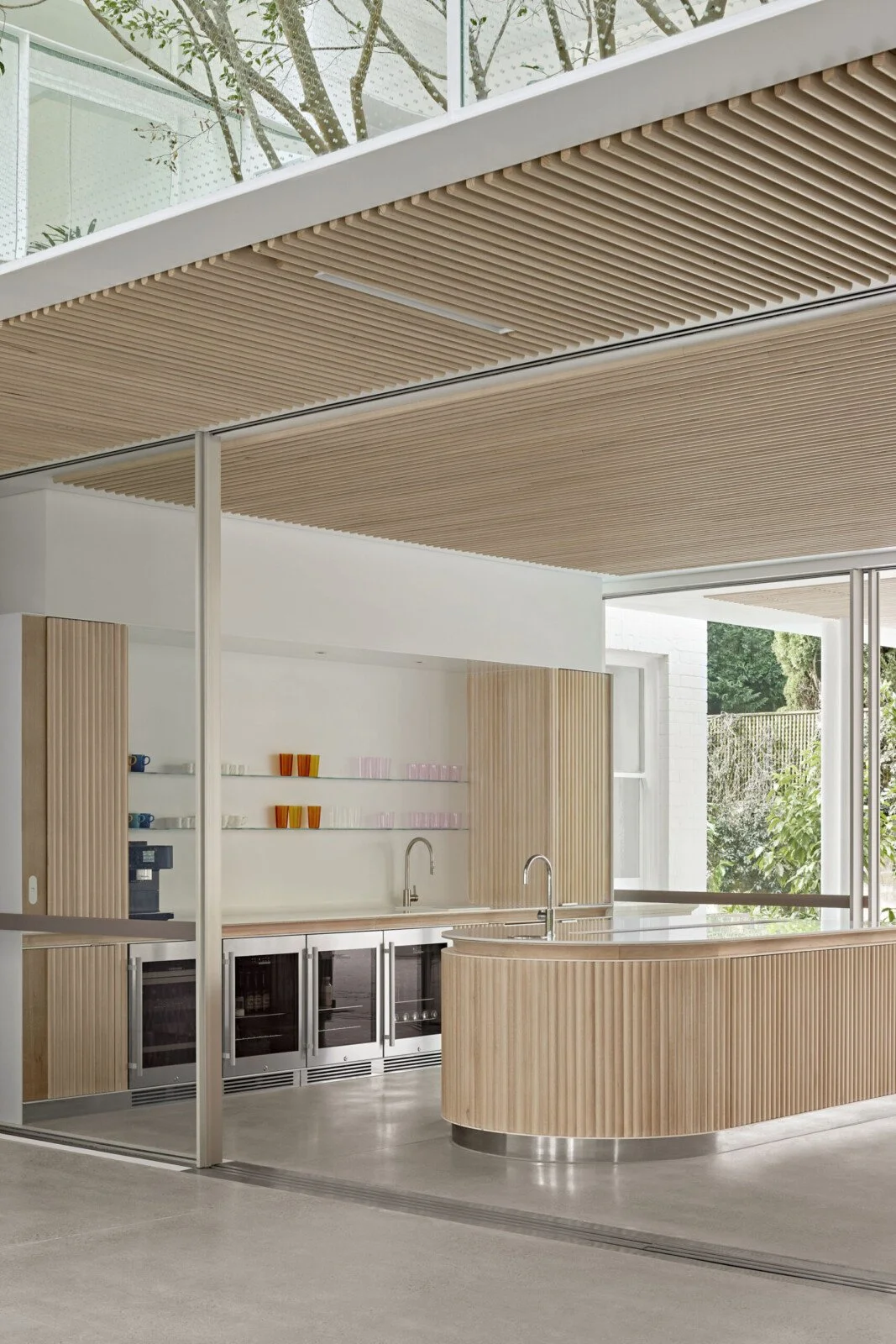
Spending time in this space, you start to notice how architecture gently shapes your mood. The tree rising through the courtyard, the soft daylight shifting overhead, and the texture of brick and timber underfoot create a calm, grounded atmosphere. There is a sense of steadiness here. Work unfolds within surroundings that feel intentional, measured and built to last.
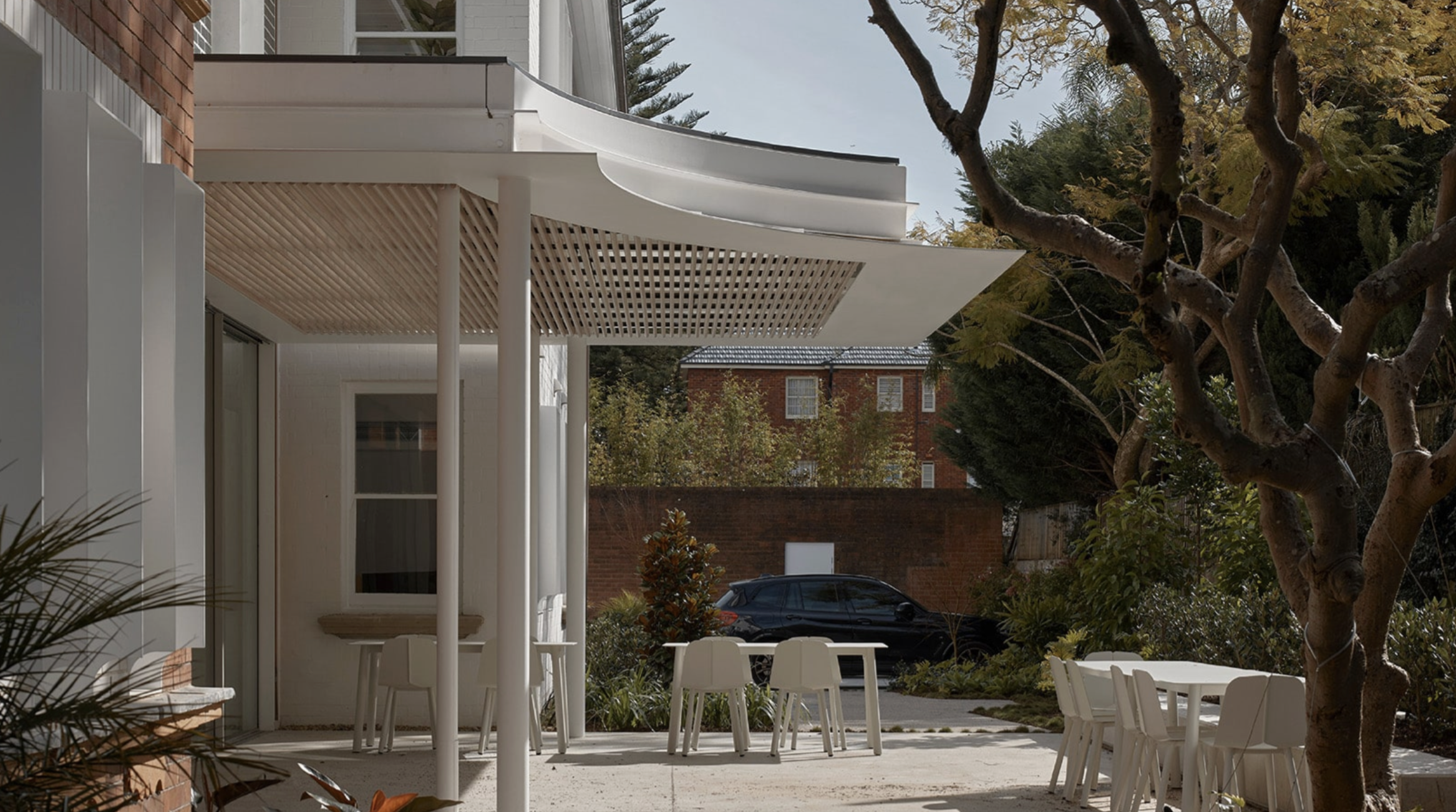
Campbell House speaks to a growing shift in workplace design, one that places value on light, landscape and authenticity. It shows how heritage buildings can evolve with care, continuing to support the city while offering moments of depth and quiet within a dense urban setting。
Project Credits:
Completion: 2022
Architecture: Tonkin Zulaikha Greer
Builder: Buildcorp
Landscape: Dangar Barin Smith
Photography: Cieran Murphy, Buildcorp