The Mayfair Building - Reasons To Commute Into The City
That tower is 171 Collins - formerly the historic Mayfair building, which has evolved through many incarnations from an early 1900s concert hall, to the Metro Theatre, then the Mayfair Theatre which closed in 1982, before finally transforming into a premium commercial office tower in 2013. It's one of a growing number of Melbourne heritage buildings finding new life as workplaces, alongside Invicta House on Flinders Lane.
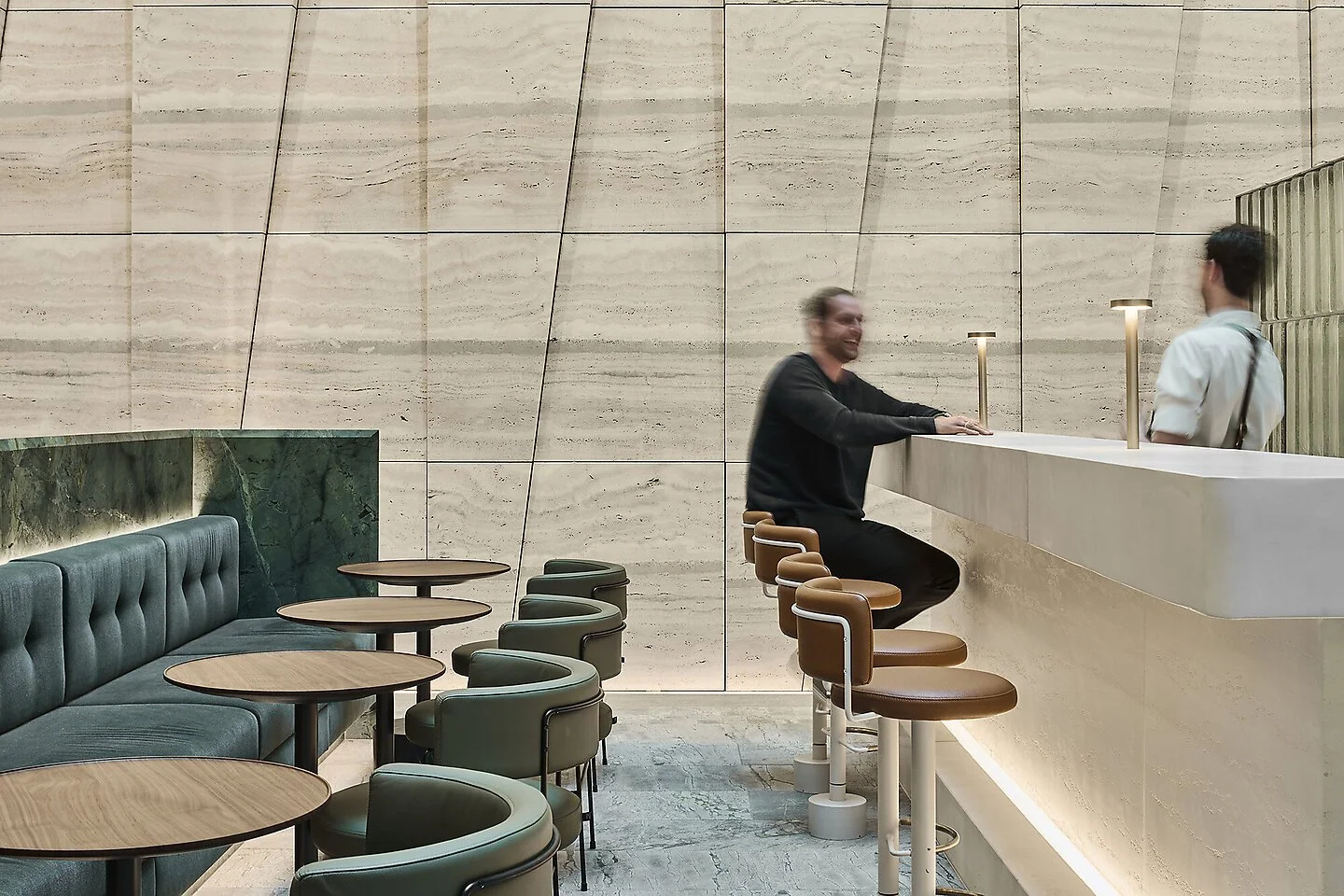
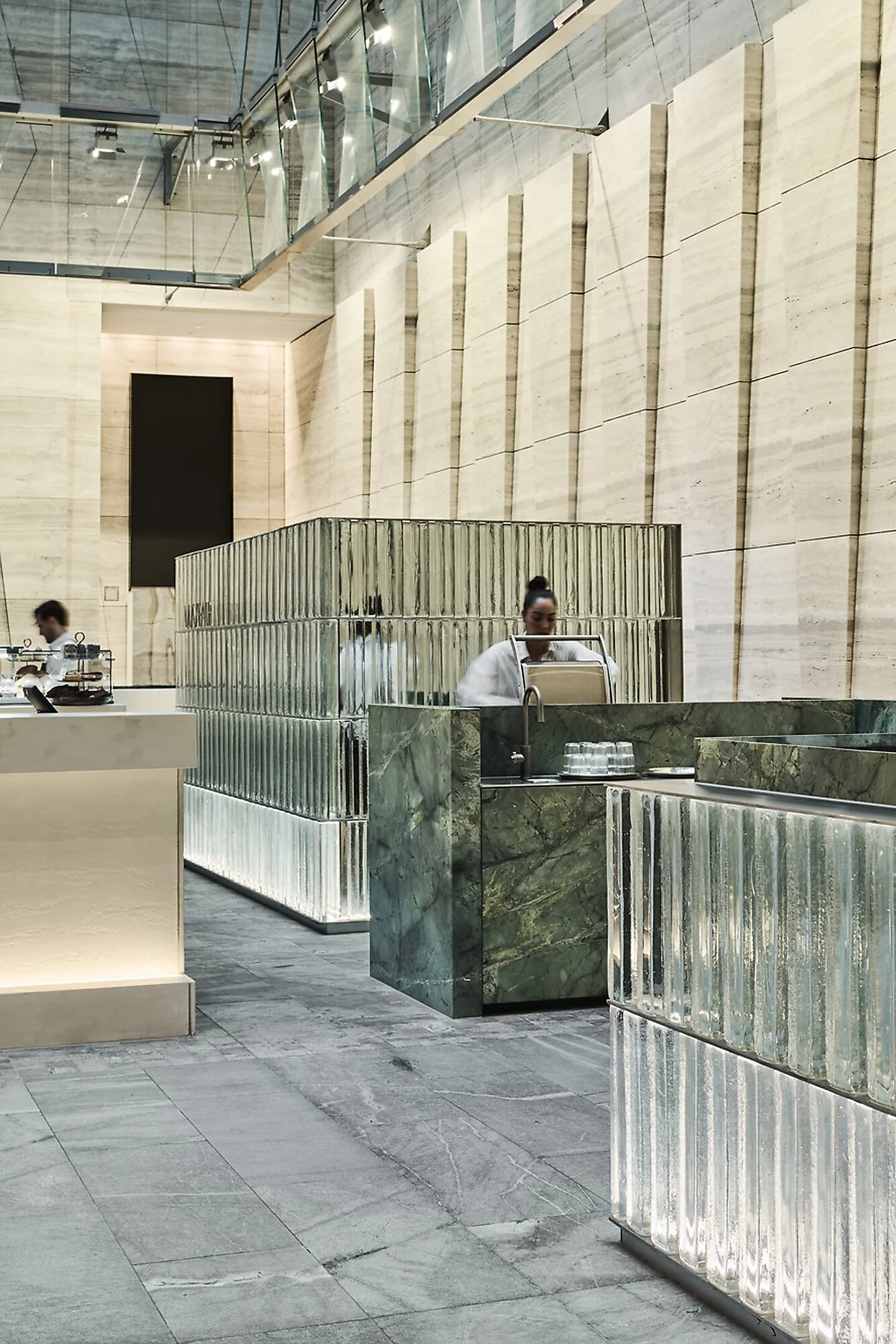
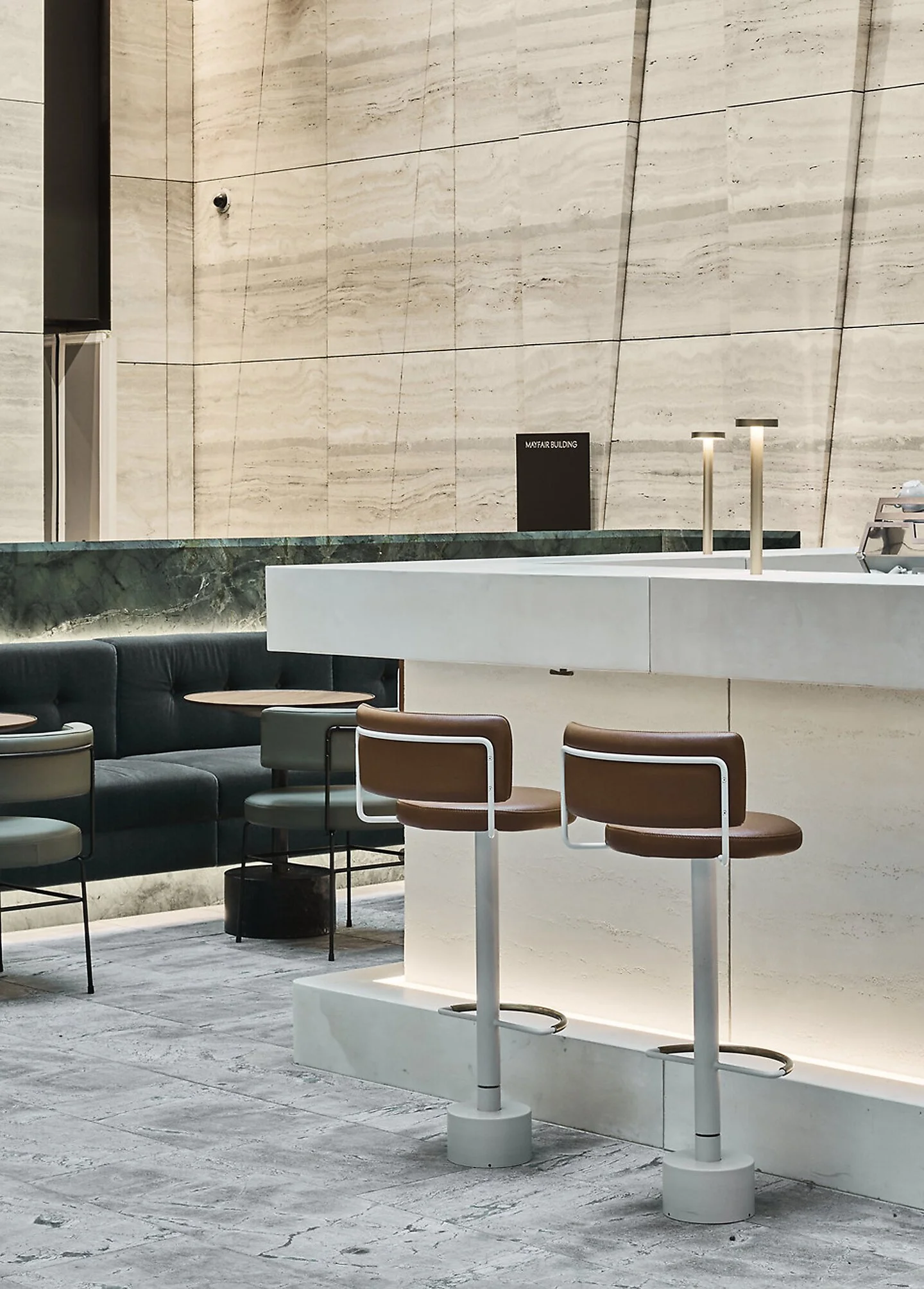
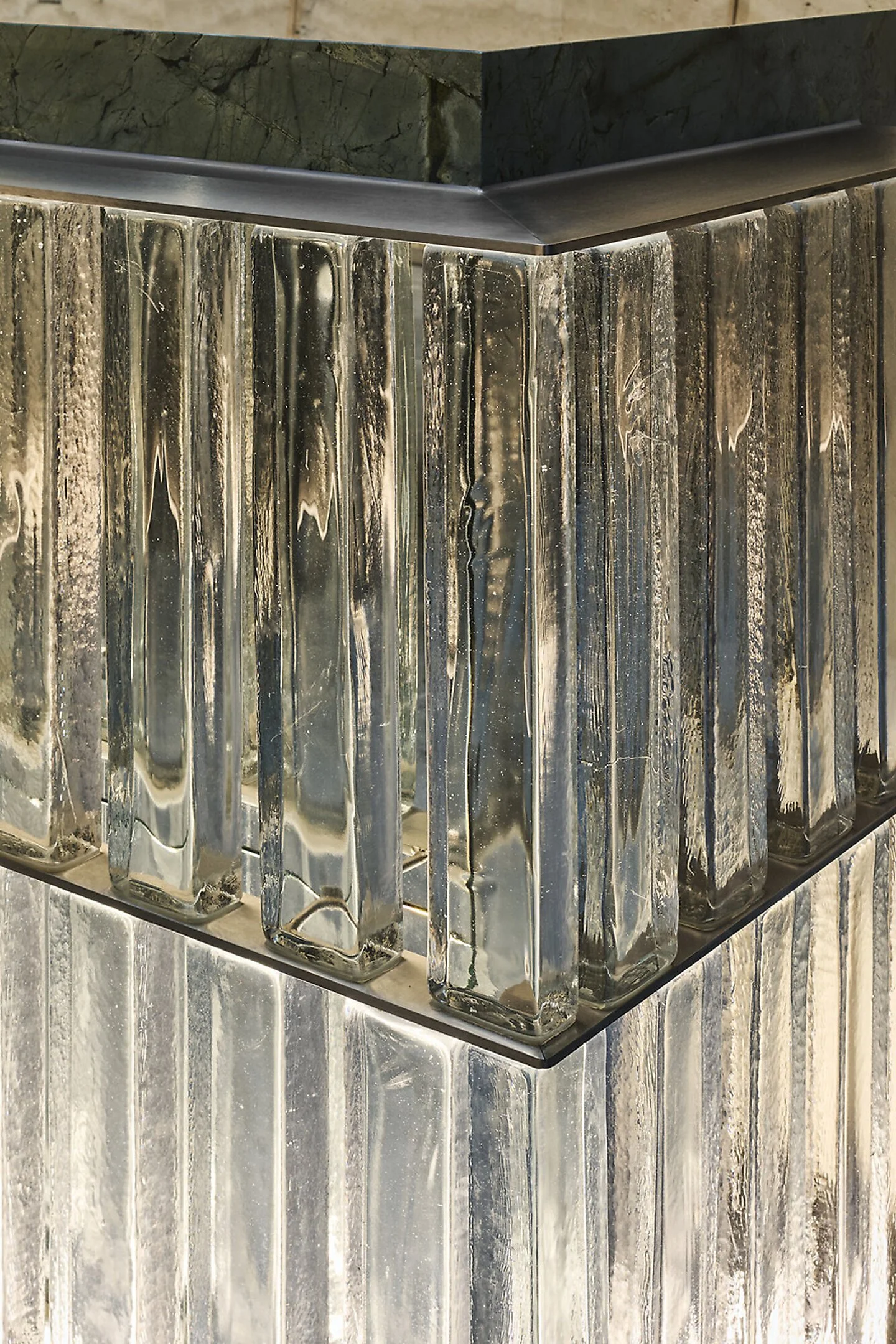
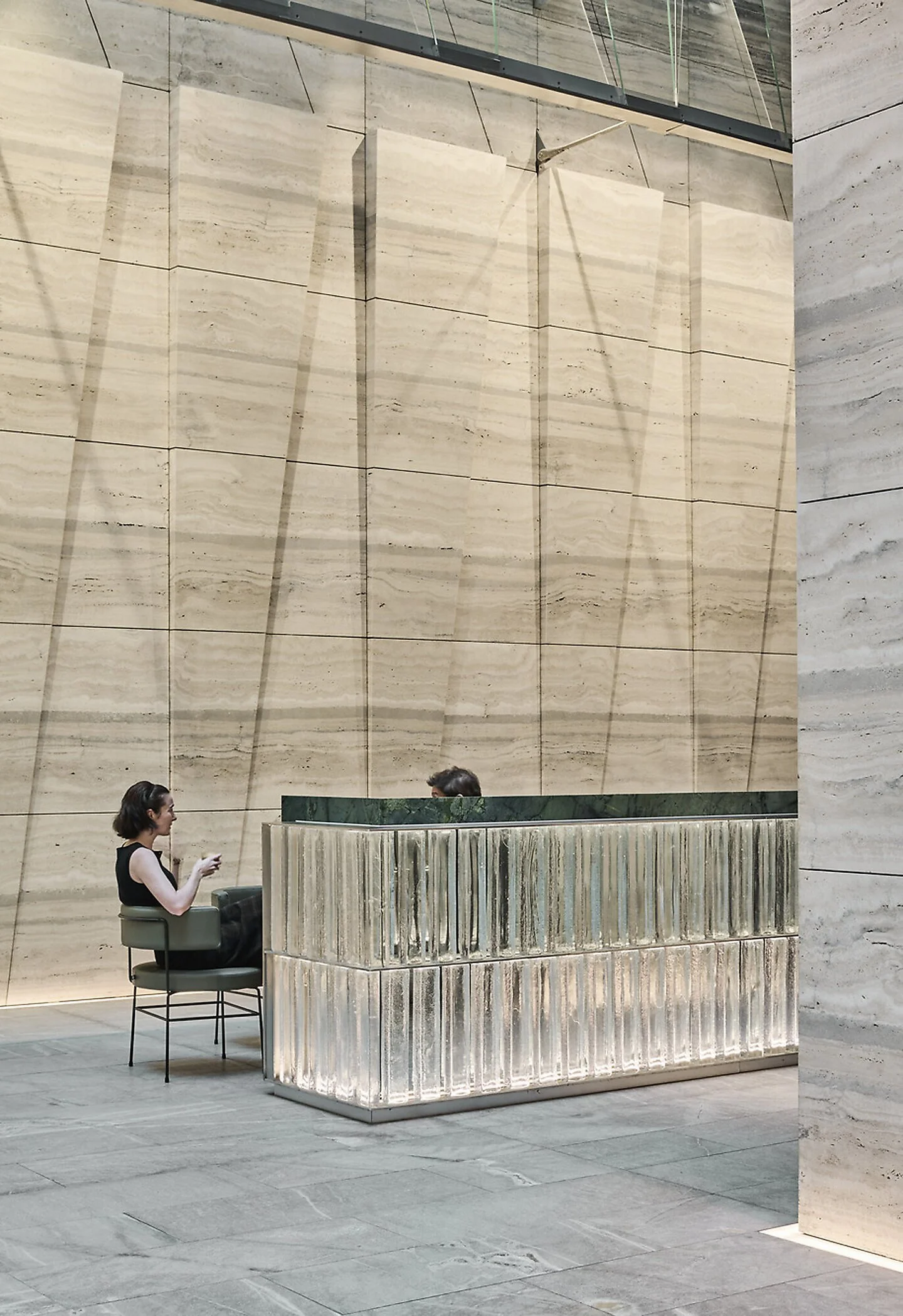
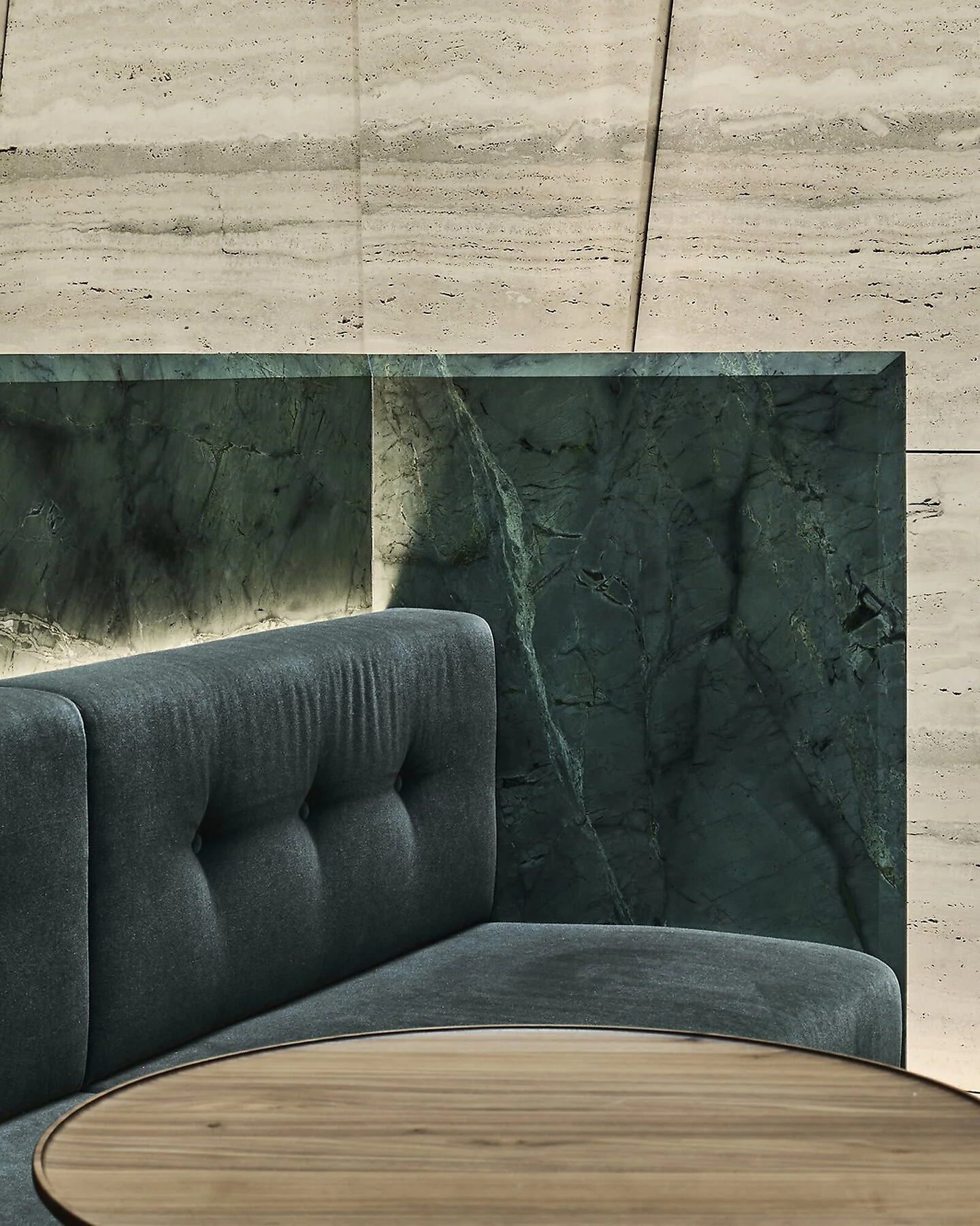
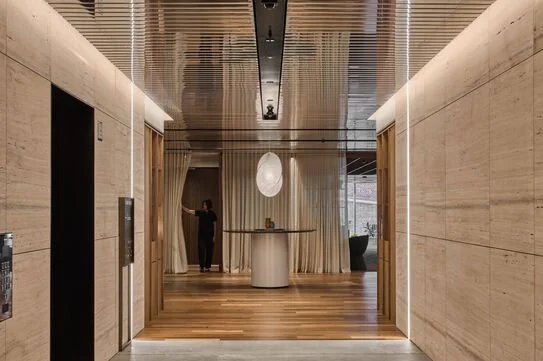
The original Romanesque Revival façade remains carefully preserved, opening into a contrastingly modern lobby, one of several along the street, including Studio Tate's lobby at 379 Collins. At Mayfair Café, themes of glass, travertine and concrete create an atmosphere that feels both elegant and aspirational.
More akin to a daytime bar, stylish Melbourne professionals mingle around the sculptural communal island with coffee in hand. It is an airy space that offers a resting point in the midst of a busy city.
When admiring the Melbourne skyline from its Southbank end, the iconic spires of St Paul’s Cathedral appear intentionally framed against the backdrop of a glimmering glass tower designed by Bates Smart.
More recently, the building underwent an end-of-trip wellness refurbishment in 2021, followed by the addition of its new Level 2 amenities floor and Mayfair Café by Hassell in 2025. It's the same practice behind Deloitte's Sydney HQ.
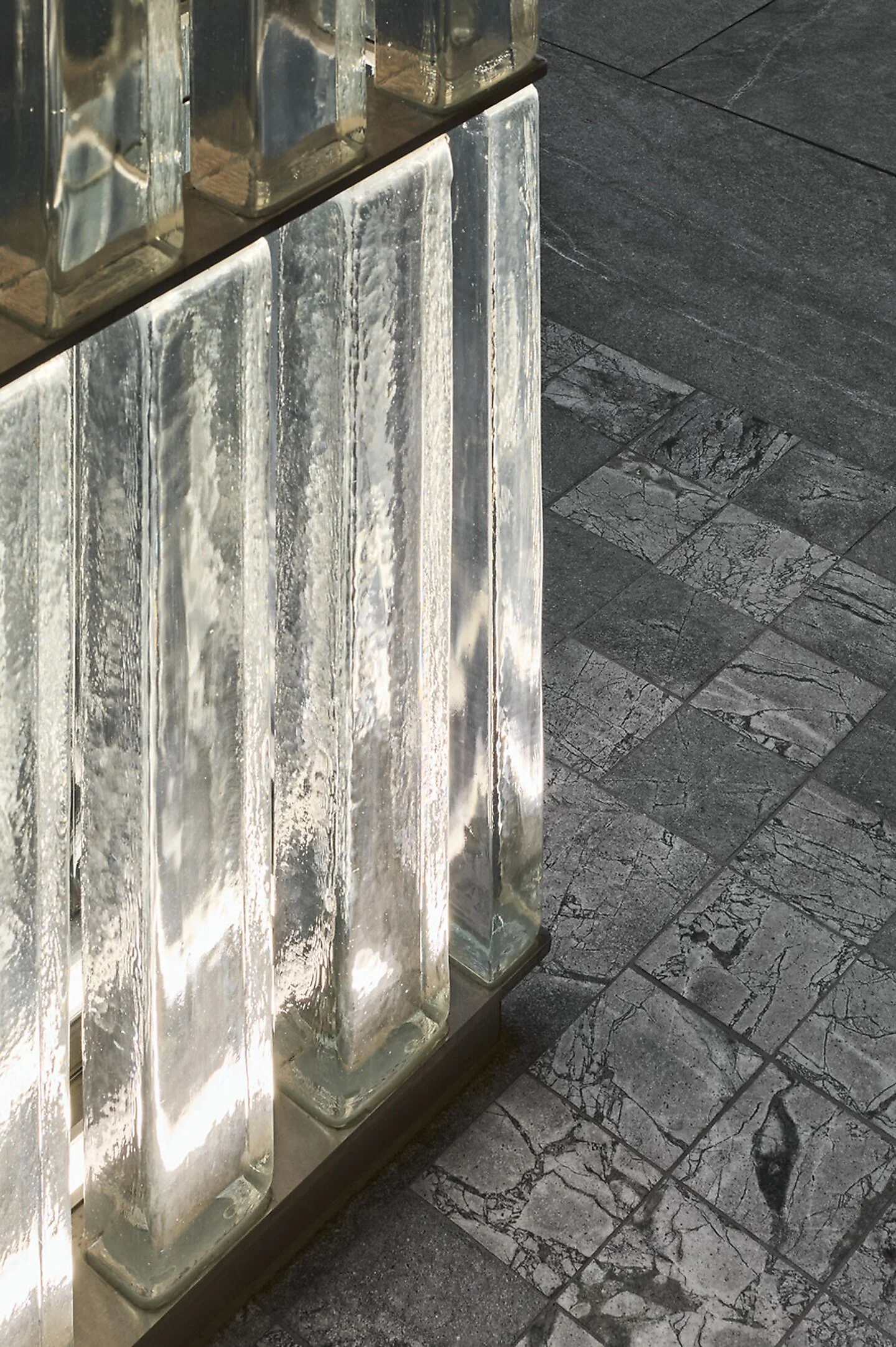
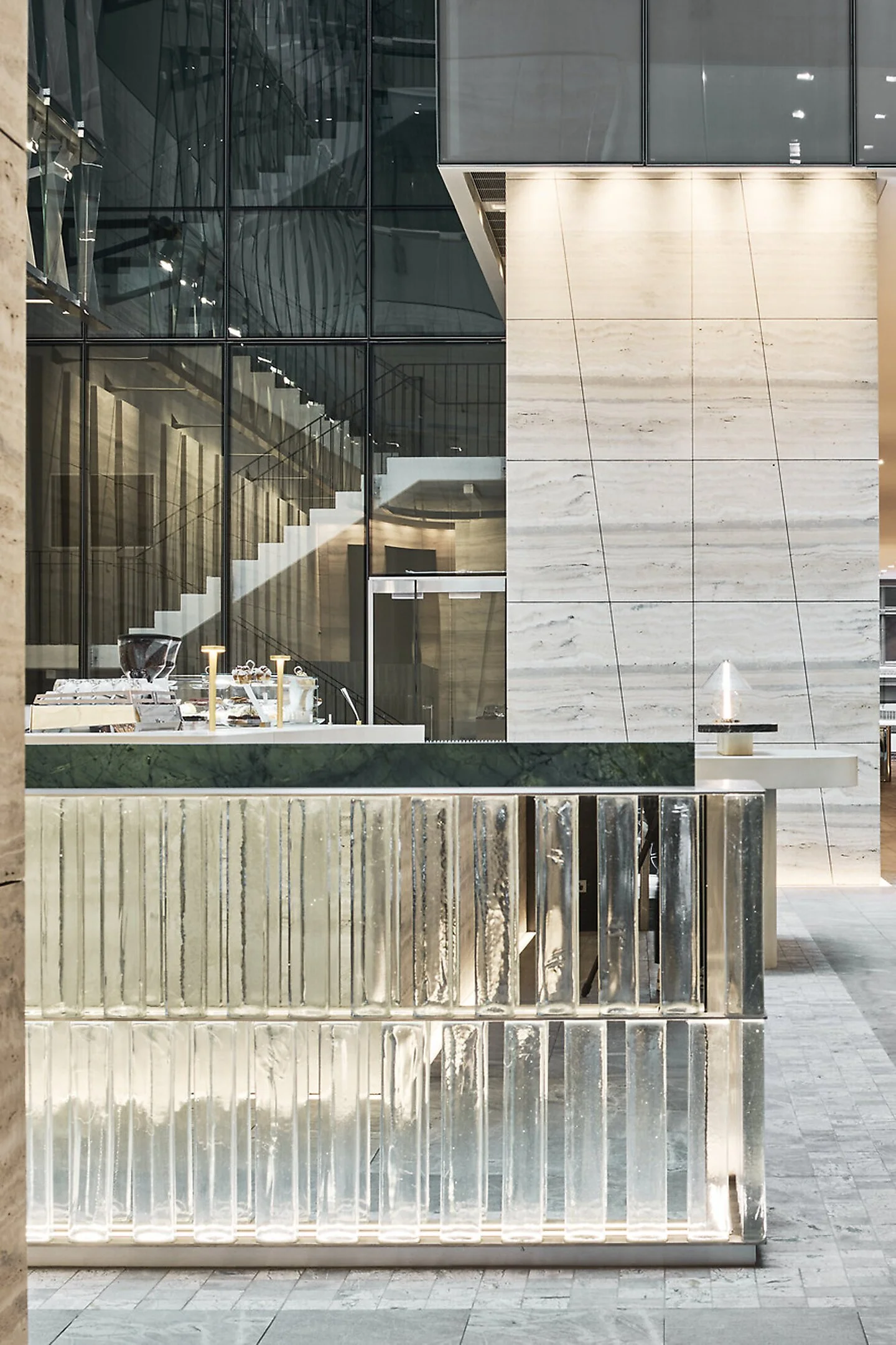
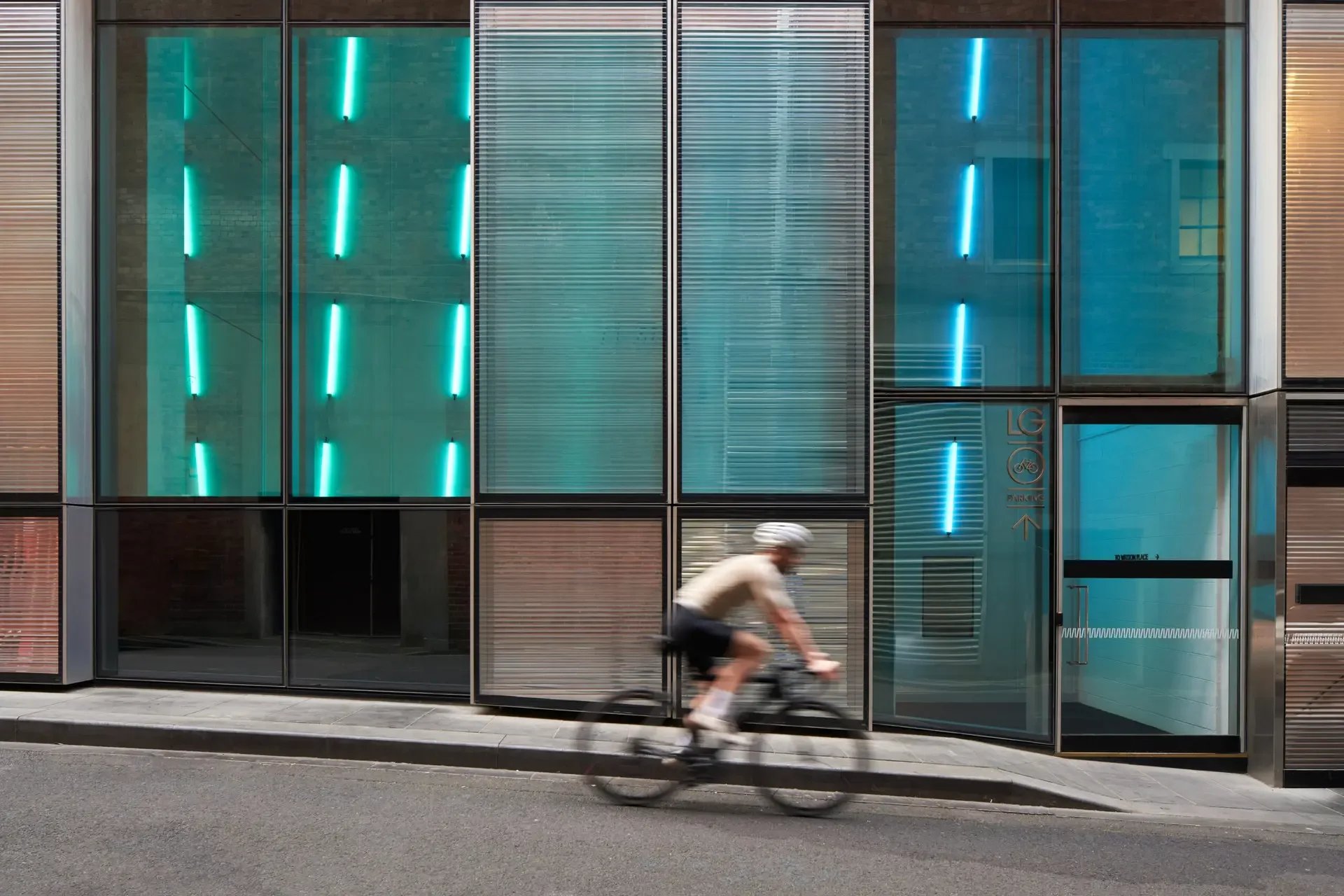
Sage banquette style seating wrapped for privacy in glass battened work that is accentuated by floor lighting - creating a textural, icy luminescence against the movement of busy passers-by.
Zig-zag glass panel work leads the eye up to a light-filled atrium that frames the glass tower above.
Cities have always been symbols of our collective human effort - places where proximity created opportunity, trade and innovation. Yet in an age where work can happen from a kitchen table, many office towers no longer hold the same social gravity they once did. According to the Property Council of Australia’s Office Market Report, Melbourne CBD office vacancy reached approximately 19% in early 2026 - the city’s highest vacancy level since the late 1990s.
The pandemic fundamentally reshaped the relationship between people and the workplace. Remote work, digital nomadism and post-pandemic flexibility shifted how people viewed the office itself. The rigid 9-to-5 increasingly came to symbolise burnout and performative productivity, while employees prioritised flexibility and work-life balance instead.
Hassell’s 2025 Workplace Futures Survey, ‘The Mandate Mirage’, found that workplace attendance has largely plateaued even despite increasingly strict return-to-office mandates. Employees subjected to stricter workplace policies were only marginally more likely to return to the office, yet significantly less satisfied with those policies.
Instead, the report found that renovated workplaces and differentiated amenities - good coffee, collaboration spaces, wellness facilities and hospitality-driven environments - significantly increased workplace satisfaction and willingness to return. As Hassell states: “With employees voting with their feet, the office must earn its keep.”
This strategy becomes most visible within Hassell’s “Third Space” redesign across the ground floor and Level 2.
Rather than functioning as a sealed corporate object, the building attempts to integrate itself back into the rhythm of Melbourne’s urban life.
171 Collins appears to embody exactly that philosophy.
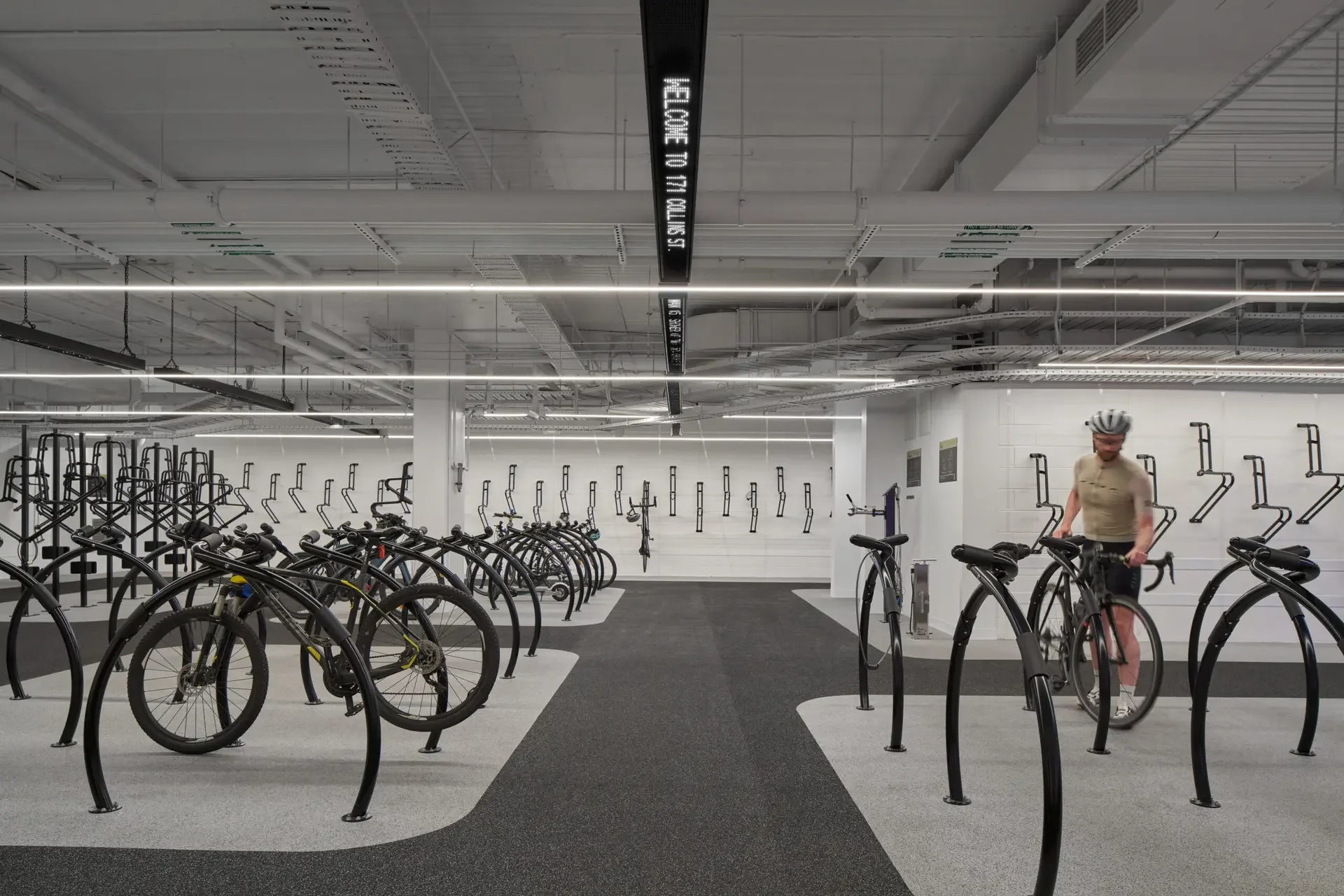
Long before the insertion of Mayfair Café, the building had already invested heavily in tenant wellbeing and commuter infrastructure.
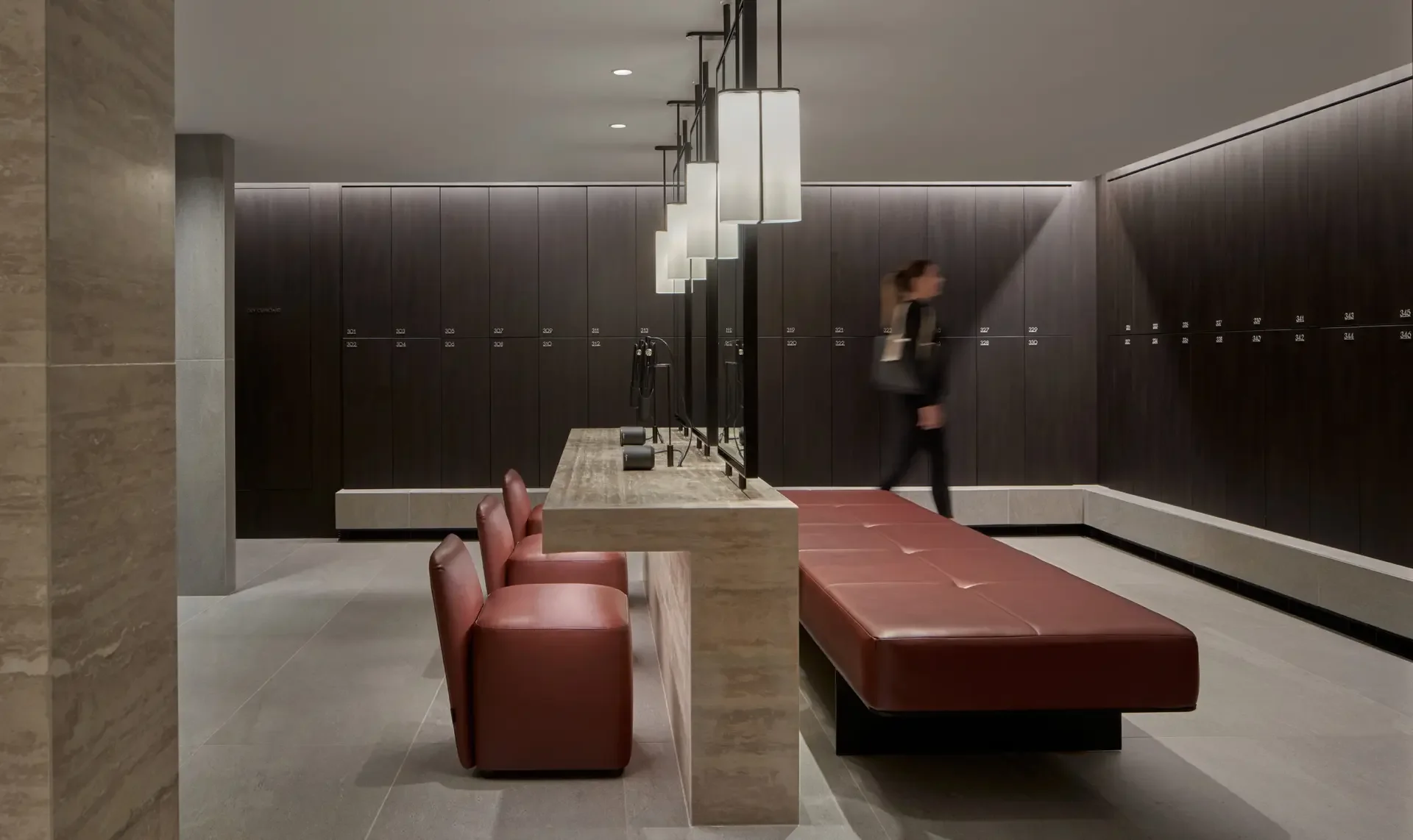
Bates Smart’s 2021 end-of-trip refurbishment introduced 280 bike racks, showers, lockers, dry-change facilities and wellness-oriented amenities designed to support healthier and more flexible commuting patterns. Further along Collins Street, 101 Collins' basement wellness destination takes the same idea even further.
Combined with its 6 Star Green Star rating, 5 Star NABERS Energy rating and under-floor air distribution systems designed to improve occupant comfort, the building increasingly positions itself less as a workplace and more as an urban lifestyle environment.
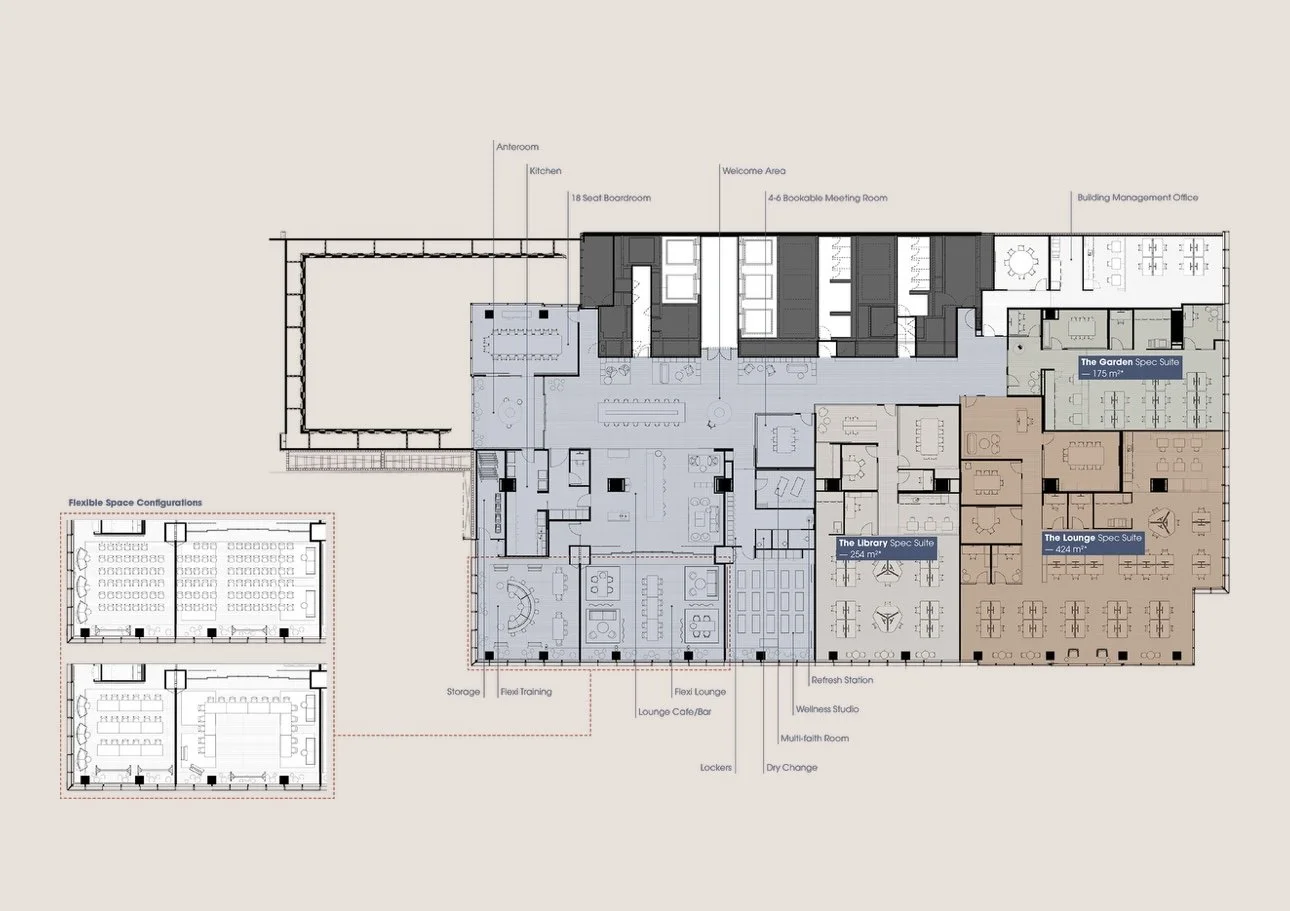
The Level 2 amenities floor includes a lounge café and bar, wellness spaces, a multi-faith room, collaborative lounges and flexible meeting environments designed less like traditional office infrastructure and more like a boutique hospitality setting.
Perhaps this reflects a larger shift now occurring within cities themselves. Rather than separating work and life entirely, the contemporary workplace is beginning to blend the two - not through obligation, but through atmosphere, beauty and social experience that can even extend beyond work hours. Hassell describes beauty not as a luxury, but as “a policy lever.”
As AI increasingly absorbs desk-based tasks such as writing, coding and research, workplaces may need to double down on the aspects of work that cannot be automated: social interaction, collaboration and human connection. Perhaps the future office is no longer simply a place people reluctantly commute into, but a place that meaningfully enriches urban life itself.
Credits
Interior Design
Hassell
Base Building Architecture
Bates Smart
Builder
Multiplex
Photography
Tom Blachford, Peter Clarke
Awards
Australian Interior Design Awards 2026 - Retail Design Shortlist