
Arup Brisbane: Setting a Benchmark for One of the World’s Most Rigorous Sustainable Design Standard
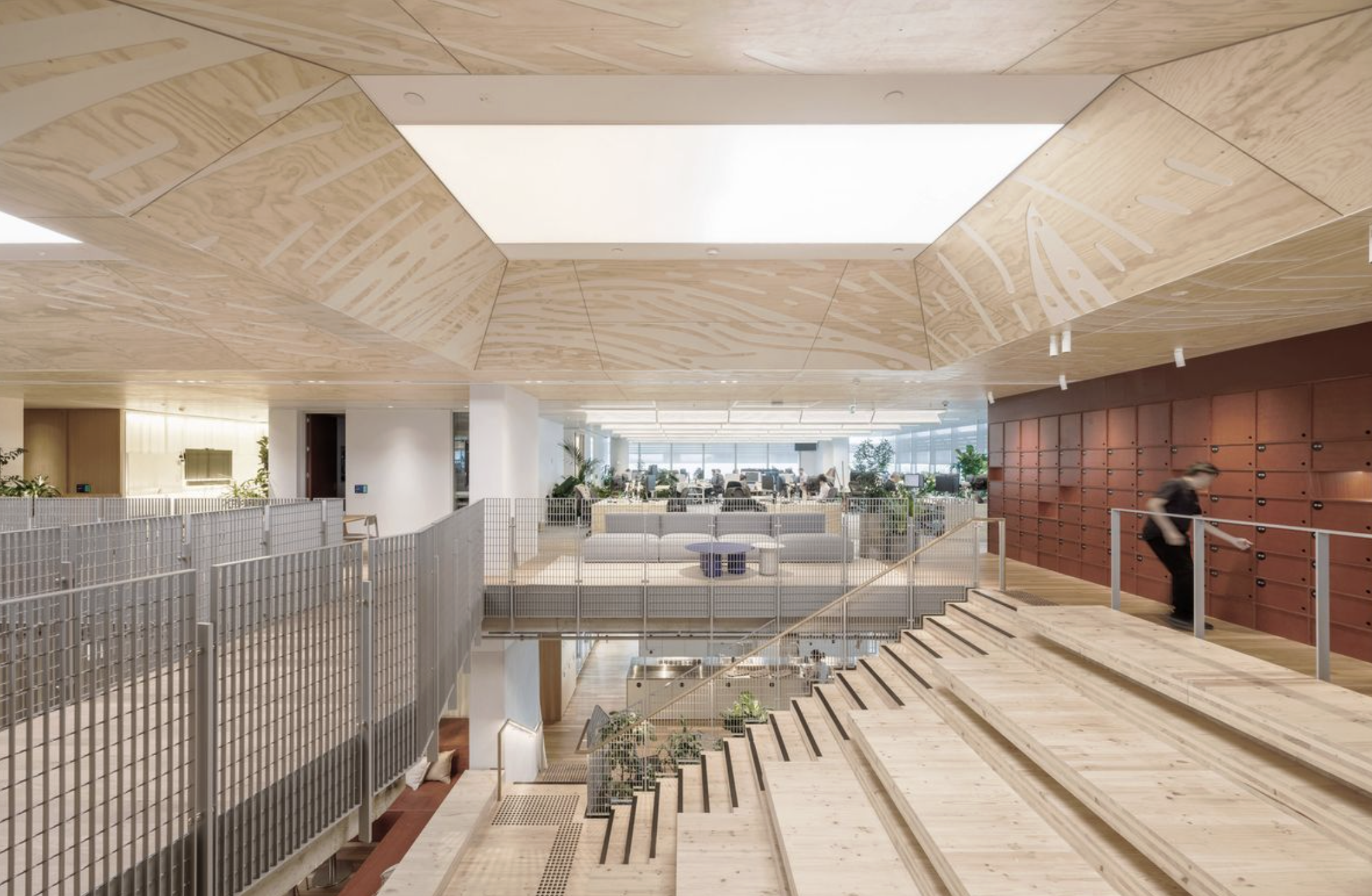
In Brisbane’s CBD, Arup’s new workplace at 123 Albert Street offers a clear demonstration of how sustainability can shape the daily experience of work. Designed by Hassell and delivered with Buildcorp, the three-level workplace accommodates around 450 staff and pursues one of the built environment’s most ambitious sustainability frameworks, the Living Building Challenge (LBC).
Widely recognised as one of the most rigorous global standards for sustainable buildings, the LBC challenges project teams to rethink how workplaces are designed, constructed and experienced. The workplace balances environmental responsibility with human experience, offering a setting that supports collaboration, wellbeing and connection to place as Brisbane prepares for significant growth leading up to the 2032 Olympic Games.
Completed 2025
Before design began, Arup and Hassell worked closely with the Brisbane team through a series of workshops to explore how people wanted their workplace to feel and function. Several themes quickly emerged, including visibility, ease of movement, inclusion, connection and kindness. Health and wellbeing sit at the centre of the design, with the project targeting WELL Platinum certification and integrating features that support physical and mental comfort throughout the day.
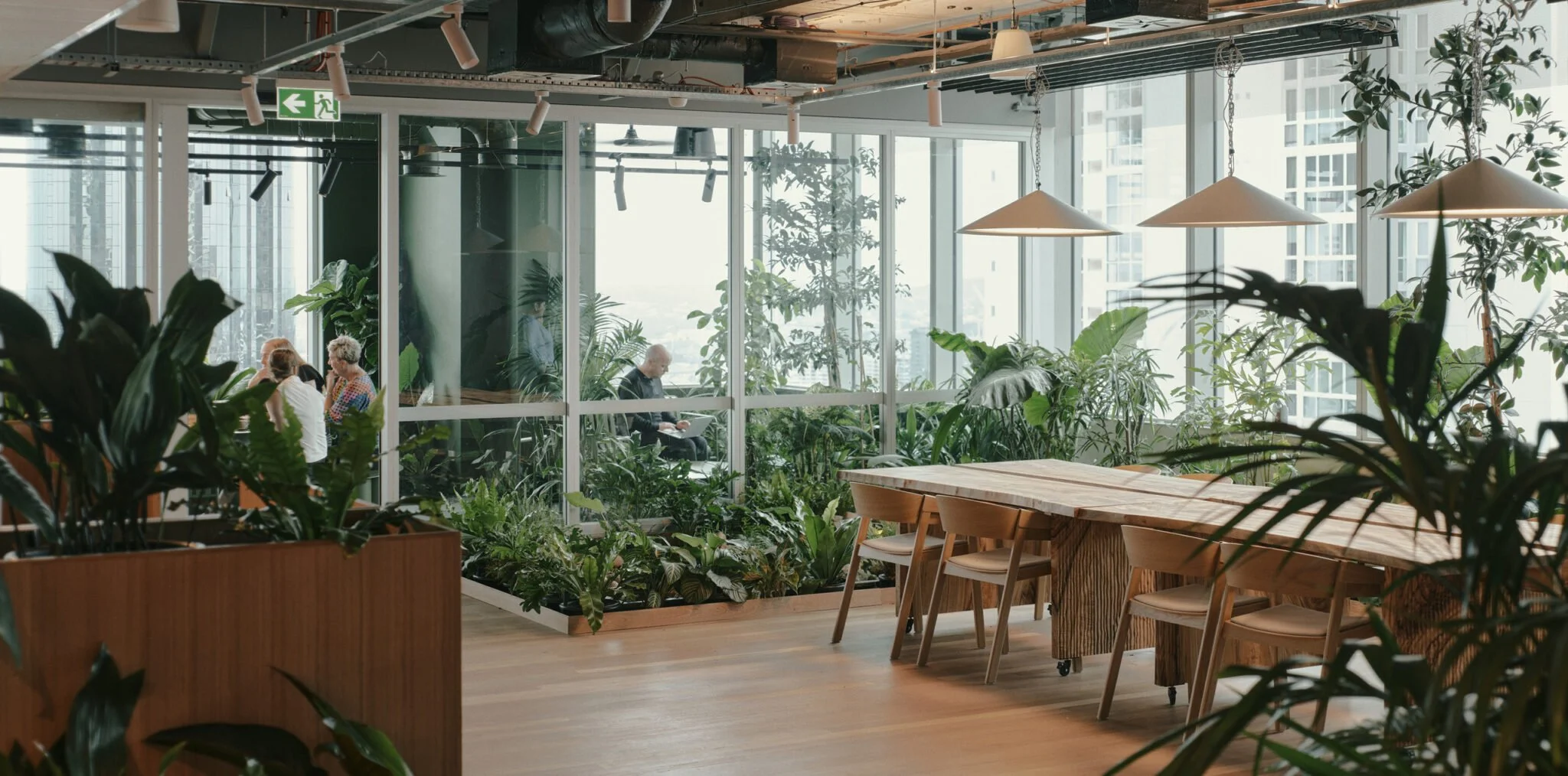
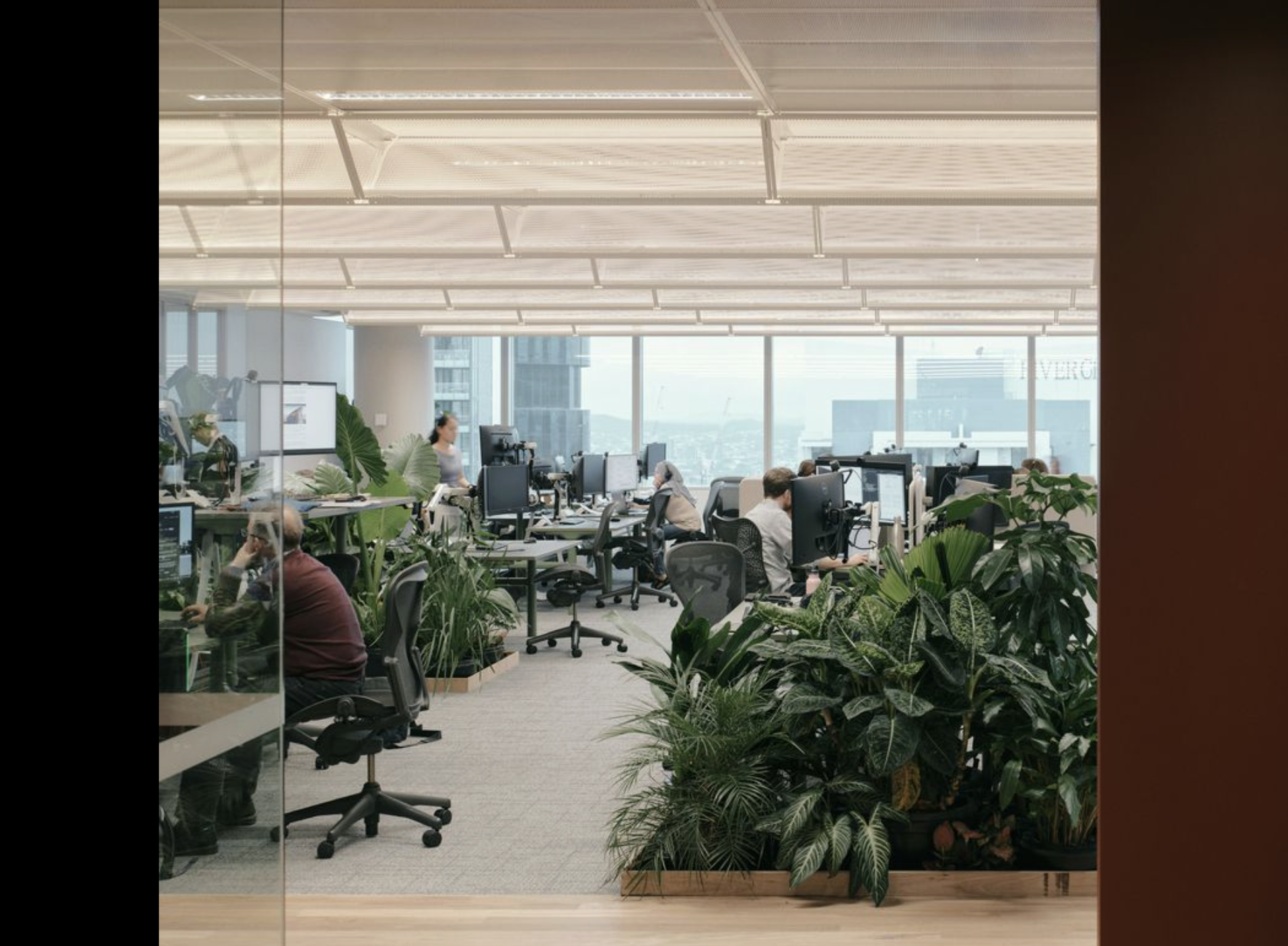
Biophilic design plays a major role in this approach. Nearly 2,000 plants representing more than 80 species are distributed throughout the workplace, and almost every workstation, meeting room and breakout space maintains a direct line of sight to vegetation, water or landscape, surpassing the typical benchmark for visual access to nature. The workplace is also designed to support diverse ways of working and different personal needs. Facilities include a parent’s room, a multi-faith space with a foot wash, focus rooms, smaller neighbourhood zones and accessible ramps across level changes, helping create a supportive and welcoming environment for both staff and visitors.
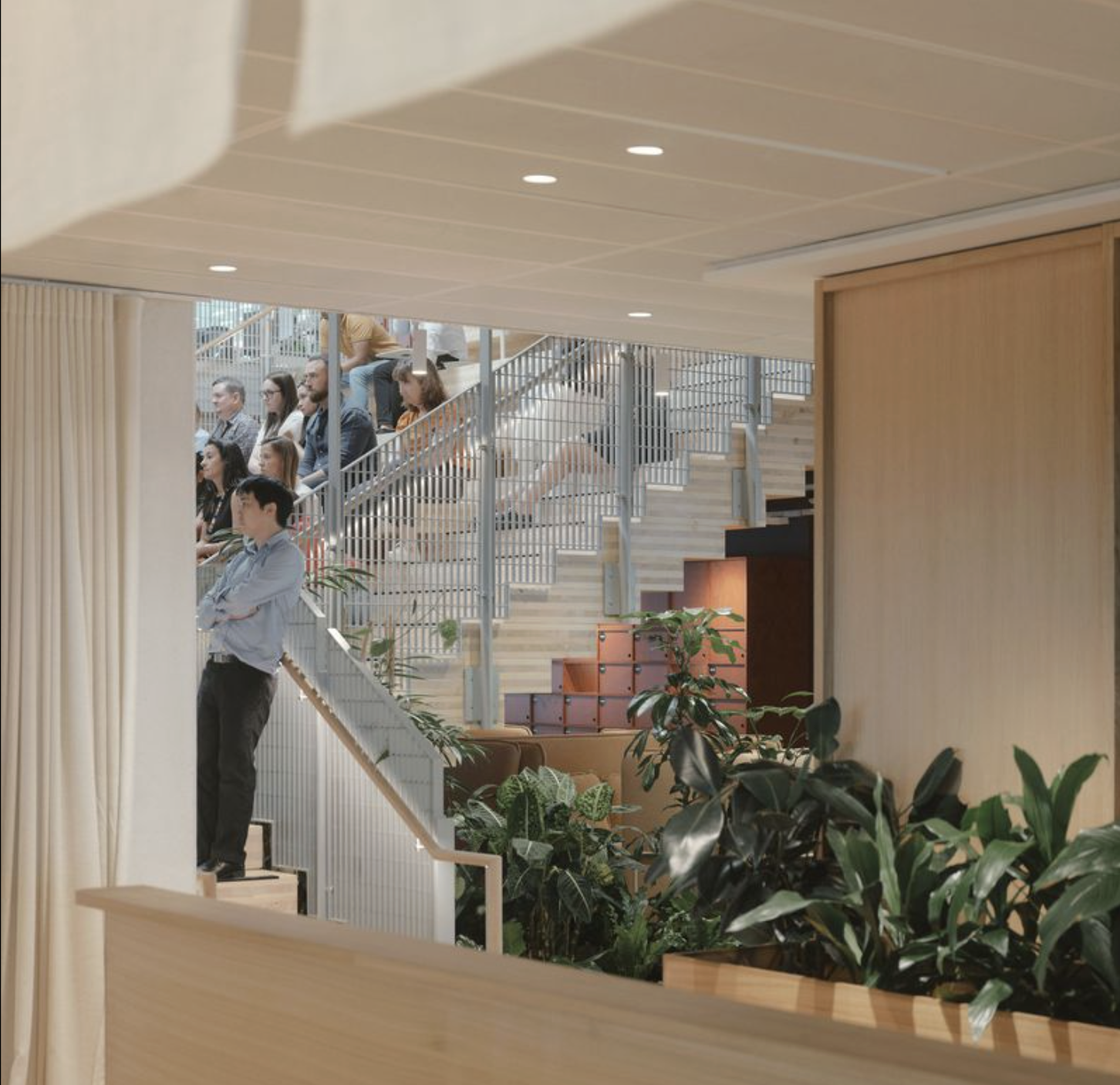
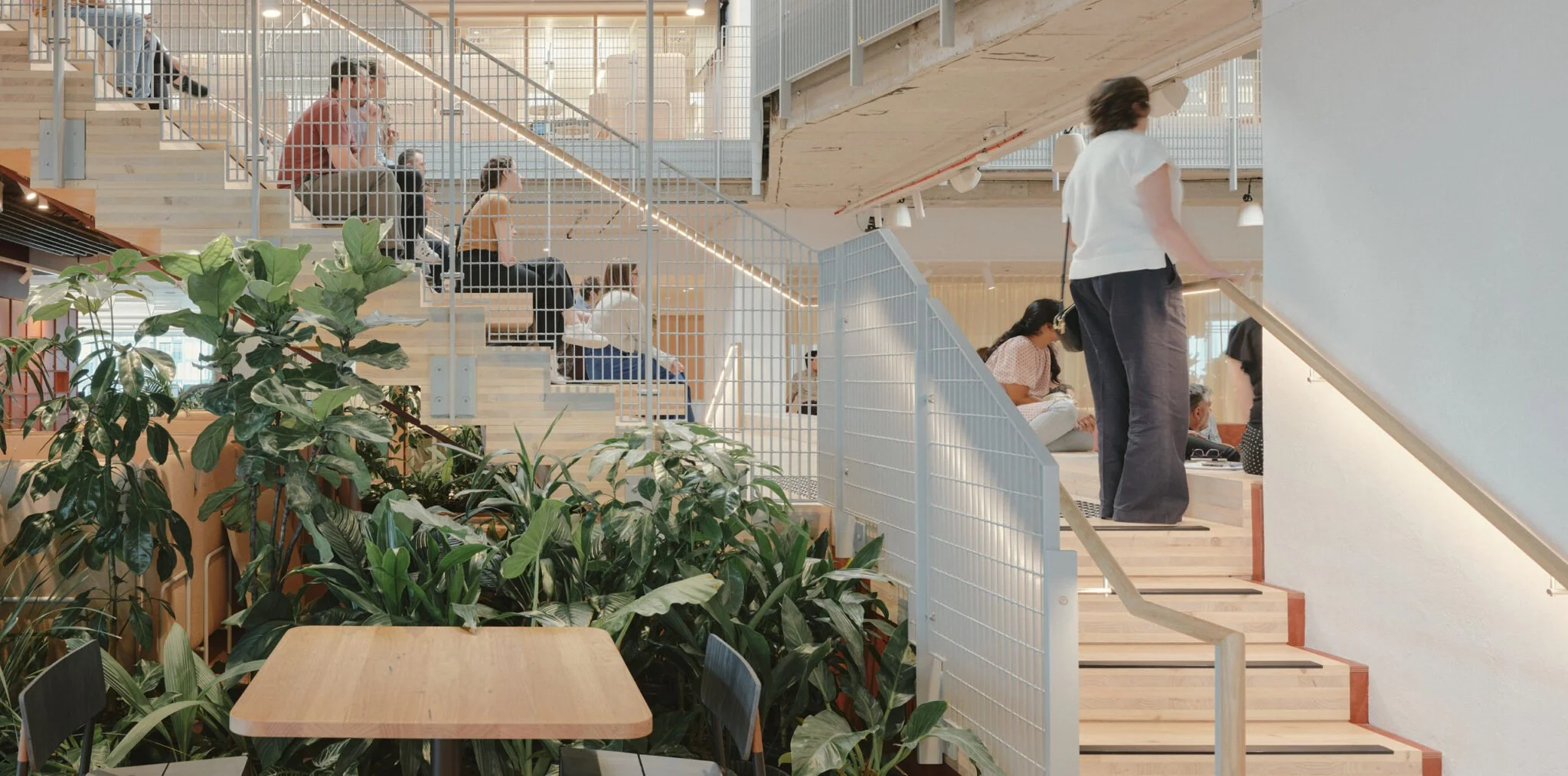
A timber staircase sits at the heart of the workplace, linking two floors and creating a natural gathering point for the studio. Constructed from modular cross-laminated timber panels, the staircase follows a kit-of-parts approach, with each component sized to fit the building’s goods lift and assembled on site using mechanical screw fixings that allow for future disassembly or reuse. The use of CLT responds to both environmental and practical considerations, offering a lighter structure with carbon sequestration benefits while avoiding wet trades such as concrete. Steel beams support the structure discreetly, allowing the timber to remain visually prominent, while the stepped form doubles as informal seating for events, conversations and everyday interaction between teams.
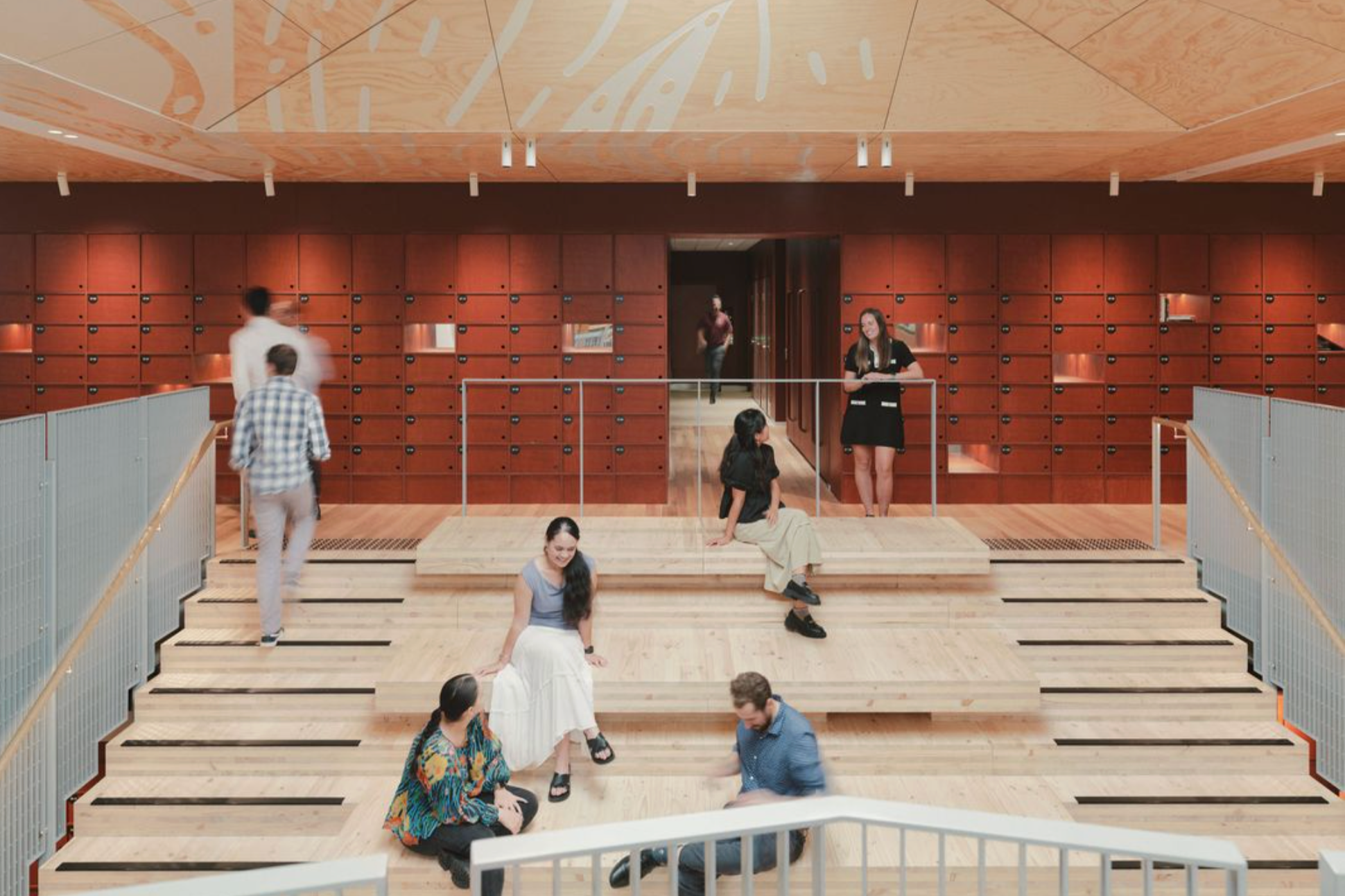
“Our new space celebrates regenerative design principles, enhances wellbeing and provides a vibrant setting for collaboration and community.”
—— Eliza Howell, Principal and Queensland State Leader, Arup
Circular design strategies appear throughout the workplace, often revealing the stories behind the materials themselves. Original mesh balustrades from the building’s staircase have been retained and wrapped around columns to form vertical planting structures. Recycled timber studs create partitions around print areas and storage spaces, while perforated metal salvaged from a closing Ripple Iron factory has been repurposed as café joinery and wall cladding.
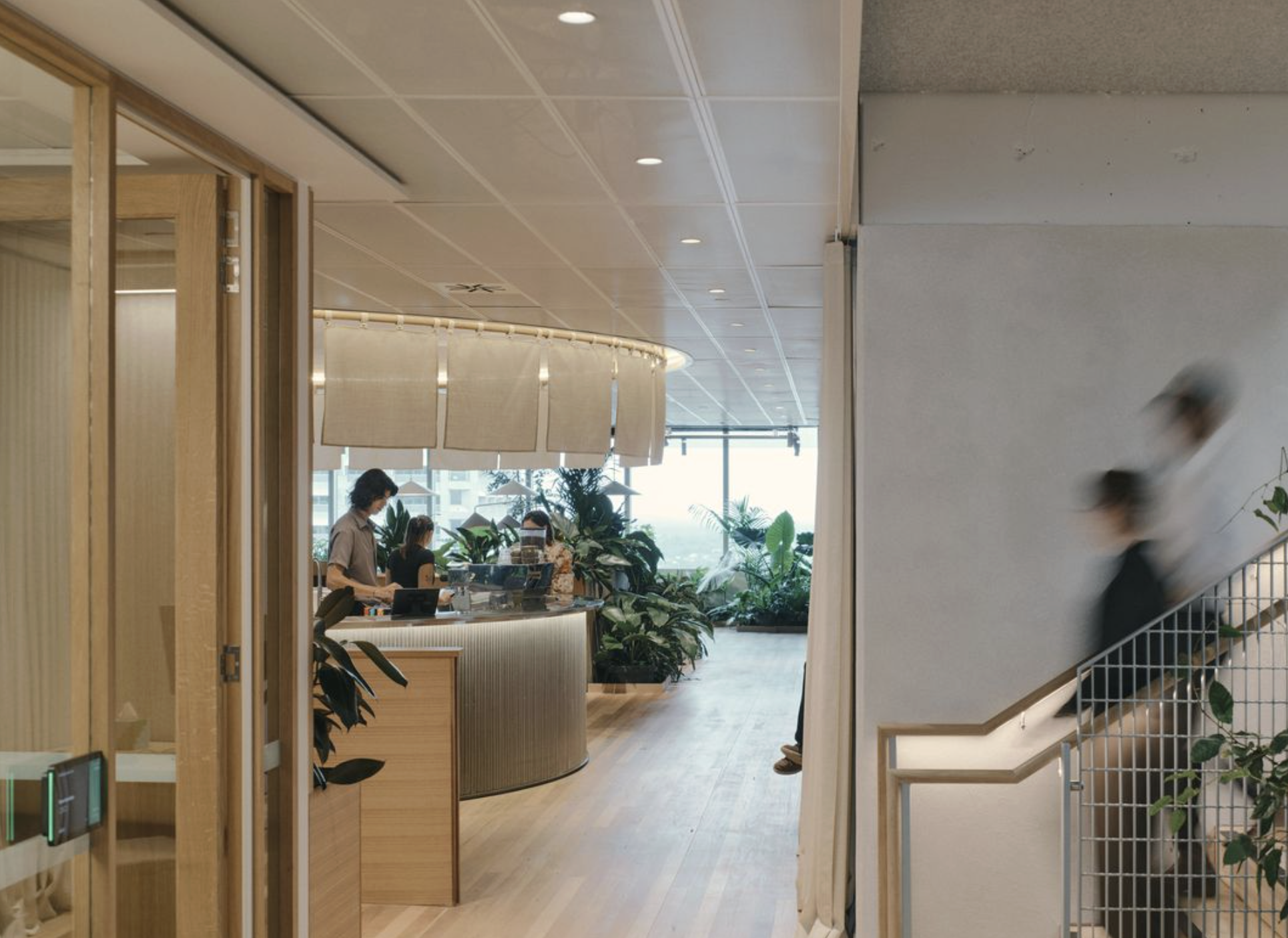
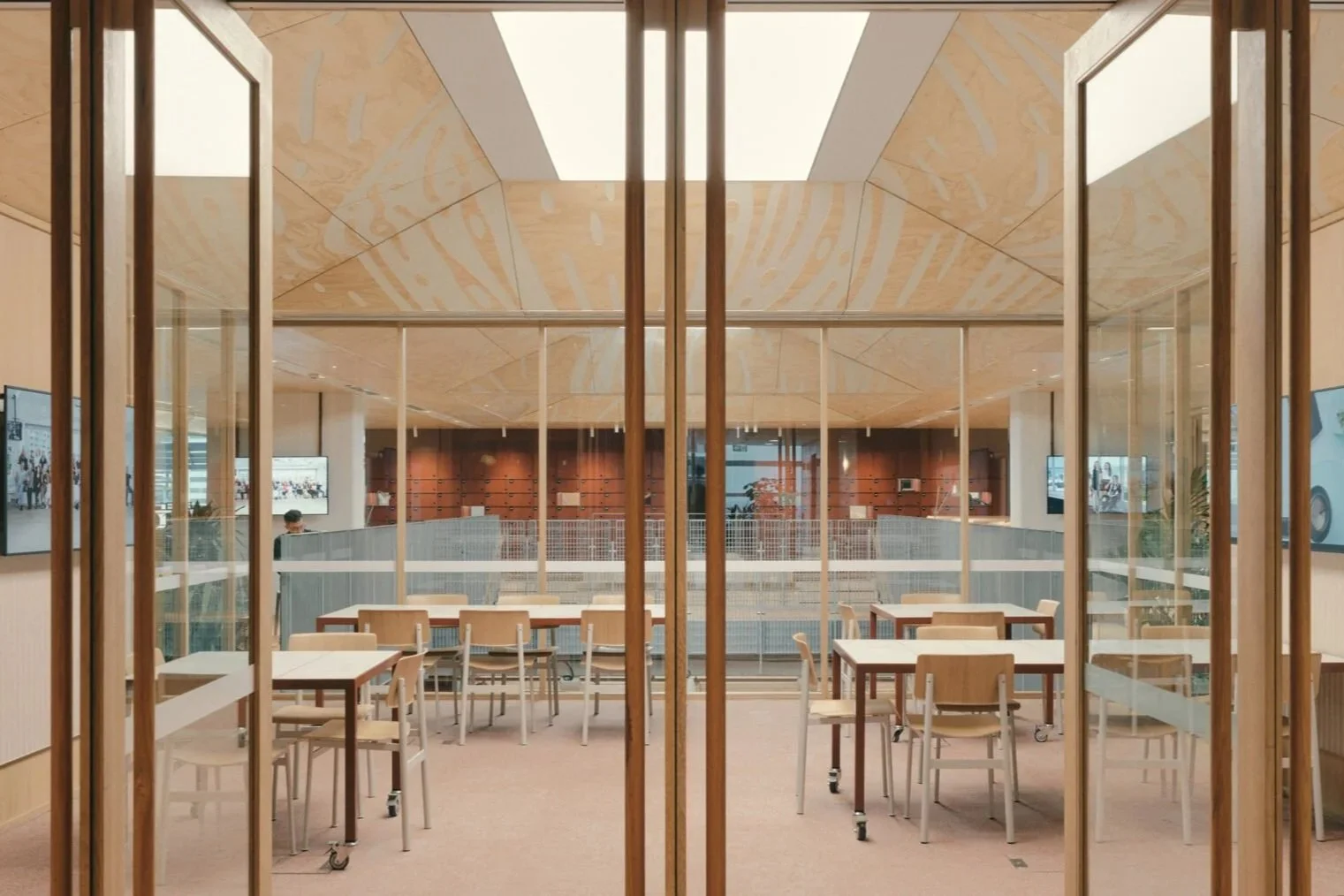
1,769 square metres of carpet tiles were retained
Other materials carry traces of Brisbane and its surrounding landscape. Blackbutt timber floorboards salvaged from New South Wales wharves reappear as furniture pieces, while volcanic tuff sourced from excavations at Brisbane Airport echoes the rugged geology of nearby Kangaroo Point cliffs. Additional reuse strategies appear across the interior, including stools crafted from salvaged floorboards by Five Mile Radius, display boxes from the Museum of Brisbane reimagined as furniture, and crushed oyster shells collected from Queensland restaurants used to create a textured render on the central columns. Green granite from a demolition site was later incorporated as flooring in the winter garden.
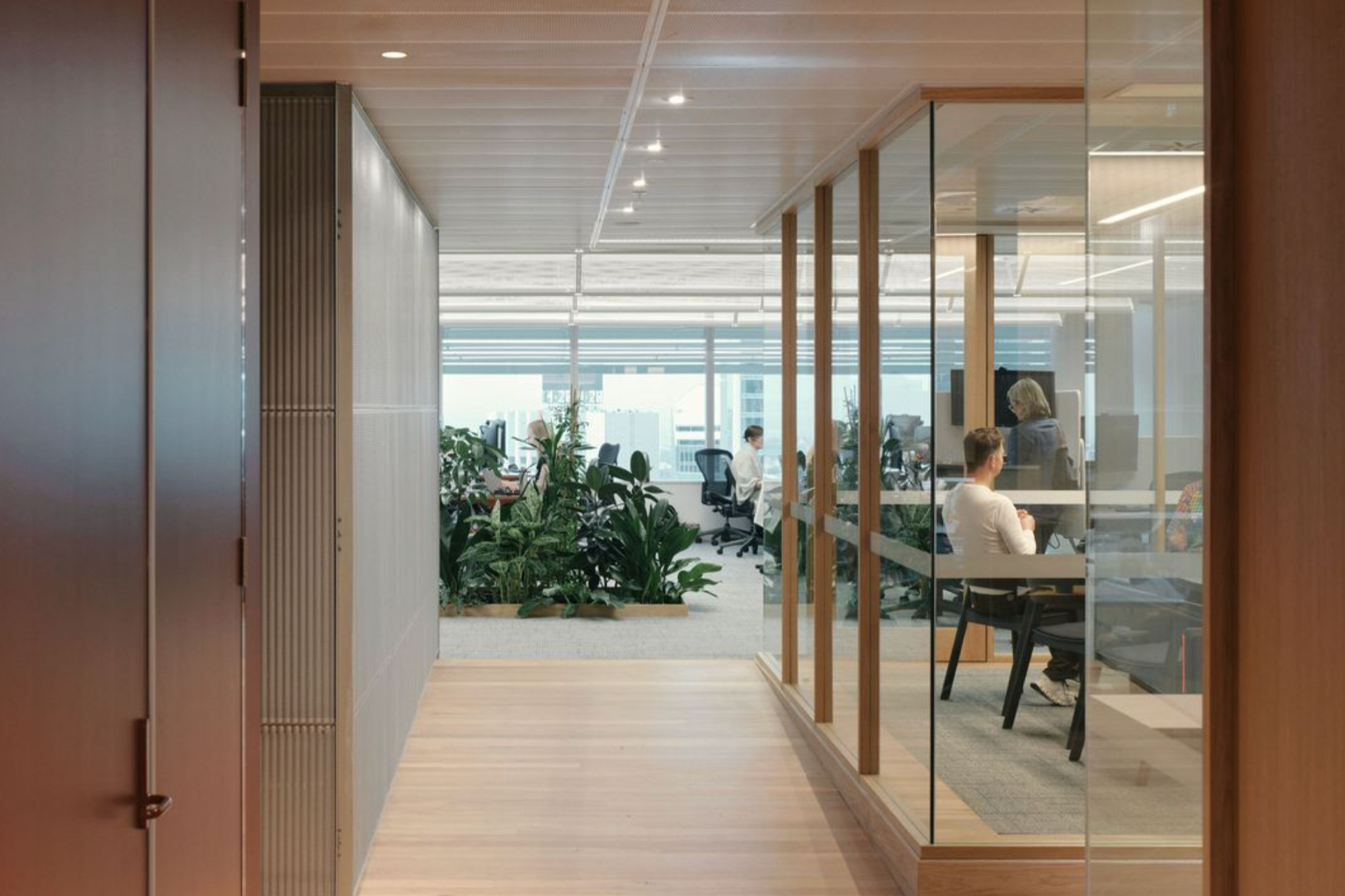
100 percent of Level 21 workstations were salvaged from an existing fit-out
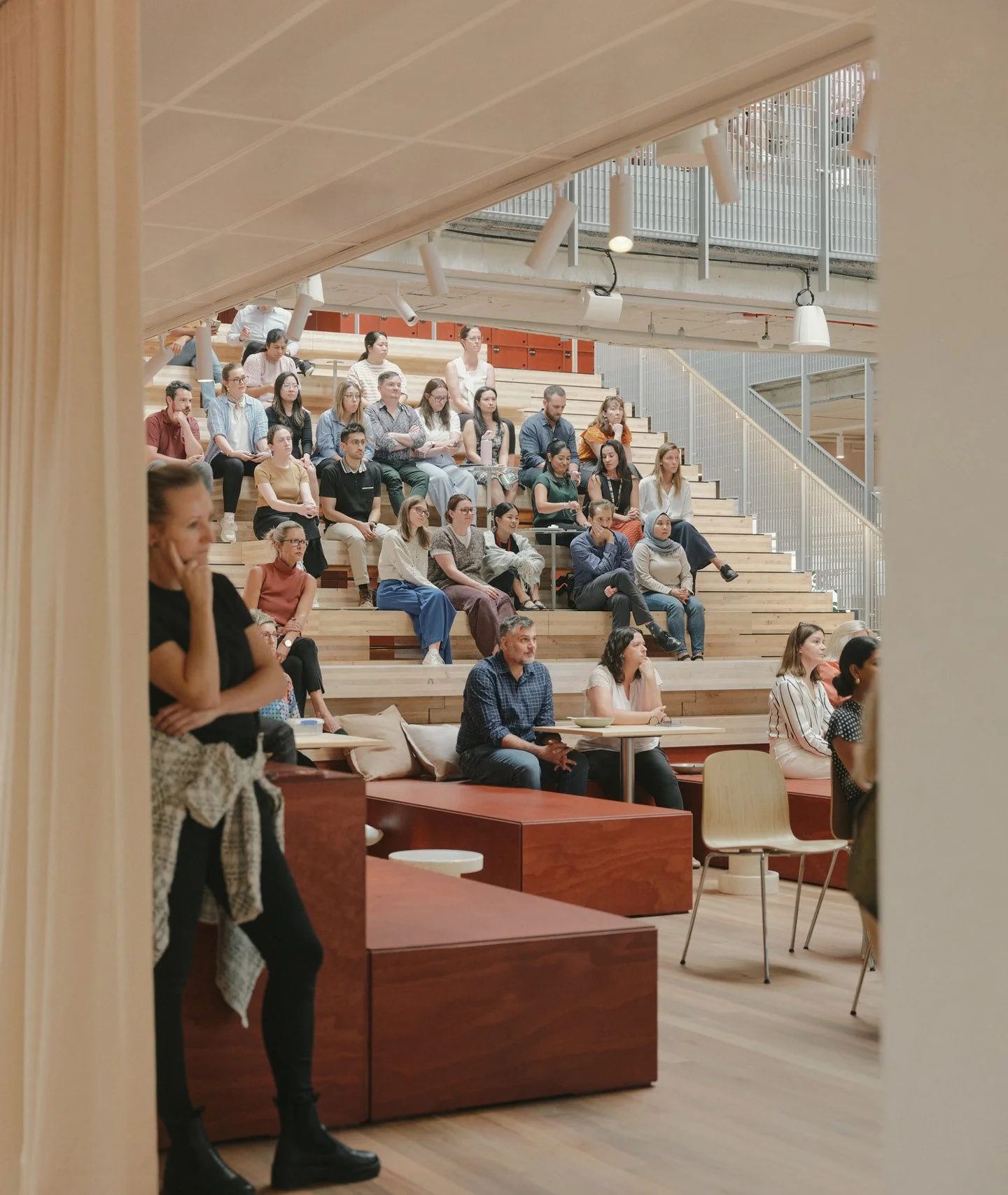
“We intentionally selected an existing building, recognising the importance of limiting our carbon footprint, and wanting to demonstrate that unique, sustainable and dynamic workplaces could be delivered within typical commercial buildings, without reliance on customisation of a new base building.”
—— Arup
The design engages deeply with Country through collaboration with First Nations design agency Blaklash. Working alongside Hassell, Five Mile Radius and the broader project team, Blaklash helped shape a design narrative connected to Yuggera and Turrbal Country. An immersive biophilia workshop explored the site’s ecological and cultural history, including the creek that once flowed through the area and the surrounding riparian landscape. These insights informed a series of spatial and material gestures across the workplace.
A reflective metal ceiling evokes the movement of water, referencing both the Brisbane River and the historical creek that once crossed the site. The double-height arrival space features artwork by Waanyi and Kalkadoon artist Keisha Leon, creating an ongoing dialogue with Sky Country. Blaklash also developed a contemporary interpretation of Acknowledgement of Country, written as prose and woven throughout the workplace environment. Furniture and joinery details reference endemic plant species and riparian ecosystems, allowing the cultural narrative of Country to become part of everyday workplace experience.
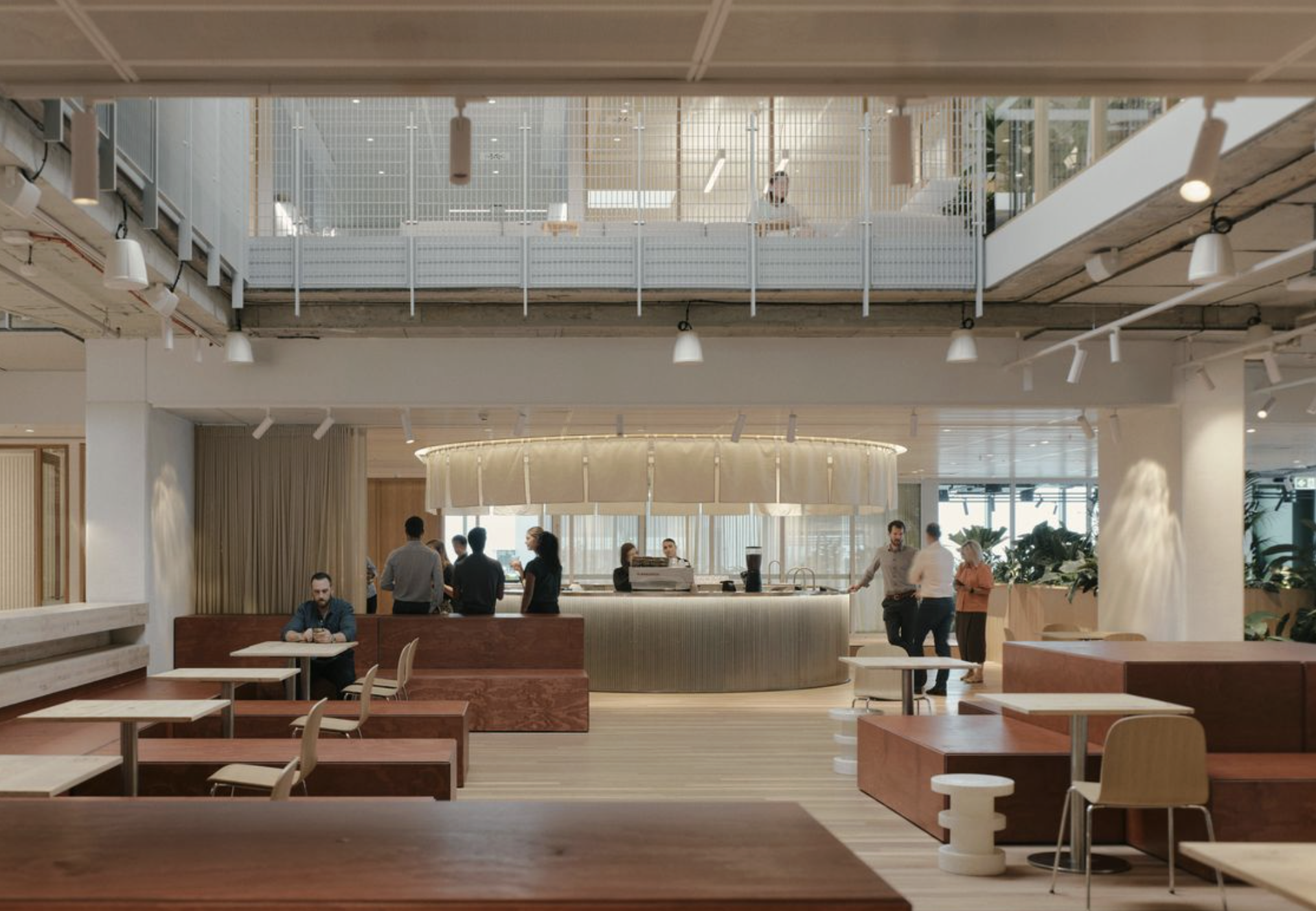
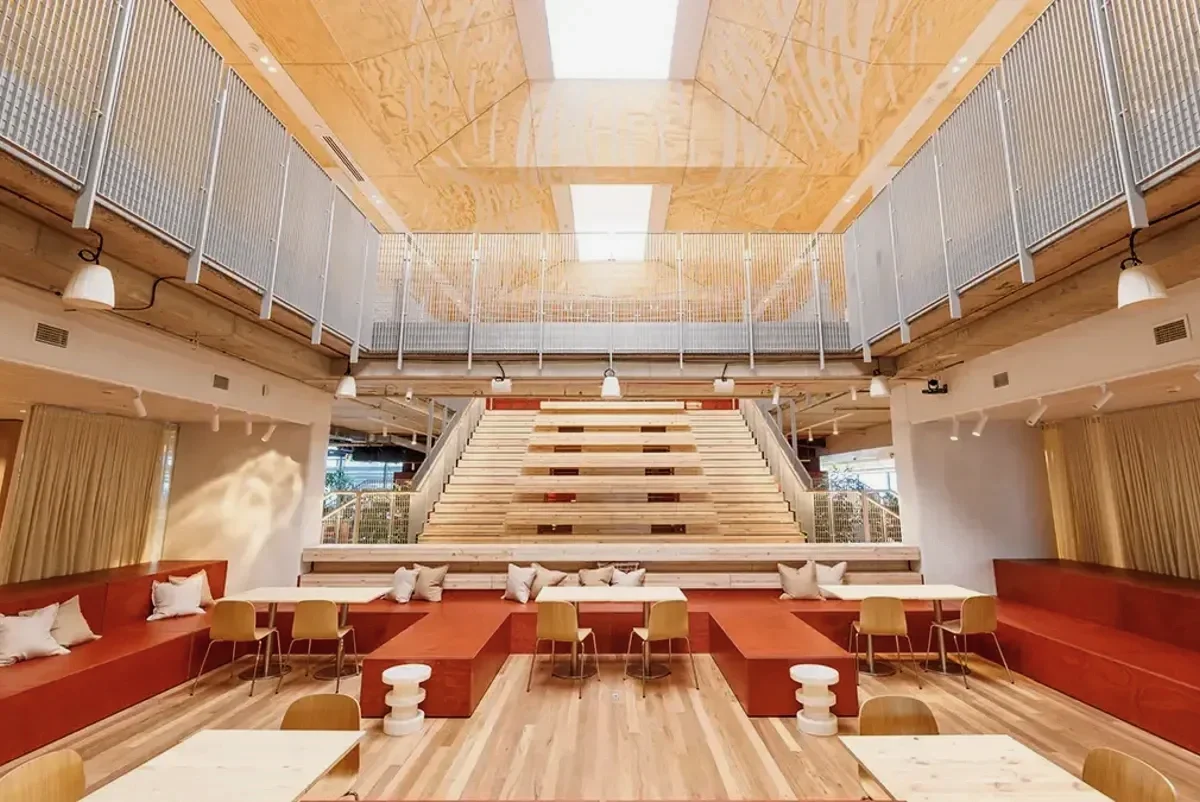
Arup’s Brisbane workplace stands among a small group of Australian projects pursuing the Living Building Challenge. Within a conventional commercial tower, the project demonstrates how regenerative design principles can shape the experience of work, from the materials underfoot to the way people gather, collaborate and connect with place.
Project Credits
Architect & Interior Design: Hassell
Builder: Buildcorp
Landscape: Hassell
First Nations Design Consultant: Blaklash
Sustainable Materials Advisor: Five Mile Radius
Photography: David Chatfield & Jon Wright
